SOUNDPROOFING IN ACTION
Noise can be a real nuisance in the wrong place, but the volume can be turned down using the right shapes and materials
WORDS SCOTT DUTFIELD
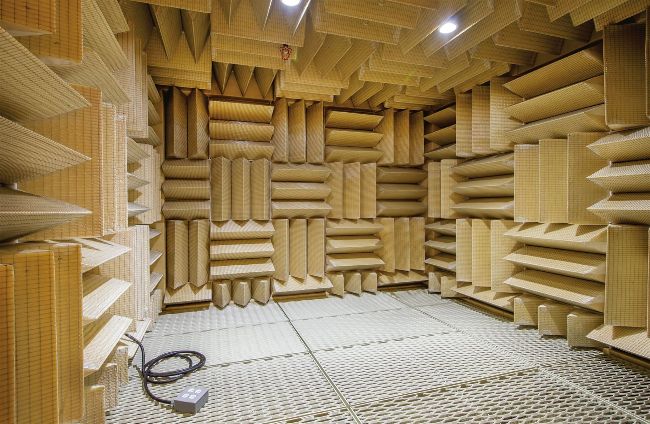
The inside of an anechoic chamber, where 99.9 per cent of sound is absorbed
Whether it’s the invading vibrations of outside traffic or the cacophony of sounds created by TVs and smartphones, our homes are a hotbed of sound waves. The basic science of sound is simple: when an object vibrates, it causes the molecules in the air to collide with one another in a domino effect that creates a wave of sound. The wave is only heard when our eardrums are hit by the sound wave and our brain interprets the sound. Our eardrums can only hear sound waves if the vibrations are a certain frequency. Anything lower than 20 vibrations per second and the human ear can’t hear it, and similarly, anything over 20,000 vibrations per second is too high for the ear to detect. The size of sound waves, known as amplitude, determines how loud the sound is heard, which typically relates to the force used to create the vibrations. For example, the harder you hit a nail into a piece of wood, the more the nail will vibrate when struck, and the louder the sound. But sound waves aren’t just airborne vibrations. Known as impact noise, these sound waves are generated when one object, such as a floor or door, is impacted by another object, such as your foot or hand, causing it to vibrate and emit sound waves.