Está viendo la página Spain versión del sitio.
Le gustaría cambiar a su sitio local?
Última edición

Phoenix Digital Bookshop McDonnell F-3H Demon Edición anterior

English
0 Reseñas   •  English   •   Aviation & Transport (Aviation)
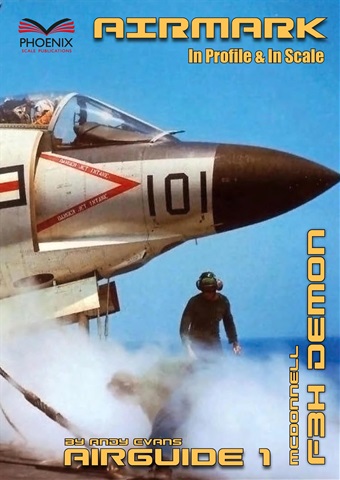
Airmark Airguide #1
McDonnell F-3H Demon
By Andy Evans

The F3H Demon was McDonnell Aircraft Corporation's first swept wing aircraft, providing the basis for development of the F-4 Phantom II. It was an infamously troubled aircraft; engine problems plagued the first version of the airplane, resulting in eleven crashes and the deaths of four pilots between 1952 and 1955. Later versions of the aircraft were designed for all-weather operations and could carry the AIM-7 Sparrow missile, yet the Demon never shook its troubled reputation. McDonnell hoped to advance its role building Navy jet fighters with a new design in response to a 1949 request for a short-range jet interceptor. The result was the XF3H-1 Demon, which first flew in 1951 Troubles with the Westinghouse J-40 power plant immediately threatened the F3H program. Between August 1952 and October 1955, eleven Demons crashed, killing four pilots, however, McDonnell stuck with the design, adopting Allison's J-71 engine, a move that allowed for a resumption of production and eventual delivery of 519 aircraft, including the F3H-2M designed to carry the AIM-7 Sparrow air-to-air missile. The improved Demon, however, could not escape its performance limitations, which included lack of power compared to Navy contemporaries, and high fuel consumption that limited range and required sparing use of the afterburner. Nevertheless, until 1964 the F3H-2 complemented daylight dogfighters such as the F8U Crusader and the F11F Tiger as a carrier all-weather, missile-armed interceptor. The Demon was withdrawn before it could serve in Vietnam where the F-4 Phantom II, itself conceived as an advanced development of the Demon, was a mainstay. Between 1956 and 1964, a total of twenty-three Navy fighter squadrons flew versions of the F3H Demon. The Airmark series are a smaller, one stop, full colour book of a specific aircraft, with background details, walk arounds, colour side profiles and model builds.
read more read less
Phoenix Digital Bookshop Preview Pages Phoenix Digital Bookshop Preview Pages Phoenix Digital Bookshop Preview Pages Phoenix Digital Bookshop Preview Pages Phoenix Digital Bookshop Preview Pages Phoenix Digital Bookshop Preview Pages

Phoenix Digital Bookshop

McDonnell F-3H Demon Airmark Airguide #1 McDonnell F-3H Demon By Andy Evans The F3H Demon was McDonnell Aircraft Corporation's first swept wing aircraft, providing the basis for development of the F-4 Phantom II. It was an infamously troubled aircraft; engine problems plagued the first version of the airplane, resulting in eleven crashes and the deaths of four pilots between 1952 and 1955. Later versions of the aircraft were designed for all-weather operations and could carry the AIM-7 Sparrow missile, yet the Demon never shook its troubled reputation. McDonnell hoped to advance its role building Navy jet fighters with a new design in response to a 1949 request for a short-range jet interceptor. The result was the XF3H-1 Demon, which first flew in 1951 Troubles with the Westinghouse J-40 power plant immediately threatened the F3H program. Between August 1952 and October 1955, eleven Demons crashed, killing four pilots, however, McDonnell stuck with the design, adopting Allison's J-71 engine, a move that allowed for a resumption of production and eventual delivery of 519 aircraft, including the F3H-2M designed to carry the AIM-7 Sparrow air-to-air missile. The improved Demon, however, could not escape its performance limitations, which included lack of power compared to Navy contemporaries, and high fuel consumption that limited range and required sparing use of the afterburner. Nevertheless, until 1964 the F3H-2 complemented daylight dogfighters such as the F8U Crusader and the F11F Tiger as a carrier all-weather, missile-armed interceptor. The Demon was withdrawn before it could serve in Vietnam where the F-4 Phantom II, itself conceived as an advanced development of the Demon, was a mainstay. Between 1956 and 1964, a total of twenty-three Navy fighter squadrons flew versions of the F3H Demon. The Airmark series are a smaller, one stop, full colour book of a specific aircraft, with background details, walk arounds, colour side profiles and model builds.


SELECCIONAR FORMATO:
Acceso instantáneo

Ofertas digitales disponibles:

Ejemplar digital único McDonnell F-3H Demon
 
5,99 / issue
Este número y otros números atrasados no se incluyen en un Phoenix Digital Bookshop suscripción. Las suscripciones incluyen el último número de la revista y los nuevos números publicados durante el periodo de suscripción.
Los ahorros se calculan sobre la compra comparable de números sueltos durante un periodo de suscripción anualizado y pueden variar respecto a los importes anunciados. Los cálculos son meramente ilustrativos. Las suscripciones digitales incluyen el último número y todos los números regulares publicados durante su suscripción, a menos que se indique lo contrario. El periodo elegido se renovará automáticamente a menos que se cancele en el área Mi cuenta hasta 24 horas antes del final de la suscripción actual.

Phoenix Digital Bookshop issue McDonnell F-3H Demon

Phoenix Digital Bookshop  |  McDonnell F-3H Demon  


Airmark Airguide #1
McDonnell F-3H Demon
By Andy Evans

The F3H Demon was McDonnell Aircraft Corporation's first swept wing aircraft, providing the basis for development of the F-4 Phantom II. It was an infamously troubled aircraft; engine problems plagued the first version of the airplane, resulting in eleven crashes and the deaths of four pilots between 1952 and 1955. Later versions of the aircraft were designed for all-weather operations and could carry the AIM-7 Sparrow missile, yet the Demon never shook its troubled reputation. McDonnell hoped to advance its role building Navy jet fighters with a new design in response to a 1949 request for a short-range jet interceptor. The result was the XF3H-1 Demon, which first flew in 1951 Troubles with the Westinghouse J-40 power plant immediately threatened the F3H program. Between August 1952 and October 1955, eleven Demons crashed, killing four pilots, however, McDonnell stuck with the design, adopting Allison's J-71 engine, a move that allowed for a resumption of production and eventual delivery of 519 aircraft, including the F3H-2M designed to carry the AIM-7 Sparrow air-to-air missile. The improved Demon, however, could not escape its performance limitations, which included lack of power compared to Navy contemporaries, and high fuel consumption that limited range and required sparing use of the afterburner. Nevertheless, until 1964 the F3H-2 complemented daylight dogfighters such as the F8U Crusader and the F11F Tiger as a carrier all-weather, missile-armed interceptor. The Demon was withdrawn before it could serve in Vietnam where the F-4 Phantom II, itself conceived as an advanced development of the Demon, was a mainstay. Between 1956 and 1964, a total of twenty-three Navy fighter squadrons flew versions of the F3H Demon. The Airmark series are a smaller, one stop, full colour book of a specific aircraft, with background details, walk arounds, colour side profiles and model builds.
Seguir leyendo leer menos

omo abonado recibirá las siguientes ventajas:


•  Un descuento sobre el PVP de su revista
•  Las nuevas ediciones se envían a tu dispositivo el día de su lanzamiento
•  Nunca te perderás un número
•  Estás protegido de las subidas de precios que puedan producirse más adelante en el año

Recibirás 1 problemas durante un año Phoenix Digital Bookshop suscripción a la revista.

Nota: Las ediciones digitales no incluyen los artículos de portada ni los suplementos que encontraría en los ejemplares impresos.

Su compra aquí en Pocketmags.com puede leerse en cualquiera de las siguientes plataformas.


Puedes leer aquí en el sitio web o descargar la aplicación para tu plataforma, sólo recuerda iniciar sesión con tu nombre de usuario y contraseña de Pocketmags.

Apple Pocketmags Online Pocketmags Google Pocketmags
La aplicación Pocketmags funciona en todos los dispositivos iPad y iPhone con iOS 13.0 o superior, Android 8.0 o superior y Fire Tablet (Gen 3) o superior. Nuestro lector web funciona con cualquier navegador compatible con HTML5, para PC y Mac recomendamos Chrome o Firefox.

Para iOS recomendamos cualquier dispositivo que pueda ejecutar el último iOS para un mejor rendimiento y estabilidad. Los modelos anteriores con especificaciones de procesador y RAM inferiores pueden experimentar una renderización de páginas más lenta y fallos ocasionales de la aplicación que están fuera de nuestro control.
N/A
Basado en 0 Opiniones de los clientes
5
0
4
0
3
0
2
0
1
0
Ver comentarios

Artículos de este número


A continuación encontrará una selección de artículos en Phoenix Digital Bookshop McDonnell F-3H Demon.

Chat
X
Soporte Pocketmags