EYEWITNESS TESTIMONY
How to engage with people and accounts of extraordinary claims without evoking anger
BY MICK WEST
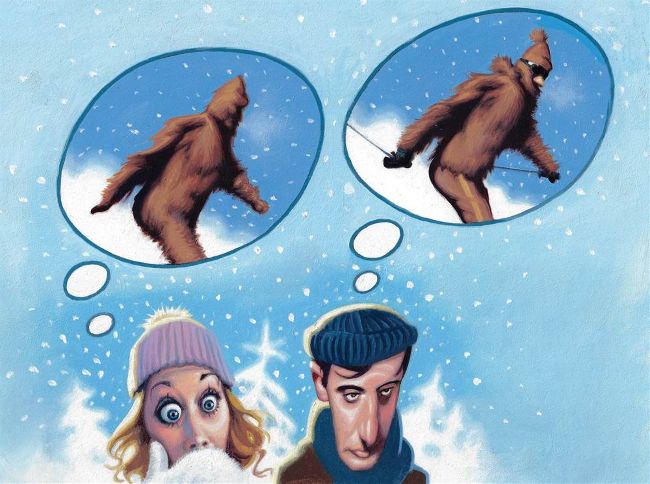
Illustration by James Bennett
Skeptics are well aware that there are issues with eyewitness testimony as evidence. These issues are popular topics of discussion at skeptical conferences and are the impetus for numerous skeptical articles. Human perception and memory are notoriously inaccurate, indeed malleable.
Preconceptions and cognitive biases shape both our immediate perceptions of events and how we later recall, interpret, and relate them.
The testimony issue goes beyond simple eyewitness accounts, i.e., the descriptions people give of things they visually saw. Testimony can include any description or characterization of something that a person draws from the memory of their perceptions. Something they heard, felt, smelled, read, viewed indirectly, or sensed in any way.
In discussing contentious topics, the interpretation of testimony can become highly emotional and swiftly evolve into an overly polarized argument that misses the nuance of the situation. I routinely encounter this type of reaction to my examination of testimony, in particular with UFO witnesses. At first I found this rather surprising. After all, I was just trying to be logical, follow the facts, and cover all the bases—one of which being the possibility of false witness testimony. But I was often met with an unexpectedly angry response.
This is something we need to avoid. Anger, of course, is rarely helpful in scientific communication. While skeptics find it logically correct to point out these problems, it’s not going to do anyone any good if all that happens is you make people angry. In fact, if you are perceived (as I often have been) of attacking, disrespecting, or denigrating a witness, then this can affect your credibility and destroy communication opportunities in other areas too.
Over the last couple of decades of encountering this problem, I’ve come across a few important concepts that have been helpful to keep in mind. Essentially, they are blind spots on the part of the supporters of the testimony, but if we don’t take them into account, they become our blind spots too.