Urbanisation and land-use practices in European regions
Authors: David Evers, Giancarlo Cotella, Mario Gregar
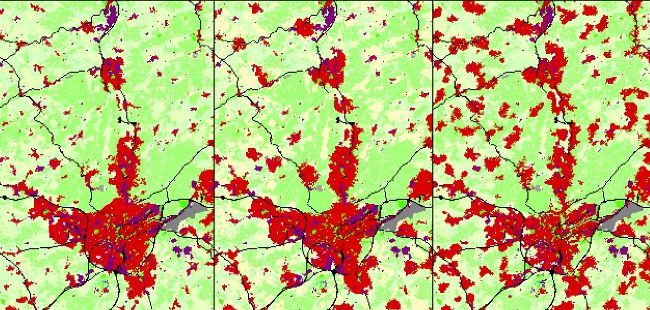
Improving urbanisation and land use practices in European regions is both necessary and possible. Although there is consensus that drivers such as demographic development (particularly in terms of households), economic growth and technology matter, it is also clear that institutional factors such as property rights, fiscal rules and other policies affect the profitability of land development. For example, territorial governance and spatial planning systems directly influence decision-making in this area. Land-use change is therefore not a natural phenomenon but socially constructed: it is the outcome of conscious decisions made by human beings. Given this, it is also something that can be affected by conscious human interventions. Policies and practices matter. The ESPON SUPER (Sustainable Urbanization and Land-use Practices in European Regions) project aims to inform decision-making on urbanisation and land use in Europe to more sustainable ends. To do this, the project has amassed a considerable body of knowledge on physical developments in the 2000–2018 period. It has also collected information on the relative success and sustainability of 232 interventions that affect, or are intended to affect, these developments. Particular attention was paid to the direct and indirect impacts of EU sectoral and territorial policies. In addition, 10 case studies were conducted on the way these interventions affect actual practices of land development. Finally, this evidence was synthesised into three scenarios for 2050 that explore the implications of pursuing three types of urbanisation. These scenarios are intended as a springboard for policy discussions on the desirability and sustainability of various urbanisation and land-use practices, as well as how to affect these practices.