EURO NCAP, ACTIVE SAFETY AND THE RELUCTANT FEW
New legislation, echoing the thinking of Euro NCAP, will soon make more active safety tech mandatory – but some brands don’t think that’s what buyers want. We’ve been investigating
George Hill george.hill@haymarket.com
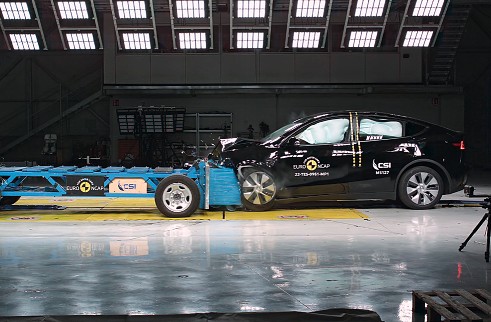
Crash tests are only part of what makes up Euro NCAP scores
IN RECENT YEARS, advanced driver assistance systems (ADAS) have come to play a greater role in tests performed by independent safety body Euro NCAP. While finding out how a given car protects its occupants in a crash continues to be at the core of the independent safety organisation’s work, the focus on systems that reduce the likelihood of such a situation occurring is sharpening.
While Euro NCAP incorporated automatic emergency braking (AEB) into its tests in 2014, further updates in 2020 and 2023 have broadened its scope to test a wider range of systems. AEB is now mandatory on new cars following the implementation in 2022 of the EU’s General Safety Regulation (GSR) legislation (which UK cars also comply with, for cost reasons), but certain other key ADAS systems aren’t yet a legal requirement, even though they play a large part in the overall safety rating that the organisation awards a car.
In a bid to keep the cost of smaller, more affordable cars down, some brands don’t include active safety features such as lanekeeping assistance (LKA) or driver attention monitoring, either as standard or, in certain cases, even as an optional extra.
As a result, those cars have achieved lower safety scores, including the Dacia Sandero (one of the cheapest new cars on sale), which was awarded just two stars out of five when it was assessed by Euro NCAP in 2021. It was denied a higher score partly because its AEB system is limited to recognising other vehicles, and not pedestrians or cyclists, and also because it’s not offered with lane-keeping assistance.