OLD HOUSE TO ECO HOUSE
Part 2 Upgrading the fabric
From addressing airtightness and insulation to maintaining adequate ventilation, Alan Tierney reveals the best eco updates you can make to the structure of a period property
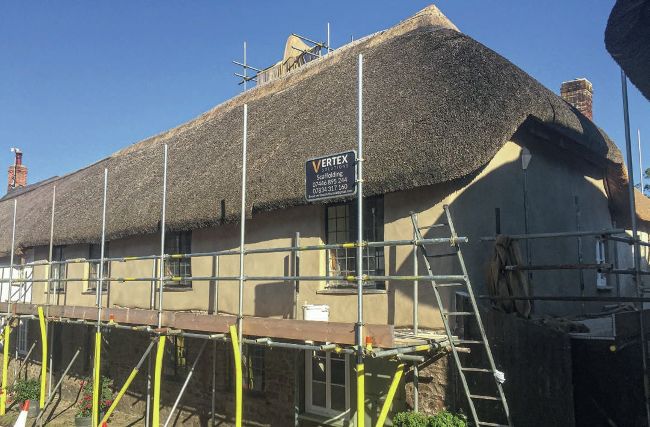
Alan is currently renovating his own house; a grade II* listed cottage in Devon

Alan closes up an air leakage point at the junction between wall and roof by packing it with cob, a traditional earthbased building material
In the first ar ticle of this series, I explained why it ’s essential to fix issues of poor maintenance and harmful past inter ventions in order to get an old building back to a dry, breathable condition. Unless this is done, any subsequent effor ts to make it warmer, more comfor table and energy ef ficient will be largely wasted. The next stage is to upgrade the fabric to minimise heat losses. This needs to come before considering energy ef ficiency technology for heat sources, control systems, lighting and more. So, this month I’ll look at how to take a fabric first approach will ma ximise the benefits of such tech, so I’ll be looking at renewables etc in the May edition.
Airtightness
It is ver y dif ficult to maintain a comfor table temperature in a draughty building, so this is the most impor tant area to address. It relates to air leakage in the external envelope but also to air movement around the building. A leaky house not only requires a lot of energy to get up to temperature but, because we are very sensitive to draughts, it actually needs to be heated to a higher temperature to be comfor table.