Designing with your build system in mind
Architect Julian Owen explores the design scope for the main structural options and explains how to utilise their strengths to optimise the scheme of your bespoke home
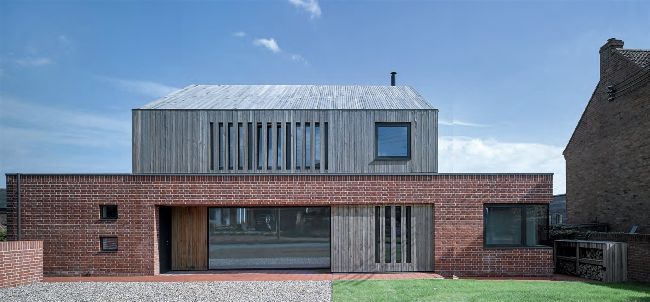
Above: Designed by Nash Baker Architects (www.
nashbaker.co.uk), this self build home has masonry walls on the ground floor and a lightweight timber upper storey. This minimises the depth of the first floor build up, conforming to planning restrictions on the height of the property without sacrificing headroom inside
NICK GUTTERIDGE
There are many different ways to create the structure of a house, each with their own impressive features. Suppliers, builders and architects all have a system they favour for different reasons. The construction industry has been weaning itself off a long-term addiction to masonry and embracing the increasingly popular alternatives.
Suppliers will almost always tell you that that any house design can be built with their method, and broadly speaking, this is true. Each of build system has strengths that favour different design features. The better your design suits your chosen structural method, the easier and cheaper it will be to construct. So, ideally, you should decide on this before submitting a planning application. This guide will cover the design advantages of the main structural options to help you choose the right one for you.
MASONRY
Much loved by builders (and insurers) throughout the UK, cavity wall masonry consists of a concrete block inner leaf, a cavity filled with insulation and bricks on the outside. Masonry construction is probably the most versatile and adaptable building system, since it’s made out of small individual units on site. Bricks are perfect for an authentically traditional style, particularly if you are into nooks and crannies or want to create intricate details, such as projecting windowsills, bay windows and corbel details under the eaves of the roof.