renovation & building
SMALL EXTENSION BIG IMPACT
With clever planning, even the most modest of additions can have transformative effects to improve your home’s design and layout. Lindsay Blair takes a look at how to get it right
When thinking about extending your home, it’s tempting to imagine large, sprawling additions that add generously to the footprint and give you ample room to play with. However, bigger is not always better. A carefully thought-out build that’s more modest – say 20m2 or less, if we’re to put a number on things – can drastically alter how your property looks, flows and the way it is used. “Small ground-floor alterations often create valuable additional space for home offices or informal living areas, for instance, significantly improving the home’s functionality,” says Robin Callister, creative director and senior architect at Urbanist Architecture.
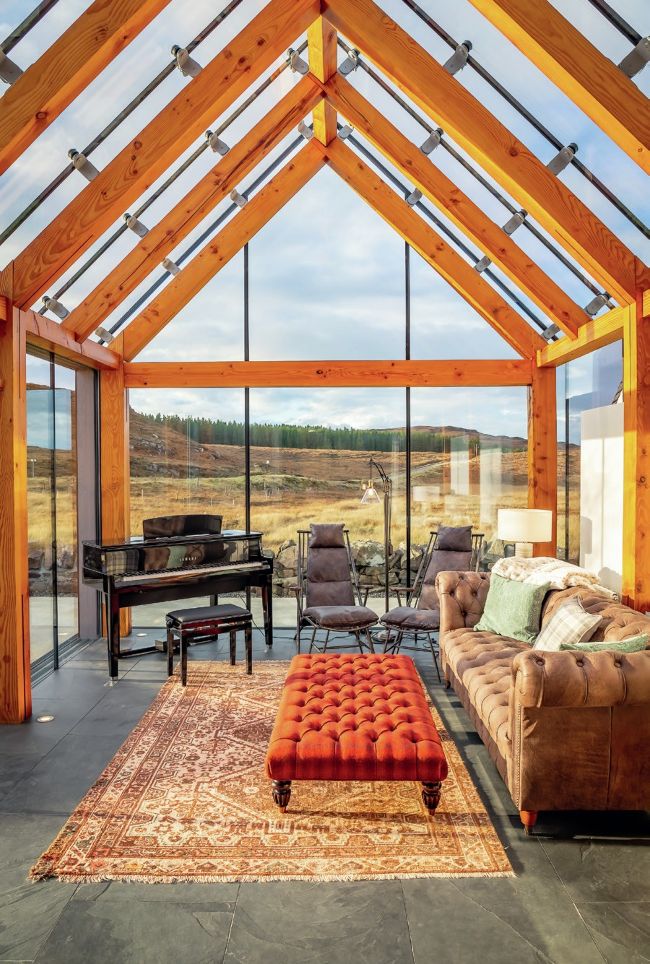
This 16m2 glass-and-timber extension provides architectural wow and practical space, as part of a complete renovation of three old school buildings into a family home. Blueprint Architecture designed the addition, which was realised using a glazed structure by Trombe and a kiln-dried Douglas fir frame by Carpenter Oak. The resulting living space takes advantage of incredible views over Loch Torridon
EOGHAN SMITH PHOTOGRAPHY
So, by making what might seem like minimal gains in terms of metreage, but really considering what the space is used for and how it connects to the existing layout, you could improve your living arrangements. And all without impeding too much on the garden or other rooms. There are planning bonuses, too. Many small additions can be simply achieved under permitted development (PD); but always check with your local authority, as this will depend on your property and location as well as the extent to which the house has previously been extended.
Unlocking potential
Sometimes large extensions negatively impact adjacent rooms, reducing natural light deeper into a floor plan or compromising views. A small build could be the solution to solving space and flow issues, while still achieving a feeling of openness and connection to the outdoors.
To assess what’s possible, consider how you currently use your home, and how you want to improve this. You should evaluate current and future lifestyle requirements, list activities you want to accommodate, and consider the flow between areas and how they interact. “I encourage clients to consider how they’ll use the spaces on both individual and family levels,” says Robin. “A personalised approach ensures that every square metre is utilised effectively, even when extension possibilities are limited.” Think outside the box to ensure practical solutions.