BROODY TYPES
Learn how to deal with these kinds of broody hens.
ARTICLE BY BRUCE INGRAM
PHOTOS BY BRUCE INGRAM /
ALEKSA MARC/
STOCK.ADOBE.COM
When my wife Elaine and I began raising heritage Rhode Island Reds, we soon learned that if a run includes a rooster and, say, a half dozen or so hens, one or more of them will become broody at some point during the spring or summer each year. Of course, so-called industrial or hybrid chooks will perhaps go broody but with not nearly as high a degree of probability.
So that you’ll have a better idea of what to expect when a hen decides to sit on a nest for the next 21 days, here are the broody types we have known and that you’re likely to encounter at some point.
THE “COME HELL OR HIGH WATER” BROODY
Because of one factor or another, our 4-year-old hen, Charlotte, has twice had to endure summers of being on the nest for more than 40 days each time — never slacking in her desire to raise chicks. The first time was apparently because the sperm of our then 4-year-old rooster, Friday, wasn’t quite up to previous standards. So we had to put her with a younger, more virile roo. The second time was because of Charlotte’s own misjudgment.
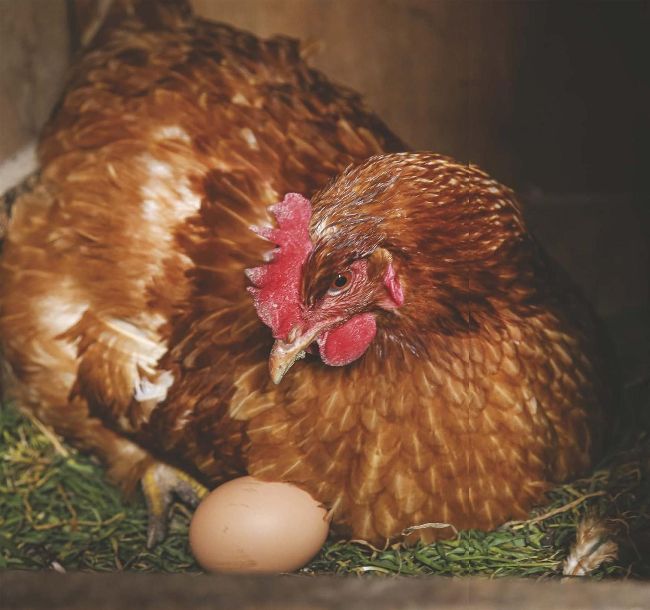
When I opened her coop one morning, I discovered that she had apparently spent the entire night keeping a sole egg outside the nest warm. Panic-stricken, I then lifted her off the stray egg and plopped the mother hen back into the nesting box. On day 22, Elaine candled the “main” eggs and found that, as we feared had happened, the eggs contained dead embryos.
Nevertheless, both summers Charlotte persisted, finally being able to rear the chicks she’s hard-wired to produce — come hell, high water or stray eggs.
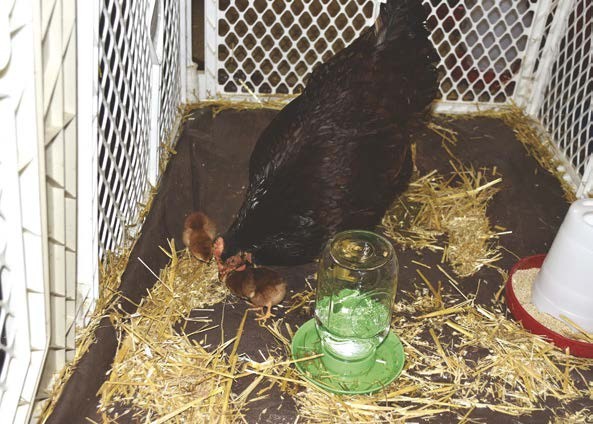
Mary tends to several of her young chicks.
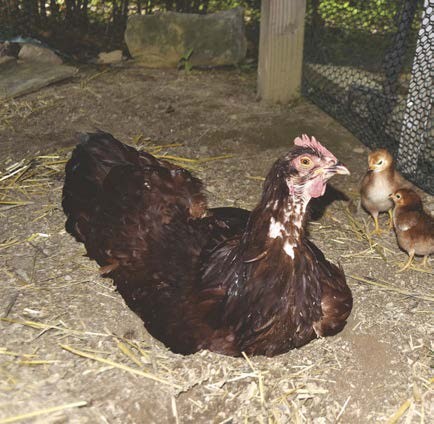
The stress of brooding can sometimes cause feather loss in a hen. Here, Mary shows her offspring the joys of dusting.