FIXING GAMES
Fatal error
The videogame industry is broken. How to fix it?
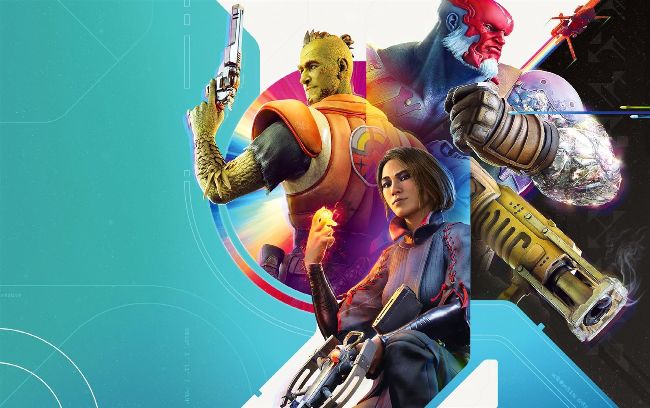
Having refunded every one of its sales, Concord might be the biggest flop not only in videogames but in entertainment history
Since 2020, we’ve been using this opening spot in each end-of-year issue to cast an eye over the preceding 12 months in videogames and attempt to pull together the year’s defining themes. Which, more often than not, have been some variant of ‘this isn’t normal’.
In 2020, a year we characterised as “terrible, yet undeniably transformative”, the focus was on how COVID-19 was impacting the way games were being made, and how, after a spate of cancelled events, they reached the public. The knock-on effects of that really began to be felt in 2021, with a sparse release schedule, particular at the upper end of the budgetary scale. Further souring things were the allegations regarding toxic work cultures and general misconduct at many studios, including Activision Blizzard – something that didn’t stay Microsoft’s hand, as it wrote a $68.7 billion cheque to acquire the company.
Still, at least money was flowing into videogames in record numbers, off the back of a pandemic-driven swell in player counts. And as the events trickled back too – minus E3, of course – we suggested with cautious optimism that 2022 might be a “transitional year”, tracking back towards something resembling normality. And then, of course, 2023 brought all the above factors home to roost, with a tidal wave of staff layoffs, studio closures and cancellations that has only grown more destructive this year.
And so, at the cusp of the decade’s latter half, it seemed like time for a change in tack. Simply recounting the many horrors that 2024 brought to videogames – the high-profile closures and cancellations, the estimated 14,600 layoffs, the resurgence of bad-faith campaigns against certain games and developers – would only reinforce what we all already know: things aren’t right. Instead of wallowing in misery, we went looking for hope, of a sort at least.
After all, we’re blessed with a contacts book of brilliant, experienced people working at the coalface of game development and publishing, many of whom seem to agree that the modern videogame industry is fundamentally flawed, perhaps even broken. So we approached some of them, and asked: how can it be fixed?
A huge question, of course, that no one person could hope to answer alone. To that end, we limited our contributors to a single suggestion apiece (a rule that, as you’ll soon see, some bent or broke) and tried to canvas as broad a range as possible, to give each person room to tackle something that’s at the front of their mind right now. Hopefully, by the decade’s end, we will no longer need to annually ask when things are going to return to normal. In the meantime, here are lots of ideas for a better way forward.
HARVEY SMITH

Former creative director, Arkane Austin
(Deus Ex, Dishonored, Redfall)
Lots of creative industries falter, but one thing they have in common across books, music, film, games et al is that a small per cent of works are giant hits, some break even, and the majority lose money. So I would want people looking at the entire model, asking why we are struggling? How could the ecosystem get restructured so there is a cushion for the people actually making the games and the companies funding them?
Developers are creatives who mostly just want to vibe together and make something they believe in. Some of them can just go do that without taking anyone else’s money. That is smart. Others build teams differently, for different types of games, and are always looking for funding. In cases where those teams can stay lean, go deep on a few cool things – key game mechanics, art style, etc – that also helps. In any case, for those deploying or looking for money, it has to get into the right hands in the right ways, without too many strings attached, so the developers can do their thing, innovating or just excelling inside a known space, either of which can result in something people love for decades.
SAM BARLOW

Game director, Half Mermaid
(Her Story, Telling Lies, Immortality)
I’ve always thought gaming should become culturally more universal and relevant. We’ve got to get out of this messed-up hardware cycle. We need to figure out a ubiquitous, cheap, universal gaming platform and make these things more readily available. But we kind of have that already in phones, right?
Mobile phones are stupidly expensive devices, but most people have access to one. And as a game-maker who thinks of games as being more novelistic and intimate as a medium, the phone is such a fantastic device. There was a brief moment in the early days of the App Store when everything seemed very cool and sexy, and there was that curation on the platform.
But now mobile gaming has raced to the bottom, essentially leading the charge for all of the games-as-a-service stuff that we’re seeing destroy the triple-A market. So if I could fix any one thing, it would be to walk back the free-to-play, games-as-service economy. We need to fix the way in which games are presented on mobile, fix the expectations around price, and re-engage people with the idea of having meaningful experiences on their phone. Maybe some harsh legislation will help, as they slowly crack down on the sort of gambling in plain sight that is a lot of mobile gaming.
I think mobile gaming is probably the purest concentration and culmination of all the issues of tech platforms disrupting entertainment, of their monetisation strategies. So maybe, if we go back to the heart of that and slay that beast, we can cure the rest of the industry.