COLLECTED WORKS KEN LEVINE
WC
From immersive-sim innovation, through undersea peril, and onto new beginnings back out in space
BY JEREMY PEEL
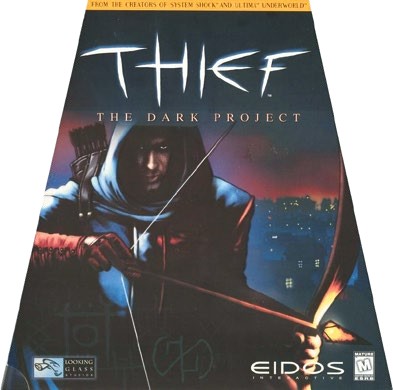
THIEF: THE DARK PROJECT Developer Looking Glass Studios Publisher Eidos Interactive Format PC Release 1998
SYSTEM SHOCK 2 Developer Irrational Games, Looking Glass Studios Publisher Electronic Arts Format PC Release 1999
THE LOST Developer Irrational Games Publisher Crave Entertainment Format PS2, Xbox Release Unreleased
FREEDOM FORCE Developer Irrational Games Publisher Crave Entertainment, Electronic Arts Format PC Release 2002
TRIBES: VENGEANCE Developer Irrational Games Publisher Sierra Entertainment Format PC Release 2004
SWAT 4 Developer Irrational Games Publisher Sierra Entertainment Format PC Release 2005
BIOSHOCK Developer/publisher 2K (2K Boston, 2K Australia) Format 360, PC, PS3 Release 2007
BIOSHOCK INFINITE Developer Irrational Games Publisher 2K Format 360, PC, PS3 Release 2013
JUDAS Developer/publisher Ghost Story Games Format PC, PS5, Xbox Series Release 2025
Ken Levine’s work is defined by a wariness of the human animal and its capacity for cruelty. Yet he sees himself as “deep down, a real optimist”. Were it not for a stubborn, self-deceptive streak of hope, he would have given up on Irrational Games a decade before making BioShock. “Maybe Irrational and Ghost Story are the one world where it worked,” he says of the studios he’s co-founded. “But I always had my eye on that world. And to some degree, you have to lie to yourself and kid yourself.”
By the time Levine joined the videogame industry, he had already lived the highs and lows of a career screenwriter. “I was getting flown out to Hollywood when I was 19 years old from college, and I was like, ‘OK, I’ve nailed it, I’ve made it’,” he says. “And then it didn’t work. I had to go through a period of my 20s where I was recovering from failure and picking myself back up again. But the fact that I had been through that prepared me for the games industry, in that I expected to fail a lot, and maybe fail completely.”
He remains amazed that the studio behind Ultima Underworld and System Shock hired him for his first job in games. “Because one could have thought, given the age of the industry, that I was washed up,” he says. “At 29, I was older than most people at Looking Glass.”
When Levine left Looking Glass Studios to found Irrational Games with colleagues Jon Chey and Rob Fermier, failure met them immediately. “We lost our first project, right at the beginning,” Levine says. “I had not shipped a title, Thief wasn’t out yet, I had no money.”
Levine found himself flying out to California to pitch a “weird strategy game”, with little but a barely functional demo to show and an interior voice telling him he was screwed. “But then I said to myself, ‘OK, what if I just keep going, and assume in my head it’s gonna work? Most people would quit at this point, because most people are rational. But what if I don’t quit? What if I just suck up the pain and keep going, and continue being embarrassed in these meetings?’”
You can see parallels between Thief’s noir atmosphere and the tone of BioShock Infinite’s DLC, Burial At Sea
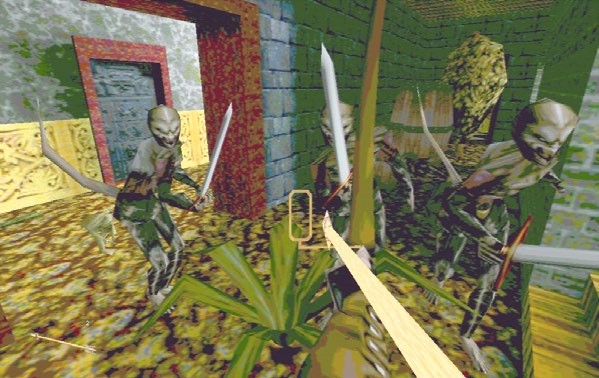
Looking Glass took the worldbuilding Levine started and further fleshed out the distinctively eerie world of Thief
“THE HEAD OF LOOKING GLASS JUST SAID, ‘WHAT IF IT WA S A GAME ABOUT A THIEF?’”
The company did indeed keep going, until eventually a call came from Looking Glass: Irrational would make System Shock 2. “And to the team’s credit,” Levine says, “we really put our heart and soul into demonstrating that we were worth something.”
THIEF: THE DARK PROJECT
Developer Looking Glass Studios Publisher Eidos Interactive Format PC Release 1998
On Thief, I had this great lesson, coming up with six or seven different ideas for what that game could be – writing ten-page documents and getting concept art made for these totally disparate games. One was called Better Red Than Undead, one was called Dark Elves Must Die; Split Knuckle was a kung-fu game. We had all these crazy ideas. It was an amazing time, and Looking Glass was an amazing place, but I also got that immediate lesson of: ‘Your ideas are gonna get thrown out a lot. You’re gonna have to invest a lot of time and energy in things which are going to go nowhere’.
My mentor was Doug Church, one of the key guys behind Ultima Underworld and System Shock, probably the father of the immersive sim space. When he knocked my ideas back, I respected him enough that I assumed he had a good reason, and I think he did. Eventually, the idea came from the head of Looking Glass, Paul Neurath, who just said, “What if it was a game about a thief ?” It lined up with a lot of what we were doing in terms of the awareness cycle of enemies. The traditional thing at that time was that your enemies would either see you or not see you – there was none of this ‘if’ system. And that was quite innovative. That was the idea that stayed.