SECOND WIND
ALMOST 30 YEARS AFTER THE ORIGINAL CAUSED WINDY HAVOC AT THE BOX OFFICE, TWISTERS IS WHISKING US BACK TO TORNADO SEASON. PREPARE FOR A THOROUGHLY MODERN DISASTER MOVIE
WORDS TOM ELLEN
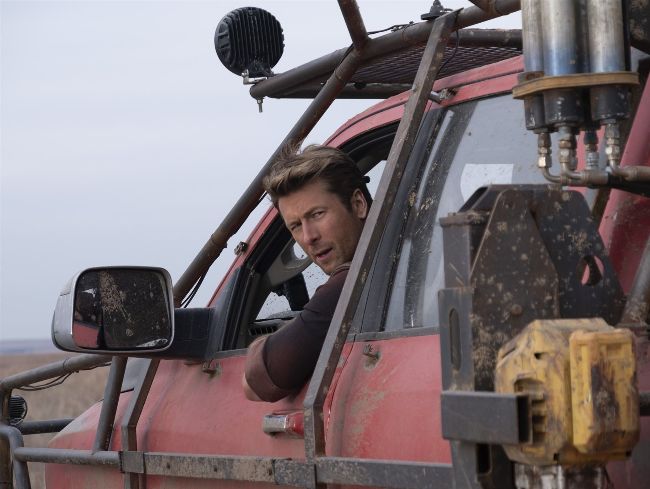
Tornado Wranger Tyler Owens (Glen Powell) — he doesn’t need PhDs and fancy tech.
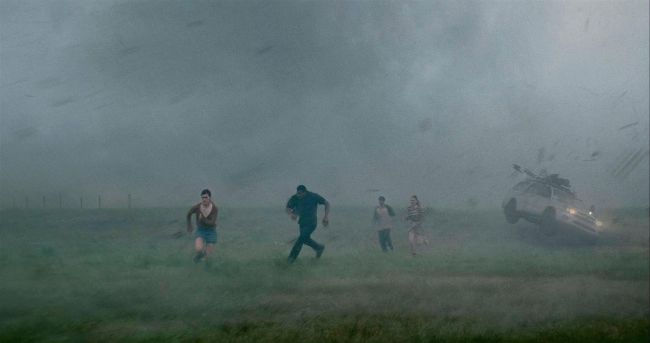
Watch out for flying cows
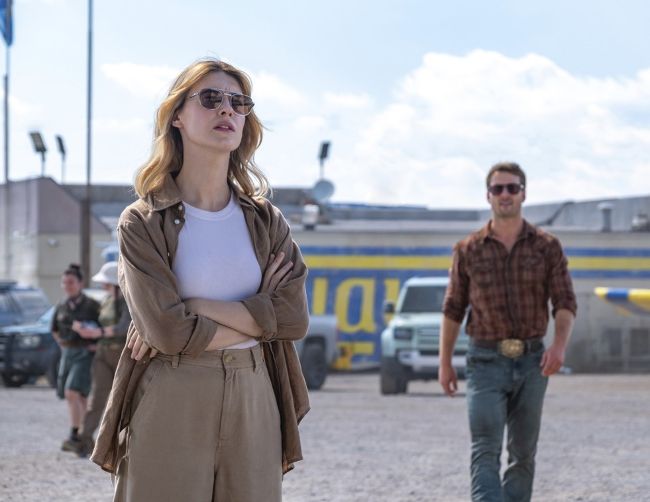
Super-smart storm chaser Kate Cooper (Daisy Edgar-Jones) with her “cowboy scientist” sidekick.
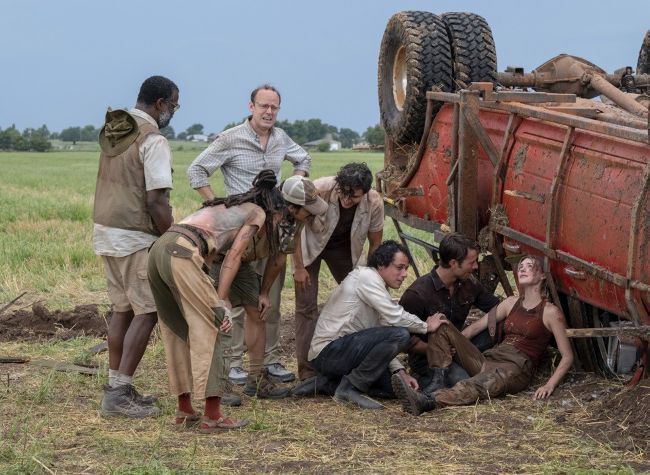
Wind 1 — humans 0.
STORM-CHASERS CALL it ‘skipping’ — the phenomenon where a tornado will seem to disappear, only to touch back down, often with renewed vigour.
A ‘skip’ typically lasts minutes, even seconds. To hear of one lasting nearly three decades is — it’s safe to say — unprecedented. And yet, 28 years after Jan de Bont’s disaster movie Twister ran riot at the box office — and inspired a whole generation of death-defying meteorologists in the process — a sequel is landing. Sort of.
“Ours is a standalone film,” clarifies Twisters director Lee Isaac Chung, from the LA edit suite where he’s putting finishing touches to his gale-force actioner. “There are no returning characters, but we’re also not a remake,” he grins. “This is a very different plot from the first one. Certain things are carried over, though — some of the technology, and just that feeling of power and grandeur. The sense you are beholding something so much bigger than yourself.”
The original Twister was, much like its subject matter, a force of nature. Starring Helen Hunt and Bill Paxton as married storm-chasers (fearless weather scientists who drive directly into tornados in order to study them), the movie was powered by blockbuster-cinema royalty — director de Bont (coming straight off Speed), plus writer Michael Crichton and executive producer Steven Spielberg (both coming straight off Jurassic Park). Audiences lapped up the groundbreaking (in both senses) special effects, and marvelled at the airborne trucks and livestock (“Cow!” hisses Hunt at one point, as a fully grown Friesian swoops over her car). The movie spawned a Universal Studios theme park ride and earned almost $500 million in ticket sales, becoming 1996’s second-highest-grossing film behind Independence Day.
“I didn’t even know [storm-chasing] existed before I saw Twister,” laughs Chung. “It’s a uniquely brilliant film.” So uniquely brilliant, that the director was not interested in making a beat-for-beat pastiche. Instead, his sort-ofsequel layers in decidedly 21st century concerns (social media, climate change), while retaining the original’s wind-battered location shooting and gung-ho approach to effects. “This is an elemental story, so I wanted us to go as practical as possible,” Chung tells Empire. “We really tore things up. We had jet engines blowing. We had fans so massive you’d lose your hearing without earplugs. We were pelting our cast with everything — dirt, wind, ice.”