HOW THEY EVOLVE
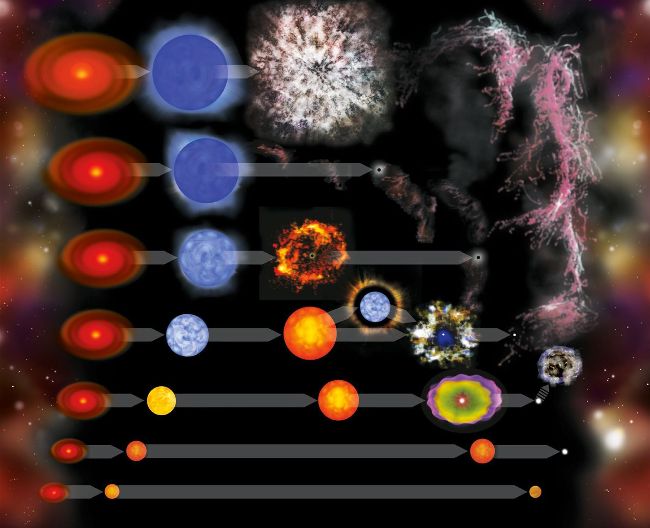
The rate at which a star progresses through its life cycle depends on its mass
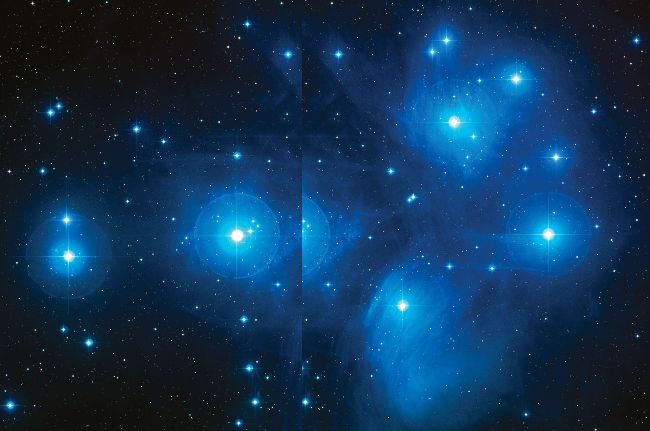
The brightest stars in the Pleiades cluster are very young blue stars
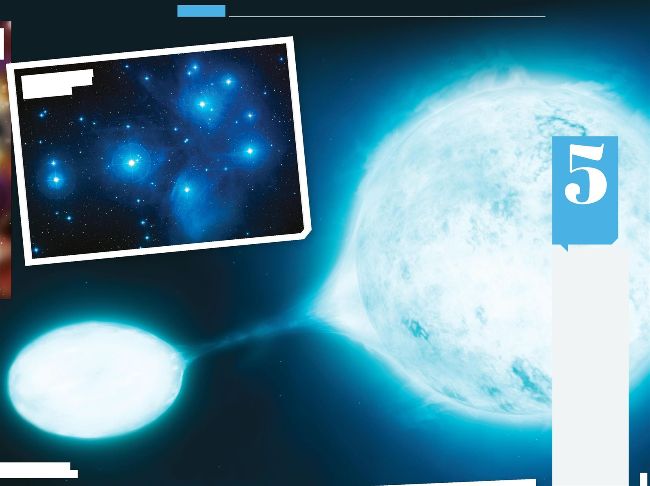
Very large blue stars may suck material from binary companions
©NASA / Getty / EuropeanSouthernObservatory / ChandraHarvard
All stars go through life cycles, changing their appearance and behaviour on a timescale much too slow for us to observe directly. Most of the stars we see are in the ‘main sequence’ phase of their evolution, in which they convert hydrogen into helium through nuclear fusion. The amount of time they spend in this phase – and what happens afterwards – depends on the star’s mass. The highest mass stars, greater than three times the Sun’s mass, appear blue in colour when they’re on the main sequence. They get through all their hydrogen fuel more quickly than lower mass stars.