PAL'S PUPPET ANCESTORS
Mike Hankin looks back on the Puppetoons, a unique series of animated films created by George Pal using a type of stop-motion animation that was all his own...
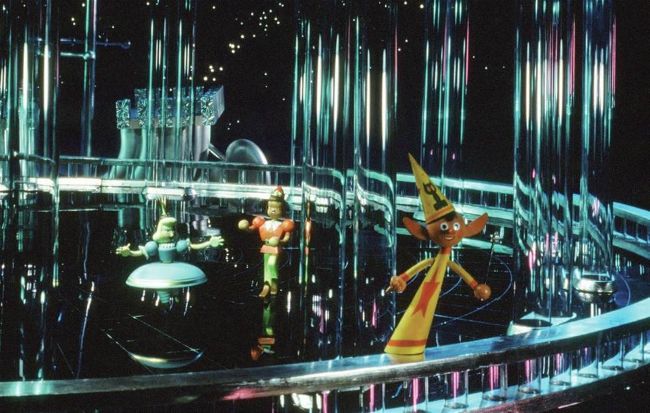
The Sky Princess (1942), a retelling of the Sleeping Beauty story
Manyvolumes have been written about the rise of the creative genius Walt Disney from his humble beginnings to a name that is known globally. Yet the early beginnings of a contemporary of Disney’s, someone who also made his mark in the world of fantasy cinema, has been virtually ignored, despite his films also being universally respected in their particular field. I am talking about George Pal, better known these days for his science-fiction classics Destination Moon (1950), War of the Worlds (1953) and The Time Machine (1960).
Hungarian-born Pal first made his name in Europe in the very different world of advertising, an area where his innovations were unrivalled, creating mini stories using traditional drawn animation as well as a unique puppet system that managed to subtly sell the product, yet still entertain the audience. Today it may not sound like anything unusual, but in the 1930s it was truly ground-breaking.
Filmmaking was not Pal’s first choice of career, graduating from university with a degree in architecture and furniture design, he found work scarce in his chosen profession. Eventually he fell back on another skill, the art of drawing, finding a position at the Hunnia Studios in Budapest. There he would learn the fundamentals of filmmaking, although their way of creating animated advertising films was very basic, moving cut-out images beneath a single-frame camera.
Pal was taught the intricacies of cel animation by fellow Hungarian George Feld, who had joined the studio after a spell working in America. The opportunity to create embellished intertitles and also design a few movie posters constantly added to Pal’s overall skills.
For a short period, Pal joined a few of his Hunnia colleagues setting up their own studio, but his life was soon to change when he met his future wife Elizabeth Grandjean (known better as Zsóka) at a dance. Her dearest wish was to leave Hungary, which led Pal to move to the German capital of Berlin, where he eventually landed a position with the giant Ufa film studio. Despite being able to speak only a few German words, within months he was placed in charge of their advertising unit, over many vastly experienced filmmakers such as Hans Fischerköesen and Wolfgang Kaskeline. Pal’s ambition finally led him to leave Ufa to set up his own business, where he made his first model animation film, creating marching cigarettes in a film called Midnight (1932).
This first excursion into model animation came through a happy accident, when Pal got a commission from a cigarette company. He couldn’t face the tedium of drawing hundreds of cigarettes, so sold his client on the use of real ones. The advert proved an enormous success and resulted in several more, firmly putting Pal’s company on the map.
VIOLENCE IN THE STREETS
Unfortunately, the growing fortunes of the company were about to be curtailed, when fate took a hand. Adolf Hitler’s rise to power brought many changes in Germany, including open hostility to the presence of foreign nationals. With Pal completely committed to his studio, it was Zsóka who saw the warning signs with marches and violence in the streets. Pal and Zsóka fled their successful business, having to leave virtually everything behind. Yet, with the help of fellow Hungarian Desider Gross. Pal set up a small operation producing cartoon animation films in Prague, before moving on to Paris.