MOJO PRESENTS
Approaching the last shows of his final tour, the 81-year-old MULATU ASTATKE could be forgiven for planning to put his feet up. But for the esteemed inventor of Ethio-jazz, the habit of innovation dies hard. “My greatest achievement is still coming up,” he tells DAVID HUTCHEON.
‘‘LE T’S TALK ABOUT AFRICAN MUSIC,” MULATU ASTATKE fixes MOJO with a glare. “Nothing else. The African contribution to the world, that’s what we are going to talk about.”
It’s early on a September morning in a Dutch hotel room, and the don of Ethiopian jazz is in a feisty mood. The composer, multi-instrumentalist and vibraphone master is preparing for what is billed as his final tour, opening in Amsterdam and, in mid-November, reaching London, the city where he experienced a musical epiphany 60-plus years ago. Now 81, he retains the steely resilience and determination that saw him break new ground throughout the 1960s and 1970s and protected him when the government in Addis Ababa brought the curtain down on a golden period for music in the Horn of Africa.
Away from home, Astatke was underappreciated until, in the late ’90s and early 2000s, Buda Musique’s 30-strong Éthiopiques series of compilations made him the breakout star of an explosion of interest in Ethiopian music. Since then, he has become an eager collaborator with European jazzers such as The Heliocentrics and Shabaka Hutchings, but he remains fiercely protective of ‘Ethio-jazz’, the groovy, hypnotic genre he pioneered, curates and, as he will tell us, invented.
“Music is Africa’s cultural contribution to the world,” he tells us, sternly, “but we have never been given credit.”
Alexis Maryon

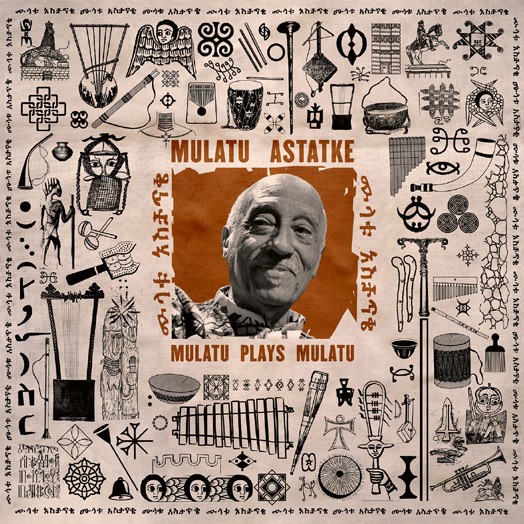
Out of Africa: Father of Ethio-jazz, Mulatu Astatke, in reflective mood, RAK Studios, London, October 2024; (above, inset) new album
Mulatu Plays Mulatu
.
Photography by ALEXIS MARYON
ASTATKE WAS BORN IN DECEMBER 1943, IN THE COFFEE-PRODUCING REGION OF JIMMA, 350km southwest of Addis Ababa, during the period of British administration that followed Italian colonial rule. Amid that instability, Ethiopia’s emperor, Haile Selassie, strengthened his hand by investing in the military and police. The side-effect was the creation of numerous marching bands, allowing the first of several generations of musicians to find their feet. Astatke, however, could hardly have been more removed from this musical boom, his parents having sent him to Wales in the 1950s to finish high school and, hopefully, learn engineering.