KEEPING TURTLES
How to keep turtles properly
In the past, pond sliders in the guise of the related yellow-bellied and red-eared (Trachemys scripta) were commonly kept, but other more suitable species are now available. Always check the likely adult size of any turtle that appeals to you, before acquiring it as this is a very important consideration.
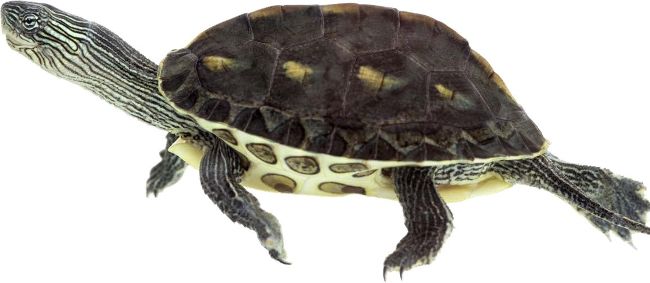
A Chinese striped-necked turtle.
Photo courtesy Eric Isselee/
www.shutterstock.com
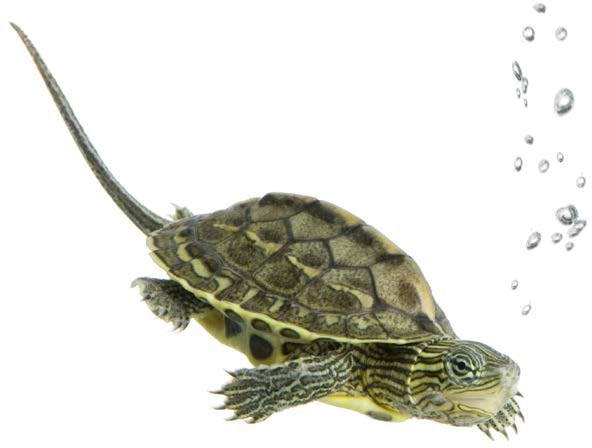
Turtles have a potentially long lifespan.
Photo courtesy Eric Isselee/www.
shutterstock.com The major drawback with the slider turtles was the fact that a cute hatchling little bigger than a large coin could ultimately end up at the size of a dinner plate, making housing them indoors rather a challenging task. The range of species that are available today, however, are generally much more manageable in terms of their adult size, and have great personalities as well, potentially becoming very tame.
It is important to bear in mind, however, that just like tortoises, turtles are potentially long-lived pets, with life expectancies of at least 25-30 years. They therefore represent a significant commitment.
Yet looking after turtles and ensuring they remain healthy is nowadays easier than ever, thanks to advances in technology. It is definitely worth planning ahead, so start by obtaining a large set-up (at least 90cm (3ft) long) that will be able to accommodate your turtle once it is full-size. Although more costly at the outset, this will be cheaper in the long run, as well as obviously providing your pet with more space from an early age.
There are special turtle set-ups on the market now, but unfortunately, these tend only to be designed for young individuals rather than adults, in terms of their size. You also need to check that there is enough space for a suitable land area, where the turtle can leave the water and bask.
One or two?
Young turtles do look very cute together, and there is perhaps an instinctive tendency to think about acquiring two together. Bear in mind, however, that turtles are solitary creatures in the wild, and do not normally associate together. Problems are most likely to arise once they start to attain sexual maturity, as a male intend on breeding is likely to harry a female relentlessly, within the confines of a tank. It is therefore better to house turtles individually.