THE FACE OF COMPUTING
Drew turney discovers how digital user interfaces in fiction come together
Drew turney
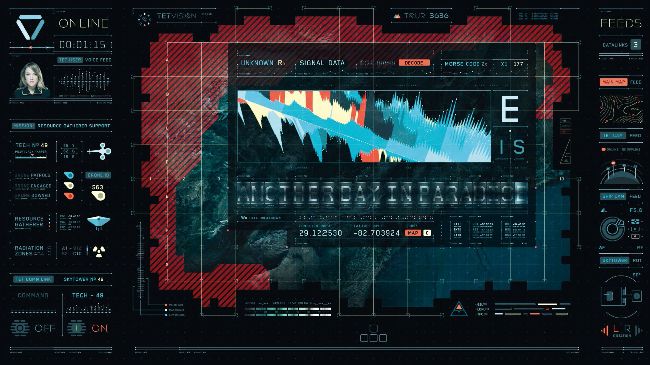
Bradley G Munkowitz helped develop the visual look of the data displays in Oblivion
Two characters in a scifimovie are arguing in hushed tones over a computer screen depicting data about the invading alien force, the fleet of next-gen fighter planes in the air or the insertion of a new sequence into a DNA strand to create a super soldier.
“Right there,” the gruff commanding officer says, pointing animatedly at the screen. “No,” says the devil-may-care hero who plays by his own rules, pointing elsewhere, “over here we’ll extract more of the reverse quantum polarity quotient.”
We cut to a close-up of the sleek, flat, silver-backed computer monitor they’re arguing over and see… a blank screen.
“WE THINK OF HUMAN PSYCHOLOGY AND WHAT MAKES SENSE IN TERMS OF VISUAL HIERARCHY”
Alan Torres, Netflix (Emerging Creation)
Without user interface (UI) designers - the people who work in a specialised subset of the VFX field - that’s how it would look when the good guys figure out the time travel/weapons recalibration/ cross-species splicing that solves the narrative problem.
UIs for the screen are an unsung art. Historically they were done using animation or the visuals native to actual computers by special effects people or editors (Steven Spielberg was never terribly interested in title sequences, usually leaving them to his longtime editor Michael Kahn).
In the CGI era they’re usually animated by the same VFX vendors that construct the scenes of Thanos’s attack on the Avengers HQ, Godzilla laying waste to a city or the realistic animal characters and backdrops of The Lion King.
If you can see yourself designing the heads-up display in a futuristic warplane or the live schematics for an epic battle, there’s certainly plenty of work around. But how do you forge a path?
MASTER OF THE CRAFT
As mentioned, UI design tends to be a subset of the larger offering from the world’s VFX vendors. But if you’re not interested in superheroes destroying cities or dinosaurs fighting, don’t despair. It’s entirely possible to make a name as a UI specialist.
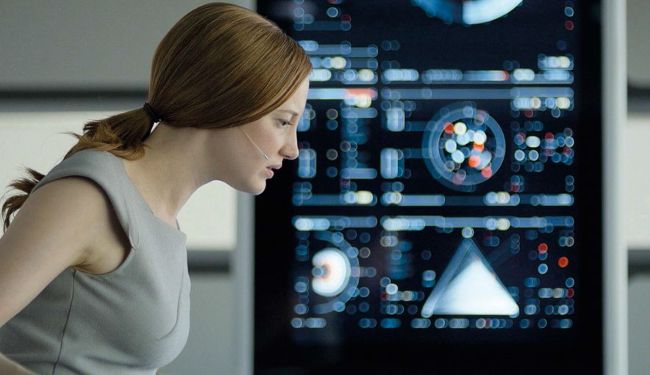
Andrea Riseborough as Victoria in Oblivion (2013), with a wall panel data display designed by Bradley G Munkowitz (GMUNK)
“Most previous clients and frankly even new ones come to us specifically because that’s what they know we do,” says Steve Lawes, creative director and co-owner of VFX provider Cantina Creative. Cantina has a great reputation after working on Avengers: Infinity War and Endgame, Hotel Artemis, Captain Marvel, Blade Runner 2049 and countless other hits, but they have also carved out a name for great UI design.
Bradley G Munkowitz is a filmmaker and photographer as well as a UI designer working under the name GMUNK, and since his well-received contribution to director Joseph Kosinski’s Oblivion (2013), he’s carved out a unique niche. He previously worked with Kosinski on 2010’s Tron: Legacy and has just completed work on the director’s sequel to 1986’s Top Gun, Top Gun: Maverick.