INDUSTRY INSIGHT Procedural Cities series #1
Challenges in procedural architecture
Matthias Buehler, founder of 3D urban environment specialists vrbn solutions, delivers his expert advice on managing procedural modelling projects
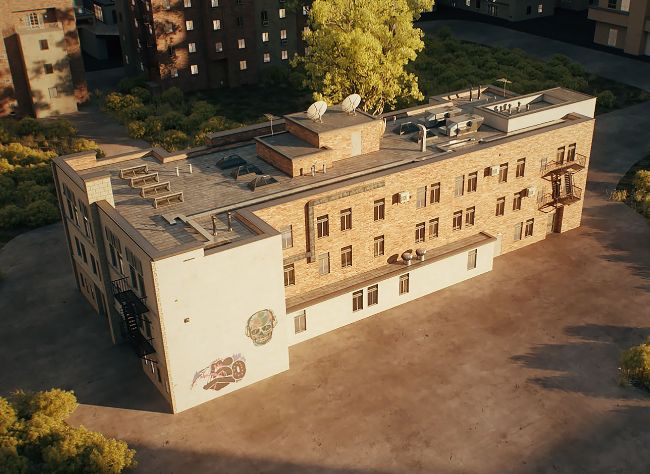
Residential LA building, ready for use in virtual production
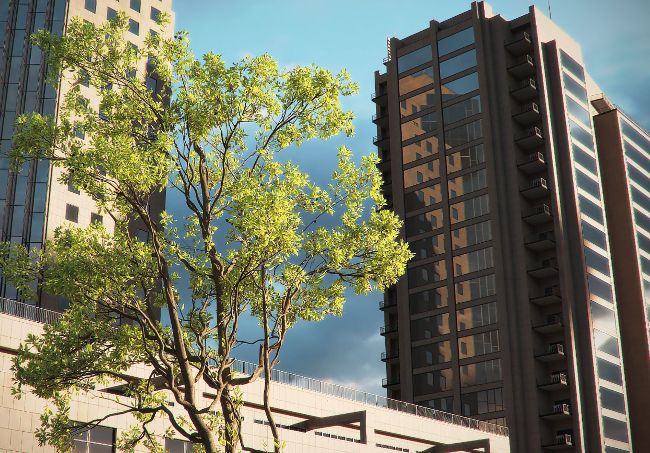
vrbn solutions skyscrapers (rendered using Redshift 3D)
APPROACH AT VRBN SOLUTIONS
I’d say our internal approach to content creation is a bit unorthodox, but designed so very deliberately. We’re focusing on artistic control and architectural consistency. Therefore, internally, we’re not focusing on just one specific procedural workflow but rather multiple, with many supporting processes in the entire pipeline.
We can utilise all the little nuts and bolts to find a suitable solution for working with clients. We will continue to solely focus on the production of 3D architecture (no games or VFX work per se) and refine our toolsets further, so particularly smaller studios don’t have to invest in an expensive pipeline.
T
his is the first article focusing on ‘procedural cities’, in which we will dive into some of the general challenges of managing the creation of procedural architecture. There are multiple tools for the task out there, such as SideFX Houdini and ArcGIS CityEngine, though the artistic and managerial challenges are the same in every tool.
Creating a gazillion 3D buildings procedurally is quite easy – creating good buildings procedurally is difficult. Good in the sense of variety of types, consistent architecture, and optimised data (e.g. ‘levels of detail’ or ‘draw call optimisation’ for realtime use). With everything challenging, good management is key. Which is why, in this month’s article, we’re focusing on the often overlooked strategic aspects of planning procedural systems. Let’s dive in!