The expert guide to cooking with game
It has a reputation for being hard to prepare and difficult to get right, but most game is actually simple to cook, even if you’re new to it. It’s a seasonal food linked to hunting, a pastime of the wealthy, so game dishes were traditionally elaborate affairs, but they needn’t be. Here are some simple recipes ideal for cooking at home, and a couple of more challenging ones that I’ve adapted to make more practical for the home kitchen.
PHOTOGRAPHS MAJA SMEND FOOD STYLING REBECCA WOOLLARD STYLING OLIVIA WARDLE JACOB KENEDY
MEET THE CHEF
Jacob started his cheffing career in the kitchens of Moro in London during his university holidays. Next he did a stint at San Francisco’s famous Boulevard restaurant, before returning to London and helping chef Oliver Rowe open Konstam restaurant in King’s Cross. He struck out on his own in 2008, opening Bocca di Lupo in Soho with his partner Victor Hugo. The restaurant, which serves regional cuisine from across Italy, flourished and two years later the pair opened Italian-style gelateria Gelupo just across the street. Their latest venture, Vico, champions the food of southern Italy. Jacob is the author of two cookbooks,
The Geometry of Pasta (£16.99; Boxtree) and Bocca (£30; Bloomsbury).
WINE PICKS
By Susy Atkins, drinks editor
Red wines make by far the best partners for all these dishes. And classic European reds win out – New World reds tend to taste too brightly fruity. The slightly savoury, peppery notes in a Rhône red such as chateauneuf du pape are spot on with game pie and venison ragù, while Bordeaux’s firmly structured clarets from the Médoc are another good option here. If you prefer a lighter, fresher tasting red, turn to Tuscany’s sangiovese red grape (as in Chianti) – cherryish, medium-bodied and especially good with roast pheasant and wild duck.
FIND MORE IDEAS ON THE delicious. WEBSITE
For more game recipes visit deliciousmagazine. co.uk/game
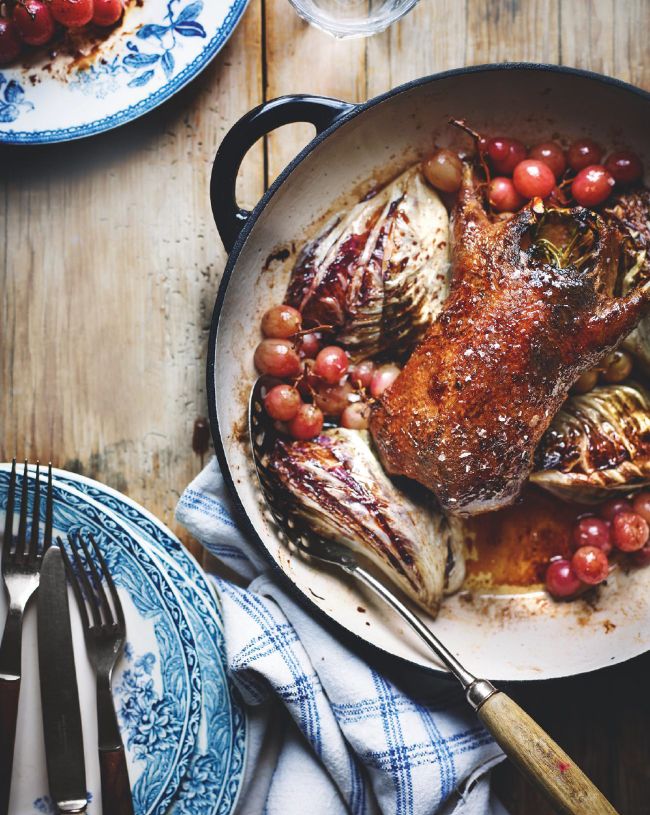
Wild duck with grapes and radicchio, p66
Wild duck with grapes and radicchio
SERVES 2. HANDS-ON TIME 30 MIN, OVEN TIME 20 MIN
" Several kinds of wild duck are hunted in the UK – mallard, teal and wigeon among others. Mallard are the most common; most butchers and many good supermarkets stock them in season. They have a rich, gamey flavour, which most people who like farmed duck will enjoy. In my opinion, all wild duck should be served medium-rare. Cook them any more and they start to take on a livery flavour and dry texture. Served pink they are sublime."
JACOB’S TIPS
You can use pretty much any aromatics to stuff the cavity of the birds – I prefer what I term mountain herbs (thyme, bay, sage, rosemary, oregano), and perhaps a little citrus and spice. It’s a great opportunity to experiment.
• 1 mallard, about 600g, oven-ready (plucked, gizzard and head removed)
• 1 fresh rosemary sprig
• 1 fresh thyme sprig
• 2 strips orange zest
• ¼ cinnamon stick
• 50g butter
• 1 radicchio
• 1 tbsp olive oil
• Small bunch red grapes on the stem, about 200g
• 1 large tbsp good balsamic vinegar
1 Prepare the mallard. Check there are no feathery stubs still attached to the skin and pick out those that you can find (a pair of cooks’ tweezers will help). Season the cavity well with salt and pepper, then stuff with the herbs, orange zest, cinnamon stick and half the butter. Set aside.