Arthur J. Cramp: The Quackbuster Who Professionalized American Medicine
How a pioneering physician at the American Medical Association fought medical fraud on a national scale in the early twentieth century.
ROBERT BLASKIEWICZ AND MIKE JARSULIC
In the first decade of the twentieth century, an enterprising man in Grand Rapids, Michigan, named A.W. Van Bysterveld claimed that he could “locate the cause of your aches and pains” free via the mail, if only you would send him a vial of your urine. Bysterveld was a self-proclaimed “Expert Inspector of Urine” and claimed that he used a “secret process handed down generation after generation, and most carefully guarded by the old families of Europe.” Van Bysterveld assured prospective clients that though his “secret methods are not taught in schools,” he “examines on an average of 25,000 bottles of urine a year. This alone stamps him as an authority of exceptional qualifications” (Cramp 1911a, 56).
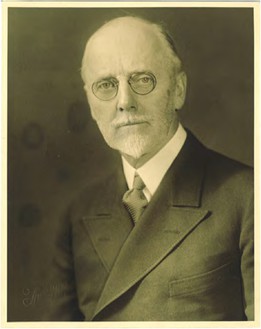
Arthur J. Cramp, MD (photo courtesy of the American Medical Association).
Between March and November 1910, the American Medical Association’s (AMA) Propaganda for Reform Department, led by Dr. Arthur J. Cramp, investigated Van Bysterveld’s claims. A sample (containing tap water, pepsin, aniline dye, and ammonia) prepared by the chemists at the AMA was sent to the Van Bysterveld Medicine Company. The diagnosis came back: “Careful examination of the urine shows there is too much acid in the blood, which will cause a rheumatic condition, the back is weak, and you will have a tired nervous feeling most of the time” (Cramp 1911a, 56). Meanwhile, correspondents working with Cramp in Iowa and Michigan contacted Van Bysterveld’s company and sent in samples that were identical to the first vial from the AMA. This time, the mixture in one case indicated poor blood, a malfunctioning liver, gas, nervousness, and heart problems; in the other case, it indicated weakened kidneys, a “catarrhal condition [inflammation of mucosal membranes] of the stomach and bowels,” and nervousness (Cramp 1911a, 56–57).
Lastly, two more samples were sent in from different addresses in Chicago. This time, both vials were filled with 95 percent tap water with 5 percent glucose. This would indicate that the patient was not merely diabetic but was urinating a substance with more than twice the sugar content of a Red Bull. Again, the diagnoses came back as either liver disease or a catarrhal digestive track. Cramp’s conclusion was unequivocal: “The whole things shows conclusively that the ‘examination’ of the urine is a farce, the diagnosis is a fake, and taking the money from victims for the ‘treatment’ of a purely imaginary disease is a fraud and a swindle” (Cramp 1911a, 57). Cramp further condemned those who profited from this mail-order pseudomedical company: “Those publications which accept the advertisements of this concern are, wittingly or unwittingly, participating in the profits of scoundralism” (Cramp 1911a, 57).
Arthur J. Cramp, MD, played an outsized but oddly unacknowledged role in the professionalization of American medicine. American medicine after the Civil War was still unorganized and largely unregulated. Practitioners needed little formal education and no single commonsense, science-based standard of evidence for treatments applied. As a result, numerous competing schools of thought and private interests fought for the attention of the American con sumer, who was barraged with advertisements for nostrums and cures on nearly every page of every popular periodical. The American Medical Association, founded in 1847, had always looked down on secret proprietary treatments, and it saw as an important part of its mission the suppression of quack medicine. For instance, Eric W. Boyle notes that the AMA reserved the right to refuse admittance of journals that advertised proprietary medicines into the Association of Medical Journal Editors, a group that had been established by the AMA to raise the standards of medical publications. Nonetheless, the revenue generated by advertising questionable remedies was so substantial that even the Journal of the American Medical Association (JAMA) failed to uphold its own standards until the turn of the twentieth century (Boyle 2013, 12–3). Dr. Cramp contributed to the professionalization of American medicine by identifying and exposing quackery; subjecting claimed remedies to scientific analysis; assisting government, public, and professional policing efforts directed at controlling health fraud; and pursuing an aggressive thirty-five–year public education program.
Arthur J. Cramp, MD, played an outsized but oddly unacknowledged role in the professionalization of American medicine.