Está viendo la página Spain versión del sitio.
Le gustaría cambiar a su sitio local?
Última edición


Free Sample Issue
Pruebe una muestra GRATIS de Classic Military Vehicle
Pruebe una muestra GRATIS de

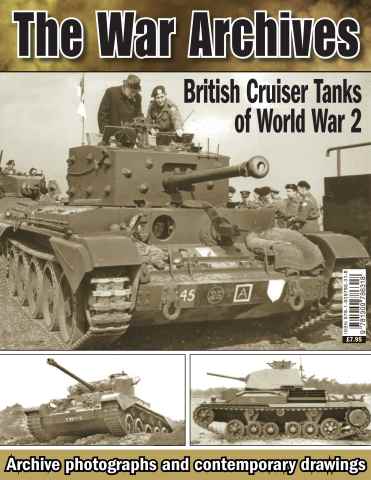
Classic Military Vehicle Magazine The War Archives: British Cruiser Tanks of World War 2 Edición especial

English
36 Reseñas   •  English   •   Aviation & Transport (Automotive)
Only €7,99
Developed according to a specifi cation drawn up
by Lieutenant-Colonel E D Swinton, and
designed by William Tritton, the tank was the
brainchild of Winston Churchill, then First Lord of the
Admiralty. Churchill hoped that his massive, armoured
‘landships’ would be able to break the stalemate that
was the inevitable result of the opposing armies
becoming entrenched on the Western Front.
The name, ‘tank’, was derived from the cover story
that the machines, which were initially built by
William Foster & Company and the Metropolitan
Carriage, Wagon & Finance Company, were water
tanks intended for use in Mesopotamia.
The fi rst tanks went into battle with the British
Army on the Somme in 1916 and, by the end of the
war, hundreds of these machines had been
constructed and deployed, with varying degrees of
success. Production ceased after the Armistice in 1918
although the development of medium tanks, as well
as a smaller, faster machine, described as a light
infantry tank, continued. Strict controls on military
expenditure during the 1920s meant that any
development was slow, but, by the end of the decade,
a consensus had emerged that saw light tanks being
developed for infantry support, with faster, so-called
medium tanks intended for a more mobile role.
By 1937, this policy had progressed further, with
the War Offi ce describing three types of machine...
light tanks were intended for the scouting and
reconnaissance role; cruiser tanks were designed to
break through enemy lines and to exploit targets of
opportunity; and infantry tanks, as the name
suggests, were intended to support advancing
infantry.
It soon became clear that the light tank was of very
limited value and, aside from the airborne role, this
type of machine was not developed further.
read more read less
Classic Military Vehicle Preview Pages Classic Military Vehicle Preview Pages Classic Military Vehicle Preview Pages Classic Military Vehicle Preview Pages Classic Military Vehicle Preview Pages Classic Military Vehicle Preview Pages Classic Military Vehicle Preview Pages Classic Military Vehicle Preview Pages

Classic Military Vehicle

The War Archives: British Cruiser Tanks of World War 2 Developed according to a specifi cation drawn up by Lieutenant-Colonel E D Swinton, and designed by William Tritton, the tank was the brainchild of Winston Churchill, then First Lord of the Admiralty. Churchill hoped that his massive, armoured ‘landships’ would be able to break the stalemate that was the inevitable result of the opposing armies becoming entrenched on the Western Front. The name, ‘tank’, was derived from the cover story that the machines, which were initially built by William Foster & Company and the Metropolitan Carriage, Wagon & Finance Company, were water tanks intended for use in Mesopotamia. The fi rst tanks went into battle with the British Army on the Somme in 1916 and, by the end of the war, hundreds of these machines had been constructed and deployed, with varying degrees of success. Production ceased after the Armistice in 1918 although the development of medium tanks, as well as a smaller, faster machine, described as a light infantry tank, continued. Strict controls on military expenditure during the 1920s meant that any development was slow, but, by the end of the decade, a consensus had emerged that saw light tanks being developed for infantry support, with faster, so-called medium tanks intended for a more mobile role. By 1937, this policy had progressed further, with the War Offi ce describing three types of machine... light tanks were intended for the scouting and reconnaissance role; cruiser tanks were designed to break through enemy lines and to exploit targets of opportunity; and infantry tanks, as the name suggests, were intended to support advancing infantry. It soon became clear that the light tank was of very limited value and, aside from the airborne role, this type of machine was not developed further.


SELECCIONAR FORMATO:
Acceso instantáneo

Ofertas digitales disponibles:

Número especial digital The War Archives: British Cruiser Tanks of World War 2
 
7,99 / issue
Este número especial no está incluido en un Classic Military Vehicle suscripción. Las suscripciones incluyen el último número de la revista y los nuevos números publicados durante el periodo de suscripción. €3,08 por número en el Cyber Week 2025 Big Annual Subscriptions Sale - Transport oferta.

Opciones de suscripción
Los ahorros se calculan sobre la compra comparable de números sueltos durante un periodo de suscripción anualizado y pueden variar respecto a los importes anunciados. Los cálculos son meramente ilustrativos. Las suscripciones digitales incluyen el último número y todos los números regulares publicados durante su suscripción, a menos que se indique lo contrario. El periodo elegido se renovará automáticamente a menos que se cancele en el área Mi cuenta hasta 24 horas antes del final de la suscripción actual.

Classic Military Vehicle issue The War Archives: British Cruiser Tanks of World War 2

Classic Military Vehicle  |  The War Archives: British Cruiser Tanks of World War 2  


Developed according to a specifi cation drawn up
by Lieutenant-Colonel E D Swinton, and
designed by William Tritton, the tank was the
brainchild of Winston Churchill, then First Lord of the
Admiralty. Churchill hoped that his massive, armoured
‘landships’ would be able to break the stalemate that
was the inevitable result of the opposing armies
becoming entrenched on the Western Front.
The name, ‘tank’, was derived from the cover story
that the machines, which were initially built by
William Foster & Company and the Metropolitan
Carriage, Wagon & Finance Company, were water
tanks intended for use in Mesopotamia.
The fi rst tanks went into battle with the British
Army on the Somme in 1916 and, by the end of the
war, hundreds of these machines had been
constructed and deployed, with varying degrees of
success. Production ceased after the Armistice in 1918
although the development of medium tanks, as well
as a smaller, faster machine, described as a light
infantry tank, continued. Strict controls on military
expenditure during the 1920s meant that any
development was slow, but, by the end of the decade,
a consensus had emerged that saw light tanks being
developed for infantry support, with faster, so-called
medium tanks intended for a more mobile role.
By 1937, this policy had progressed further, with
the War Offi ce describing three types of machine...
light tanks were intended for the scouting and
reconnaissance role; cruiser tanks were designed to
break through enemy lines and to exploit targets of
opportunity; and infantry tanks, as the name
suggests, were intended to support advancing
infantry.
It soon became clear that the light tank was of very
limited value and, aside from the airborne role, this
type of machine was not developed further.
Seguir leyendo leer menos
Classic Military Vehicle Magazine

Brought to you by Key Publishing Ltd, the Europe’s Leading Transport Publisher.

Now incorporating the best of Military Machines International magazine, Classic Military Vehicle is the best-selling publication in the UK dedicated to the coverage of all historic military vehicles. From the turn of the 20th century, when warfare started to become increasingly mechanised, right up to the Gulf War of the 1990s, all kinds of military hardware that featured in conflicts around the world is profiled extensively in Classic Military Vehicle magazine every month.

Regular features include:

• Vehicle Profiles: A driver’s eye view inside some of the world’s finest military machines
• Exercise Reports: Exclusive images and eye witness accounts of major military exercises worldwide
• Review: A round up of current military-vehicle news, views and correspondence
• The Military Vehicle Market: Charting the ups and downs of the military vehicles market
• Out and About: Our editorial team visit the must-attend military history events

And much more!

For more information, visit www.cmvmag.co.uk

Please note: Posters, calendars or wall planners, plans, decals etc. may not necessarily be included with this digital issue. Please check the specific issue’s description within the app, to see if it is included with that digital version.

Published by Key Publishing Ltd. The entire contents of this title is © copyright 2018. All rights reserved.

omo abonado recibirá las siguientes ventajas:


•  Un descuento sobre el PVP de su revista
•  Las nuevas ediciones se envían a tu dispositivo el día de su lanzamiento
•  Nunca te perderás un número
•  Estás protegido de las subidas de precios que puedan producirse más adelante en el año

Recibirás 12 problemas durante un año Classic Military Vehicle suscripción a la revista.

Nota: Las ediciones digitales no incluyen los artículos de portada ni los suplementos que encontraría en los ejemplares impresos.

Su compra aquí en Pocketmags.com puede leerse en cualquiera de las siguientes plataformas.


Puedes leer aquí en el sitio web o descargar la aplicación para tu plataforma, sólo recuerda iniciar sesión con tu nombre de usuario y contraseña de Pocketmags.

Apple Pocketmags Online Pocketmags Google Pocketmags
La aplicación Pocketmags funciona en todos los dispositivos iPad y iPhone con iOS 13.0 o superior, Android 8.0 o superior y Fire Tablet (Gen 3) o superior. Nuestro lector web funciona con cualquier navegador compatible con HTML5, para PC y Mac recomendamos Chrome o Firefox.

Para iOS recomendamos cualquier dispositivo que pueda ejecutar el último iOS para un mejor rendimiento y estabilidad. Los modelos anteriores con especificaciones de procesador y RAM inferiores pueden experimentar una renderización de páginas más lenta y fallos ocasionales de la aplicación que están fuera de nuestro control.
4,7
/5
Basado en 36 Opiniones de los clientes
5
26
4
8
3
2
2
0
1
0
Ver comentarios

Classic Military Vehicle

wonderful magazine Revisado 16 abril 2020

Best Military Vehicle Mag Out there

There are many specialist military vehicle mags, but this one is still the best for the range of topics / articles and quality. Revisado 01 octubre 2018

Found it again

Didn't know this magazine was still going as its not in my local shop anymore. Great to find it still is and thinking about a digital subscription now as it is so much cheaper, and I think I prefer the digital version without the staples in it. Revisado 16 julio 2013

Artículos de este número


A continuación encontrará una selección de artículos en Classic Military Vehicle The War Archives: British Cruiser Tanks of World War 2.

November 2025 issue November 2025 November 2025 Comprar por €6,99 Ver | Añadir a la cesta
October 2025 issue October 2025 October 2025 Comprar por €6,99 Ver | Añadir a la cesta
September 2025 issue September 2025 September 2025 Comprar por €6,99 Ver | Añadir a la cesta
August 2025 issue August 2025 August 2025 Comprar por €6,99 Ver | Añadir a la cesta
July 2025 issue July 2025 July 2025 Comprar por €6,99 Ver | Añadir a la cesta
June 2025 issue June 2025 June 2025 Comprar por €6,99 Ver | Añadir a la cesta
May 2025 issue May 2025 May 2025 Comprar por €6,99 Ver | Añadir a la cesta
April 2025 issue April 2025 April 2025 Comprar por €6,99 Ver | Añadir a la cesta
March 2025 issue March 2025 March 2025 Comprar por €6,99 Ver | Añadir a la cesta
February 2025 issue February 2025 February 2025 Comprar por €6,99 Ver | Añadir a la cesta
January 2025 issue January 2025 January 2025 Comprar por €6,99 Ver | Añadir a la cesta
December 2024 issue December 2024 December 2024 Comprar por €6,99 Ver | Añadir a la cesta
November 2024 issue November 2024 November 2024 Comprar por €6,99 Ver | Añadir a la cesta
+
Ver todos
Free Sample Issue
Pruebe una muestra GRATIS de Classic Military Vehicle
Chat
X
Soporte Pocketmags