Está viendo la página Spain versión del sitio.
Le gustaría cambiar a su sitio local?
19 MIN TIEMPO DE LECTURA

Making it new interwar literature

Dr Margery Palmer McCulloch explores the ‘Scottish renaissance’, an outpouring of literature in the years between the two World Wars, producing a rich body of work from numerous authors that is still appreciated almost a century later

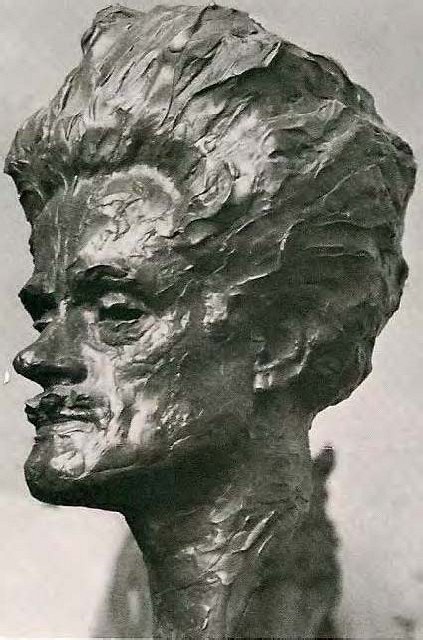
A bust of MacDiarmid, sculpted by William Lamb, 1927

The First World War, C.M. Grieve and plans for a new Scottish literature

It was Christopher Murray Grieve’s wartime experience in Salonika with the Royal Army Medical Corps and his first-hand contact with Europe both there and later in Marseilles which ultimately led to the birth of the interwar literary movement known in its own time as the ‘Scottish renaissance’. The principal fighting in Greece was over when Grieve arrived in Salonika in the summer of 1916. He was assigned duties in the hospital which catered for the wounded and he also acted as quarter-master, but once these duties were fulfilled he would appear to have had considerable free time for reading and thinking about his own and Scotland’s future. His principal correspondent when in Salonika was George Ogilvie, his former English teacher at Broughton junior student centre in Edinburgh, and this correspondence, edited by Catherine Kerrigan with helpful biographical and contextual notes and published by Aberdeen University Press in 1988, is a most useful guide to what Wordsworth earlier called ‘the growth of a poet’s mind’ and to the development of the thinking of the writer who would later initiate a new direction in the development of a selfdetermining Scottish literature.

Like the Orkney-born Edwin Muir, Grieve’s post-school education had come largely from A.R. Orage’s New Age magazine, with its wide range of philosophical, social/political, cultural and literary – especially European literary – material. In Salonika he was able to continue his periodical reading interests as a result of material sent from ‘The soldiers’ recreation friend’ organisation in Edinburgh, together with an exploration of modern creative writers such as the American Henry James, Irish J.M. Synge and Russian Maxim Gorky. He was particularly interested in Wyndham Lewis and his Blast magazine, the first issue of which had been published in 1914, on the eve of war, and he followed eagerly The Little Review’s obscenity difculties with the publication of Lewis’s short story ‘Cantleman’s Spring-Mate’.

In addition, his school French would appear to have been of a standard to allow him to read ‘in the original a big anthology of contemporary French poets’ and by March 1919 he was writing to Ogilvie from Marseilles that he was now ‘in communication with Paul Valéry, André Gide, Albert Samhain and a few others’. The Christopher Grieve who would return to Scotland later in 1919 with the aim of reinvigorating Scotland’s moribund literature as well as making a name for himself as a writer was already looking to modern European writing for inspiration.

Grieve’s first literary venture after demobilisation was a series of poetry anthologies titled Northern Numbers (although these would appear to have been influenced more by the success with the public of Edward Marsh’s middlebrow Georgian Poetry than by his own earlier avant-garde reading). The first two anthologies were published by Foulis in Edinburgh in 1920 and 1921 with the third published from Montrose in 1922 by Grieve himself when Foulis was in financial difficulties. The anthologies were well received, with the journalist and poet William Jeffrey using what may have been the first coining of the term ‘Scottish renaissance’ when his positive review of the second anthology in the Glasgow Bulletin of 17 January 1921 was titled ‘Is this a Scottish poetry renaissance?’. It is interesting also that Grieve’s own publishing of the third volume in 1922 was to a significant extent the most forwardlooking of the series, with several of the older, more traditional writers replaced by younger, more adventurous contributors and with the number of female contributors increased from the one out of eleven present in the 1920 Northern Numbers to nine out of twenty in the selfpublished 1922 volume. Unfortunately, Grieve’s own first collection of experimental poetry and prose, titled Annals of the Five Senses and also dueto be published by Foulis, was now without a publisher, but was later published by himself from Montrose where he was now employed as a journalist on the Montrose Review.

Lea el artículo completo y muchos más en este número de History Scotland
Opciones de compra
Si eres el dueño de la edición, Iniciar sesión para leer el artículo completo ahora.
Edición digital única May - Jun 2019
 
€5,99 / issue
Este número y otros números atrasados no se incluyen en un nuevo suscripción. Las suscripciones incluyen el último número regular y los nuevos números publicados durante su suscripción. History Scotland

Este artículo es de...


View Issues
History Scotland
May - Jun 2019
VER EN TIENDA

Otros artículos de este número


History Scotland
FROM THE EDITOR
Those of us who lived through the Second World War
NEWS
VICTORIAN ERA GLASS PHOTOGRAPH SLIDES RESCUED FROM SKIP
Remarkable images of pioneers boring through rocky mountainsides during the construction of the Katrine aqueduct have been rescued from a skip as work takes place on refurbishment of the aqueduct
Newly-discovered Mary Queen of Scots letters shed light on life in 16th-century Edinburgh
Newly-discovered Mary Queen of Scots letters shed light
Radiocarbon dates from Coldingham confirm location of 7th-century monastery
A team of archaeologists who have been working on a project to locate the remains of Coldingham monastery in Berwickshire have revealed the results of their first set of radiocarbon dates
New focus on the battle of Stirling Bridge
The National Wallace Monument has released new visuals
WAR POETS TRAIL
This month Neil McLennan takes a new approach to his hidden histories explorations, introducing a thematic trail that takes in newly-installed memorials to the country’s war poets
IN-DEPTH FEATURES
SCOTLAND’S GREAT WAR MEMORIALS
Dr J.J. Smyth and Dr Michael Penman discuss Scottish Great War memorials, asking what the huge volume and diversity of memorialisation projects can tell us about the way Scots sought to remember and commemorate their dead in the immediate aftermath of war
The lasting effect of the First World War on CRIME IN SCOTLAND
Re-assessing the link between war-service and crime in the post-1918 period, Cameron McKay demonstrates that many Scottish veterans had difficulty readjusting to civilian life, leading to a rise in both petty and serious criminality
THE UN-PEACEFUL PEACE: SCOTLAND AND THE US IN THE POST-WAR PERIOD
Dr Stephen Bowman examines the relationship between Scotland and the United States in the interwar period, discovering a shared experience of anxiety and social dislocation that was shaped by the historical connection between the two countries
DESOLATION OR NEW DEAL? THE HIGHLANDS IN THE INTER-WAR PERIOD
Professor Ewen Cameron explores the experience of the Scottish highlands between 1918 and the late 1930s, a period of sustained discussion about the economic and cultural future of a region reeling from the aftershocks of the First World War
Going back to yesterday: the legacy of war
Reflecting on the various ways in which the centenary of the First World War was commemorated in text, Dr Catriona M.M. Macdonald argues that we are developing a new, more democratic narrative of the conflict, putting the people of Scotland, and their stories, centre-stage.
ARCHAEOLOGY NEWS
The salvage sites of the German High Seas Fleet in Scapa Flow
As the centenary of the scuttling of the German High Seas Fleet approaches, Kevin Heath, Malcolm Thomson, Sandra Henry, Mark Littlewood and Paul Sharman take a look at how the underwater wrecks have been explored and salvaged over the decades
FEATURES
LOUISE & LORNE: A ground-breaking royal marriage
This May marks the 200th anniversary of the birth of Queen Victoria. Margaret Brecknell explores the marriage of Victoria’s daughter Louise – a match that went against the strict conventions of the time
THE MITCHELL LIBRARY’S BLACK BENEFACTOR: The brief life of Louis Edward Campbell
Morag Cross tells the story of how the son of a Glaswegian merchant, born to an African mother on a Caribbean island just after the abolition of slavery, went on to become one of the benefactors of Glasgow’s Mitchell library
REGULARS… IN EVERY ISSUE
Women registrars in Scotland
Dr Tristram Clarke examines what an historic photograph can reveal about the rise of women registrars in Scotland
history SCOTLAND PLUS…
Captain Robert Pincarton and Darien
A foot soldier of Empire
Ben Fanstone delves into the life of James Taylor and his inluence on the development of Ceylon’s exports
Battle of Prestonpans
Martin Margulies enjoys a reappraisal of the 1745 Battle of Prestonpans
New analysis
HelenYoung explores a fresh account of early modern Edinburgh and the influences of the Scottish Enlightenment
Living history
Experience history first-hand with our pick of outdoor
THE BATTLE OF GLENSHIEL
Peter Tillemans’The Battle of Glenshiel is based on eye-witness accounts of the battle and features figures including Rob Roy MacGregor and General Joseph Wightman
Spotlight on… Tullibody History Group
Tullibody is one of Scotland’s oldest villages, with
Burial records
Ken Nisbet of the Scottish Genealogy Society shares his expert tips for finding an ancestor’s burial records online
TREASURES OF THE SCOTTISH HISTORY SOCIETY
Dr Annie Tindley spotlights a collection of strike bulletins that highlight the high level of engagement from the population of Scotland in the general strike of 1926
Tales of the past
We talk to Jackie Lee, director of Artemis Scotland, about her work in providing heritage interpretation via costumed characters using storytelling techniques to engage visitors at historic attractions
Chat
X
Soporte Pocketmags