STEAK MASTERCLASS
…and the 5 sauces every cook should know
meat matters.
PHOTOGRAPHS LAURA EDWARDS FOOD STYLING ANNIE RIGG STYLING AND ART DIRECTION TABITHA HAWKINS
If you’re a meat lover, there’s nothing quite like an expertly cooked steak, the outside caramelised and glistening, the inside tender, pink and juicy, with a sauce that enhances the savoury meat flavours. Harry Eastwood gives the lowdown on how to buy and cook the best beef cuts, plus how to master five of the best sauces to serve with steak
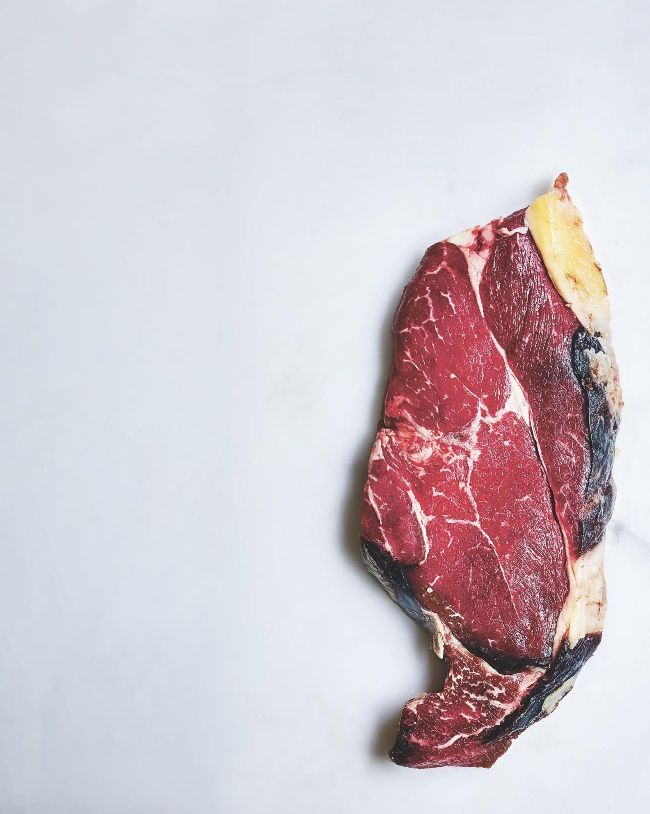
Rump
A BIT ABOUT HARRY
Ms Eastwood is a food writer and cookbook author who’s appeared on numerous TV food programmes and series. When she was in her early 20s, she moonlighted as an apprentice butcher at London’s Smithfield Market. She now lives in Paris, and Carneval is her fourth book.
“I hope this carefully put together collection of tips and essential recipes provides you with the kind of lasting joy that comes from appreciating great meat, carefully sourced, expertly butchered and cooked with love. Meat should be seen as a luxury product. It’s not meant to be eaten every day and it’s not meant to be cheap, but when you cook a great quality steak and cook it well, the result is a treat to be properly savoured.”
HARRY EASTWOOD
STEAK KNOW-HOW 4 points to get your head around before setting off for the shops
•Native breeds such as Aberdeen Angus and Longhorn are good as they’re suited to growing slowly on a natural diet, ideally for up to 30 months, instead of the standard 14.
•Grass-fed beef is best, but it’s common practice to supplement the grass diet with some protein and grain, especially towards the end of the cattle’s lives. This enables the cattle to lay down the extra fat that means the carcasses can be aged/hung for longer.
•The best beef is dry-aged, or hung, in a temperature-controlled environment. There’s no limit to how long meat can be hung, but few butchers will hang beef for more than 3-4 weeks. The muscle breaks down very slowly during the ageing process, becoming tender and developing a deeper flavour.
•Find a good butcher, someone you can trust. He or she will be an important person in your quest for great meat, and good butchers are longing to show us the amazing stuff they have sourced, aged and cut.
What to look out for
COLOUR Choose meat that’s dark red – brown, even – and dry to the touch. Cuts (see right) differ in colour – bavette can look almost purple. Well-hung meat is darker than fresh meat. Bright-red steak should be avoided. Any outer fat should be firm – an indication of extended hanging time. If you see a piece of whole rib eye or sirloin with a dark, almost black crust, ask the butcher to cut your steak from that. THICKNESS A steak (for two) should be at least 2.5cm thick – 4cm is ideal. For one, I recommend onglet, bavette (which has great flavour even when cut thinner) or a stout piece of rump. FAT Intramuscular fat, or marbling, is highly desirable because it melts as it cooks, helping to keep the steak moist and adding flavour. Fillet, rib eye and sirloin have more marbling; bavette and onglet have less.