26.2 MILES IN NORTH KOREA
Few locations for a marathon are as unusual as Pyongyang, capital of North Korea, as STEVE HARKNETT discovered
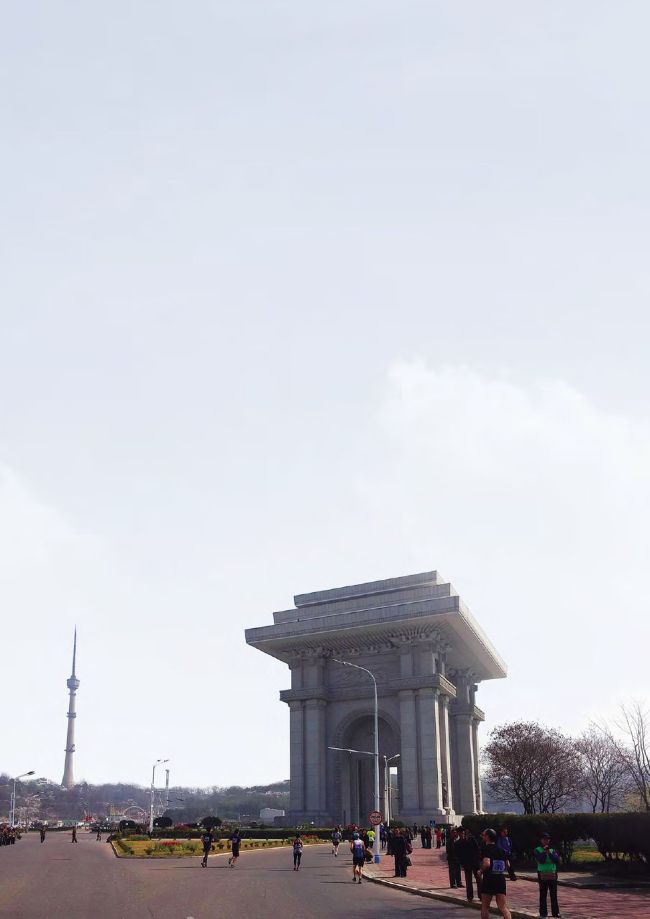
Edwin Cheung
IN 1999 25-year-old North Korean Jong Song Ok became a national hero when she won the women’s marathon in the World Championships in Seville, Spain, which remains the country’s only gold at the championships. At a press conference after the race she was asked what her motivation was for success and her famous reply revealed much about sport, and society in general, in North Korea: “I just run and run having our Great General in my mind. This is the main resource of my strength.” She was referring to North Korea’s founding father, Kim Il Sung, who died in 1994 and is still recognised as the country’s “eternal president”. Since 1981 a marathon has been held each April as part of celebrations to mark his birthday, a national holiday in North Korea known as “the Day of the Sun”.
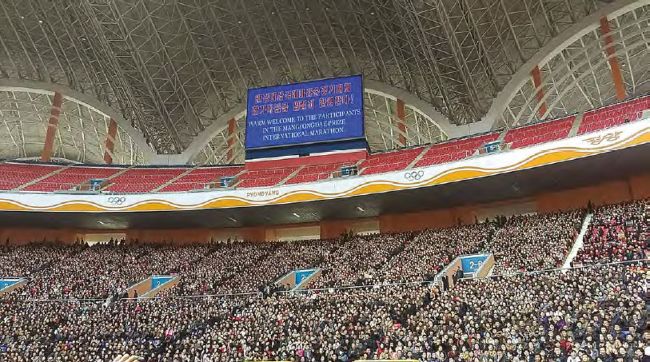
Pyongyang's marathon has recently opened up to international runners
Edwin Cheung
“WHEN YOU ENTER A MARATHON IN THEIR COUNTRY YOU DO IT THEIR WAY AND YOU DO ASYOU’RE TOLD
For many years this ‘Mangyongdae Prize International Marathon’, to give the race its full title, was exclusively for North Korean athletes and a handful of invited elite foreign runners, mostly from Africa. However, in recent years, despite political tensions with its Asian neighbours and the USA over its nuclear programme, North Korea has been showing tentative signs of opening up to the rest of the world, including promoting sports tourism – a ski resort opened in 2013 to much fanfare, and in 2014 the Pyongyang Marathon was opened to amateur runners for the first time. The race was accredited as an IAAF Bronze Label Race for many years, although it lost this accreditation last year. While open to amateur runners, the cut-offs (four hours for the marathon and two hours thirty minutes for the half-marathon) discourage more casual runners.