BACK IN BUSINESS
The car industry was propelled to the top of the news agenda in 2023, writes Felix Page
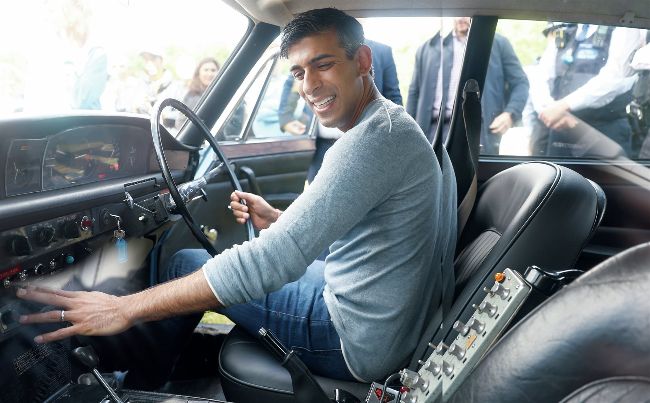
GETTY IMAGES
So, 2023: the year we forgot about Covid, electric cars slipped inconspicuously into the mainstream and we could barely move for enormous piles of worthless semiconductors – a world away from the turbulence and uncertainty of 2022.
Well, not quite. While the past 12 months felt relatively stable and established a sense of optimism within the car industry going into 2024, it was the direct opposite of uneventful, and it will surely be written into the history books as a transformative year for motoring.
Since the dawn of the car, there has surely never been less of a divide between the industry and the wider news agenda, nor has the car ever been so central to popular discourse, not to mention politics at national and global levels.
HILLINGDON TO DIE ON
It began in a leafy suburb of West London on 20 July, as Conservative candidate Steve Tuckwell claimed a narrow victory over Labour’s Danny Beales in the Uxbridge and South Ruislip by-election, off the back of a “one-issue campaign” that revolved almost exclusively around his opposition to London mayor Sadiq Khan’s expansion of the capital’s Ultra Low Emission Zone (ULEZ).
Many constituents, incensed at the prospect of paying £12.50 a day to drive their cars within the M25, loudly engaged with Tuckwell’s chest-thumping ‘Stop ULEZ’ agenda, and so this minor by-election ultimately became the kindling that would light a roaring bonfire (or should that be bin fire?) of debate around the very concept of personal mobility.
In a bid to recapture some sorely needed populist appeal, Tory prime minister Rishi Sunak jumped on the bandwagon and quickly announced a 30-point manifesto of “pro-motorist” policies that ranged from culling Low Traffic Neighbourhoods to phasing out 20mph speed limits and reducing the fine for stopping in a yellow box junction.