A budgetfriendly new home
When they discovered an affordable model for bespoke rural Scottish houses, Dawn and Torq Allen knew they’d finally found a way to achieve their dream of self-building
readers’ homes
WORDS JENNY MCBAIN PHOTOS KEITH HUNTER
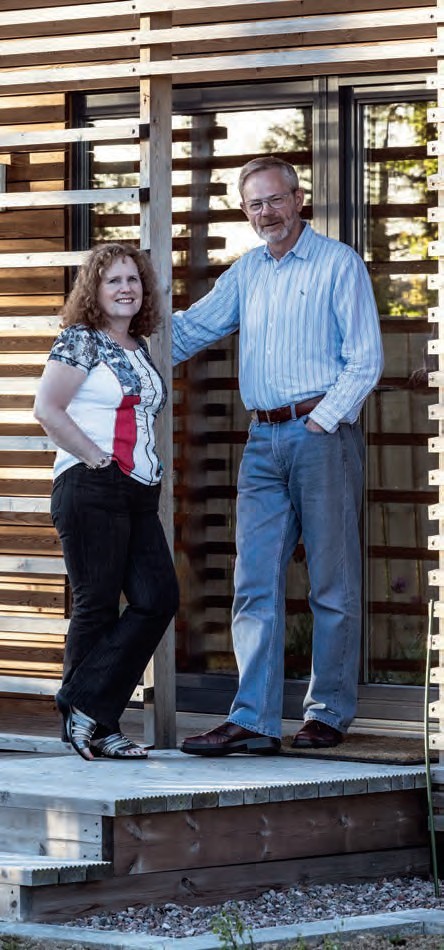
Left & inset: A mix of gable-end glazing, rooflights and storeyheight ground floor windows, sheltered by loose slatting, bring just the right amount of natural light into house
Sometimes simply turning the page of a book or magazine can be a life-changing event. That was certainly the case for Dawn and Torq Allen, who had long harboured a desire to build their own home in rural Aberdeenshire – but couldn’t see a way to pay for the land and construction within a realistic budget. “I’ve always loved buildings,” says Dawn. “In fact my first job was working in the office of a quantity surveyor, so I am very familiar with plans and know how to read them. However, I am also all too aware of how project costs can quickly spiral out of control.”
So for decades the couple’s self-build dreams were held in abeyance, as they made little progress beyond enthusiastically reading property magazines. That all changed back in 2013, however, when they read an article in Build It. “We came across the Model D concept,” says Torq. “This is an architect-designed kit house that’s both sustainable and aff ordable.” The project in question was a prototype owned by Bryan Stuart – who is also the owner of the building company that developed the idea.
First impressions
Bryan’s firm, Sylvan Stuart, specialises in timber frame structures. The company developed the Model D design with a view to creating an aff ordable house type that was made entirely from Scottish timber. “The name is a reference to Ford and how car types evolved from the basic to the luxurious,” says Bryan, who built the first Model D as his own home and to use as a show house for potential customers.
Dawn and Torq jumped at the opportunity to visit. Bryan’s home has three bedrooms, two bathrooms, a utility, an open-plan kitchenliving space and a mezzanine area. The tall, narrow design is very much in keeping with traditional Aberdeenshire architecture, and features a steep pitched roof and overhanging eaves designed to protect the characterful larch cladding from the elements.