2000s
BACK IN THE SUN
AFTER THE DEVASTATION OF LOSING LINDA AT THE END OF THE NINETIES, THE NEW MILLENNIUM HERALDED A DECADE OF CHANGES FOR PAUL MCCARTNEY, BOTH PERSONALLY AND PROFESSIONALLY – AND THERE WERE A FEW COSTLY MISTAKES LURKING AMIDST THE CHAOS AND THE CREATION…
MARK LINDORES
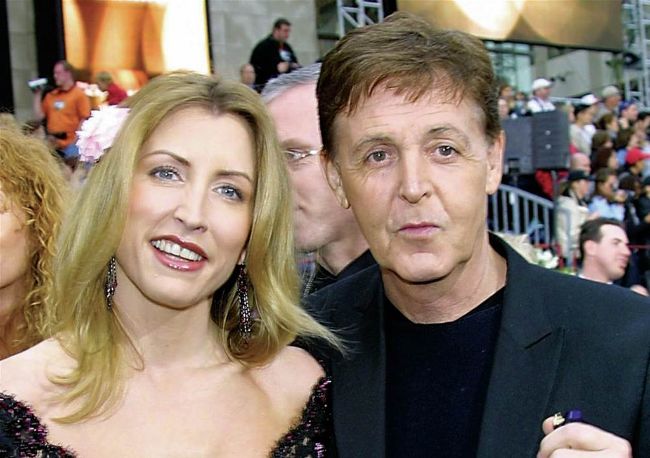
Paul and Heather in Hollywood 2002, just two months before they married
© Getty Images
AS THE Nineties had concluded with the worst 18 months of Paul’s life following the death of Linda, he began the new millennium with a determined sense of optimism. Having enjoyed the musical shapeshifting he had been part of with his classical ventures, forays into dance and electronica and his own solo work, Paul was keen to further explore that avenue – and that optimism extended into his personal life with him confirming that he was dating former model and charity worker Heather Mills at her 32nd birthday party on 2 January 2000.
The pair had first met a year previously at the Pride Of Britain Awards, where Paul was presenting an award named after Linda for services to animal welfare. The pair had begun talking and collaborating on charitable ventures such as Heather’s charity single, Vo!ce, which featured backing vocals from Paul. His contribution, however, was fairly minimal, and the first proper taste of Millennial McCartney came with Liverpool Sound Collage, by far his most daring and experimental work to date.
The piece came about after famed Beatles sleeve designer Peter Blake approached Paul to create the soundtrack to the About Collage exhibition, due to be held at Liverpool’s Tate Gallery in 2000, with a brief to create something musical, contemporary and which embodied the Liverpool spirit in order to complement Blake’s current work. Inspired by the idea and relishing the challenge, McCartney approached the project in the same vein as the art it was to accompany, slightly avant-garde and encompassing a variety of styles and textures.
THE SOUNDTRACK FOR THE ABOUT COLLAGE EXHIBITION EARNED A GRAMMY NOMINATION IN 2001 FOR BEST ALTERNATIVE RECORDING
Enlisting the help of Youth, who he had worked successfully with on The Fireman records, and Super Furry Animals, Paul created five songs which incorporated digital beats, sound samples and dialogue from The Beatles’ studio days as well as soundbites from Liverpool residents about their feelings on Liverpool and The Beatles and excerpts from Paul’s classical piece, Liverpool Oratorio. Released on 21st August 2000, Liverpool Sound Collage was a major triumph for all involved and earned a nomination for Best Alternative Recording at the 2001 Grammys (it lost to Radiohead’s Kid A).
As 2000 drew to a close, Paul took time out from writing for his next album to help promote 1, a new Beatles compilation. Released on 13 November 2000 to mark the 30th anniversary of the break-up of the band, it was their first single disc hits compilation and featured digitally remastered versions of all of their UK and US No. 1 singles.
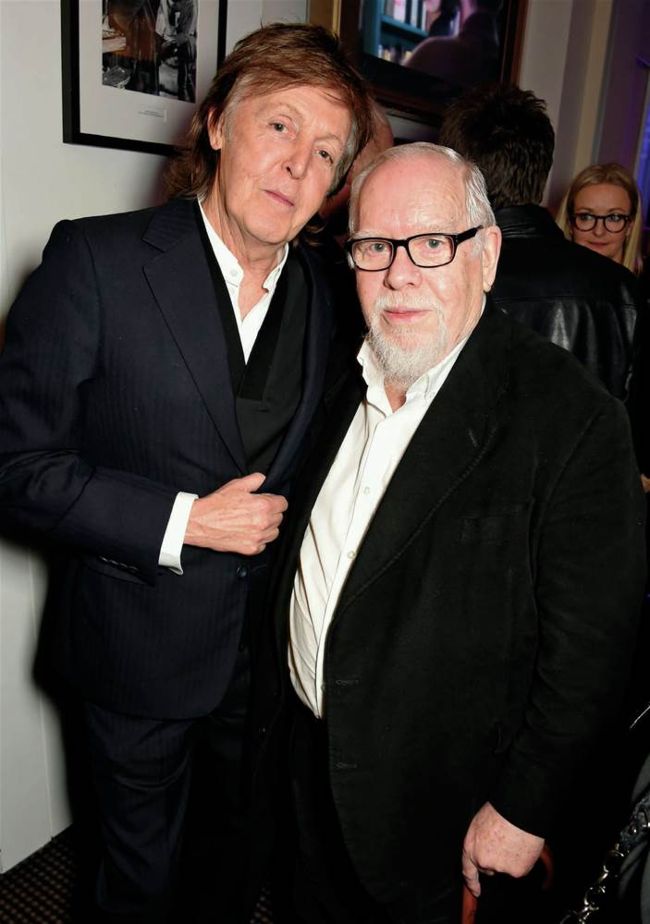
With Sir Peter Blake, the artist best known for creating the sleeve for Sgt Pepper’s Lonely Hearts Club Band
© Getty Images
© Getty Images
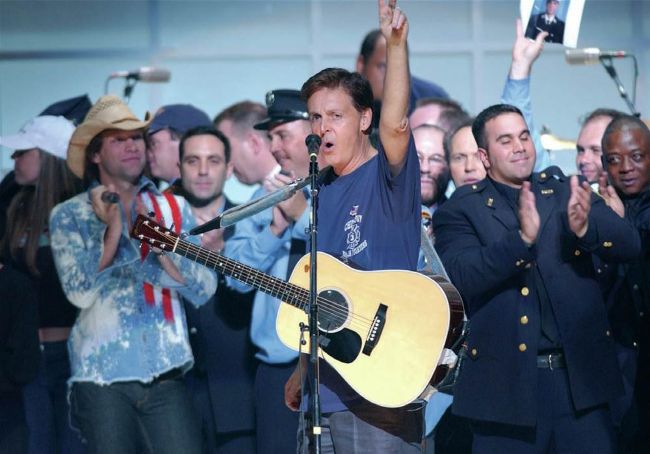
Paul’s Concert For New York City was captured in the 2011 TV movie The Love You Make
© Getty Images
The success of 1 surpassed all expectations, topping the charts in 35 countries in its first week with sales of over one million copies. In the UK it became the biggest-selling album of the year and the decade, proving interest in the group remained as strong as ever. Six months later, Paul released another best-selling collection when he compiled Wingspan: Hits And History, a double album combining Wings material and some of his solo hits.
On September 11th 2001, Paul witnessed the 9/11 New York attacks first-hand from a plane on the tarmac of New York’s JFK Airport and organised A Concert For New York City to benefit the families of people who had died. With a line-up including the Stones, David Bowie, The Who, Elton John, Billy Joel and Jay-Z, the concert, which took place in Madison Square Garden on October 20, was a huge success, raising $35 million. He also penned the song Freedom; it was too late to be listed in the completed artwork of his next album, Driving Rain, but it was included as a hidden track.