THE MITCHELL LIBRARY’S BLACK BENEFACTOR: The brief life of Louis Edward Campbell
Morag Cross tells the story of how the son of a Glaswegian merchant, born to an African mother on a Caribbean island just after the abolition of slavery, went on to become one of the benefactors of Glasgow’s Mitchell library
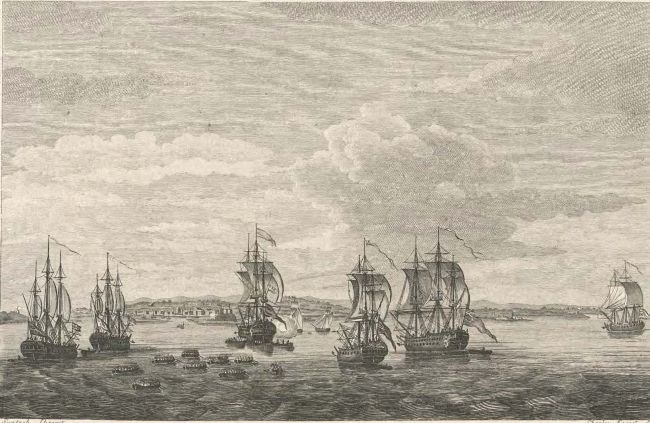
The island of Martinique, where Louis was born
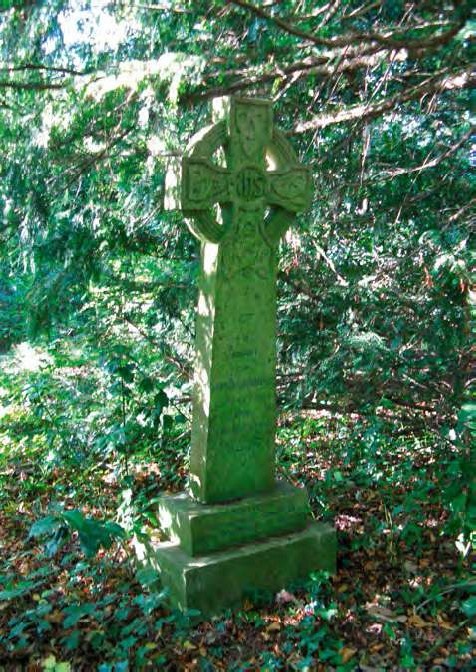
Louis’ memorial cross
The unexpected tragedy of Louis Edward Campbell was revealed while researching the histories of various tradesmen and commercial firms for the website ‘Mackintosh architecture: context, making and meaning’. Many personal tales had to be omitted, but Campbell’s is especially poignant. It includes architects Charles Rennie Mackintosh and Alexander ‘Greek’ Thomson, and the diverse human and financial legacies of Glasgow’s Caribbean trading links.
Louis was born in St Pierre, on the Caribbean island of Martinique, in 1851, the son of Glaswegian Alexander Campbell, a West India merchant ‘of large means’, and ‘a coloured French mother’, whose name is unrecorded. Martinique was a French colony which had only abolished black slavery in 1848, and both Campbell and his mother were described as ‘French subjects’. A few Indian (Asian) indentured labourers arrived after Campbell’s birth, so she was almost certainly of African descent.
In the late 1840s, Alexander probably worked for the Scottishowned trading firm of which he became a partner, Macfarlane, Campbell & Co, but he left in 1851, to establish his own company. His son claimed that he was British consul, but this cannot be verified, although he was definitely appointed American consul to the island in 1852.
Although ‘born out of wedlock’, Louis ‘was always treated by Alexander… his friends and relatives as his son’. Around 1860, his unusuallyresponsible father sent Louis ‘home’ for a good Scotch education, possibly because something had happened to Louis’s mother. Despite being mixed race, Louis was apparently accepted into his grandmother’s home and attended a local school.
Agnes Campbell and her unmarried daughter Ann shared a spacious flat (now long demolished) off New City road, in the rapidly-expanding west end of Glasgow. Louis (listed as ‘James’) is acknowledged in the 1861 census as her ‘grandson’ and like other comfortably middle-class families, they employed a servant.