AMD ZEN 4 UNWRAPPED
Welcome to the modern age
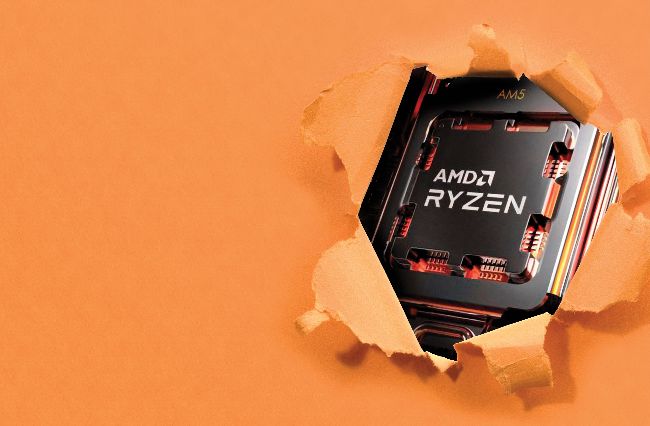
© STOCKCAM/GETTY IMAGES, AMD
AMD’S ZEN ARCHITECTURE revitalized the CPU industry, bringing much-needed competition and higher core counts to consumers everywhere. It’s hard to believe we languished on 4-core Intel CPUs as the top mainstream solution for a full decade, starting with the Core 2 Quad in early 2007 and lasting until the Core i7-8700K launched in late 2017. If you wanted more CPU cores, you had to move to the more expensive LGA2011 HEDT (high-end desktop) platform. AMD kicked that idea to the curb with its first Ryzen 7 CPUs, and we’ve been watching an arms race of escalating core counts and clock speeds ever since.
Round four of Zen is now getting prepped for launch. At Computex and its Financial Analyst Day, AMD spilled the beans on much of what we can expect with the upcoming Ryzen 7000-series CPUs and the Zen 4 architecture. It’s more than just a minor architecture update.
Zen 4 comes with a new socket, a PCI Express upgrade, DDR5 memory support, and more. AMD hasn’t backed off, and it plans to make Zen 4 its most competitive solution ever, scaling from lowpower laptops all the way to massive supercomputers.
Get your wallets ready for a major upgrade, as Zen 4 looks to be the most significant overhaul of the Ryzen family since its inception.
GUNNING FOR NUMBER ONE
AMD is ready to go after the performance crown once more with its latest Zen 4 family of processors. The Ryzen 9 5950X led in virtually every multi-threaded workload and put up some competitive numbers in gaming performance back in 2020. However, Intel reclaimed the overall lead with its 12th Gen Core Alder Lake processors and the Core i9-12900K in late 2021.
Prior to the 12900K, there were cases where Intel was still a little faster, such as in singlethreaded workloads and some games, but Intel needed to get off its comparatively ancient 14nm process node and move into the modern era. Alder Lake did just that, using the rechristened Intel 7 process, then went a step further by including a hybrid architecture with performance cores and efficiency cores to attempt to deliver the best of all worlds.
AMD’s Zen 4 architecture isn’t quite as revolutionary as Alder Lake, sticking with a single allpurpose core architecture rather than taking a hybrid approach, but that’s not a bad thing. Singlethreaded performance still matters, and Zen 4 is targeting a greater than 15 percent improvement in singlethreaded workloads. That’s good to hear, as right now, if we look at single-threaded benchmarks, the Core i9-12900K beats the Ryzen 9 5950X by about 17 percent, depending on the application.
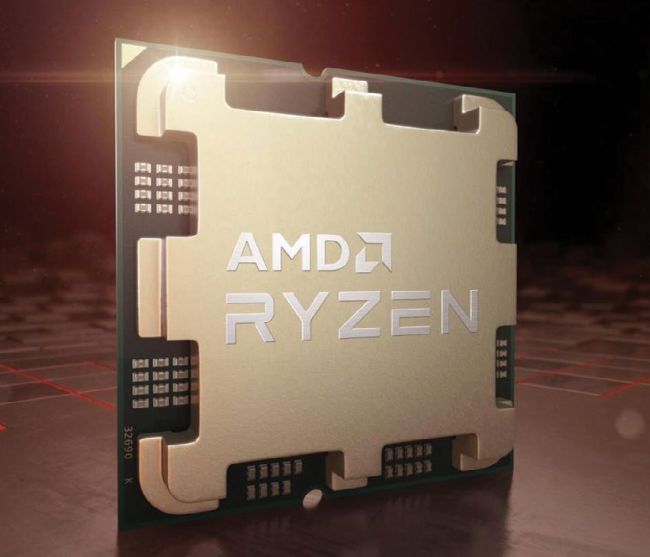
AMD’s Zen 4
CPUs come with the new socket AM5, which ditches the pins and moves to a land grid array on the back.
What’s more, AMD doesn’t intend to give up any ground in the multithreaded arena. The 5950X and 12900K currently trade blows in such workloads, ending in a virtual tie. Zen 4 aims to deliver up to 35 percent more performance, AMD says, which would easily put it back in top spot. It will get there through a combination of architectural enhancements, higher clock speeds, and increased power limits.
IPC AND CLOCK SPEED IMPROVEMENTS
One of the most impressive parts of the Zen 4 reveal at Computex is that AMD already had a chip running at 5.5GHz using a standard AIO liquid cooler. That wasn’t in a heavily threaded benchmark, so the 5.5GHz was only on a single core, but that’s still at least a 12 percent boost to CPU clocks compared with Zen 3 and the 5950X that topped out at 4.9GHz. It’s a sign that AMD already has silicon running at such clock speeds, and we expect to see lightly threaded workloads breaking the 5GHz barrier on many of the upcoming Ryzen 7000-series CPUs.
A FAREWELL TO SOCKET AM4?
With the forthcoming launch of Zen 4, it looks as though socket AM4 has finally reached the end of the line.
It has served us well, from the first Ryzen CPUs to the latest Ryzen 7 5800X3D, and, in many cases, all you need is a motherboard BIOS update to enable support for the latest Ryzen 5000-series processors on an old X370 or B350 motherboard.
With a move to DDR5 memory, however, AMD will be switching everything over to the new AM5 platform. Or will it?
AMD hasn’t made any definitive statements on the matter, but one of the great benefits of the later Ryzen CPU designs is that they moved to a chiplet hierarchy, with an I/O die that handles the memory interface, PCI Express, and other core functionality linked up to one or more CPU chiplets that support anywhere from four to eight cores.
With Zen 4, there’s a new I/O die that supports DDR5 and PCIe 5.0, linked once more to CPU chiplets via an updated Infinity Fabric. Here’s where things get interesting.
DDR5 is and will remain a more expensive proposition than DDR4, as it requires on-DIMM voltage regulation, power management ICs, and an extra DRAM chip for ECC support. That will make it more difficult for AMD to sell budgetfriendly Ryzen 7000 processors.
However, AMD could potentially use the existing Ryzen 5000-series I/O chiplet and link that up to new Zen 4 CPU chiplets, keeping the DDR4 and PCIe 4.0 support but also cutting costs. Such a design could theoretically drop into existing AM4 motherboards with a BIOS update.
Alternatively, AMD may simply keep making the current Ryzen 5000-series processor for socket AM4 to fill the budget role