U bekijkt momenteel de Netherlands versie van de site.
Wilt u overschakelen naar uw lokale site?
Laatste editie

Model Aircraft Magazine MAE-03 F-4 Phantom Vorige editie

English
101 Beoordelingen   •  English   •   Hobbies & Crafts (Scale Modelling)
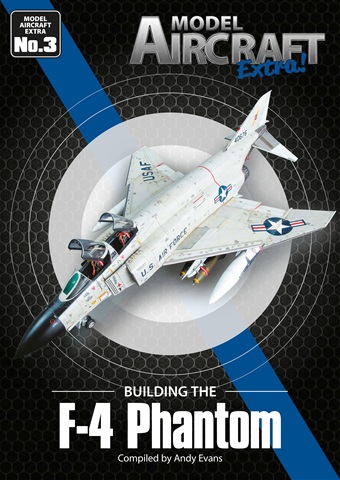
Building the F-4 Phantom

Model Aircraft Extra #3
Compiled by Andy Evans

The iconic McDonnell Douglas F-4 Phantom II was originally developed for the US Navy and entered service in 1960. Proving highly adaptable, it was soon adopted by the US Marine Corps and the US Air Force, and by the mid-1960s had become a major part of their air arms. The Phantom is a large fighter with a top speed of over Mach 2.2, and can carry more than 18,000lb of weapons on nine external hardpoints, including air-to-air missiles, air-to-ground missiles, and various bombs. The F-4 was used extensively during the Vietnam War, where it served as the principal air superiority fighter for the US Air Force, Navy, and Marine Corps and became important in the ground-attack and aerial reconnaissance roles later in the war. The aircraft continued to form a major part of US military air power throughout the 1970s and 1980s, being gradually replaced by more modern aircraft such as the F-15 Eagle, F-16 Fighting Falcon F-14 Tomcat and the F/A-18 Hornet. The F-4 Phantom II remained in use by the US forces in the reconnaissance and Wild Weasel roles in the 1991 Gulf War, finally leaving service in 1996. It was also the only aircraft used by both the USAF Thunderbirds (F-4E) and the US Navy Blue Angels (F-4J). The Phantom was also operated by the armed forces of eleven other nations, and Israeli Phantoms saw extensive combat in several conflicts, while Iran used its large fleet of Phantoms, acquired before the fall of the Shah, in the Iran–Iraq War, and both the Royal Air Force and Royal Navy used the FG.1 and FGR.2 versions using Rolls-Royce Spey engines . Phantom production ran from 1958 to 1981, with a total of 5,195 built, making it the most produced American supersonic military aircraft. As of 2018, sixty years after its first flight, the F-4 remains in service with Iran, Japan, South Korea, Greece, and Turkey.
read more read less
Model Aircraft Preview Pages Model Aircraft Preview Pages Model Aircraft Preview Pages Model Aircraft Preview Pages Model Aircraft Preview Pages Model Aircraft Preview Pages Model Aircraft Preview Pages Model Aircraft Preview Pages

Model Aircraft

MAE-03 F-4 Phantom Building the F-4 Phantom Model Aircraft Extra #3 Compiled by Andy Evans The iconic McDonnell Douglas F-4 Phantom II was originally developed for the US Navy and entered service in 1960. Proving highly adaptable, it was soon adopted by the US Marine Corps and the US Air Force, and by the mid-1960s had become a major part of their air arms. The Phantom is a large fighter with a top speed of over Mach 2.2, and can carry more than 18,000lb of weapons on nine external hardpoints, including air-to-air missiles, air-to-ground missiles, and various bombs. The F-4 was used extensively during the Vietnam War, where it served as the principal air superiority fighter for the US Air Force, Navy, and Marine Corps and became important in the ground-attack and aerial reconnaissance roles later in the war. The aircraft continued to form a major part of US military air power throughout the 1970s and 1980s, being gradually replaced by more modern aircraft such as the F-15 Eagle, F-16 Fighting Falcon F-14 Tomcat and the F/A-18 Hornet. The F-4 Phantom II remained in use by the US forces in the reconnaissance and Wild Weasel roles in the 1991 Gulf War, finally leaving service in 1996. It was also the only aircraft used by both the USAF Thunderbirds (F-4E) and the US Navy Blue Angels (F-4J). The Phantom was also operated by the armed forces of eleven other nations, and Israeli Phantoms saw extensive combat in several conflicts, while Iran used its large fleet of Phantoms, acquired before the fall of the Shah, in the Iran–Iraq War, and both the Royal Air Force and Royal Navy used the FG.1 and FGR.2 versions using Rolls-Royce Spey engines . Phantom production ran from 1958 to 1981, with a total of 5,195 built, making it the most produced American supersonic military aircraft. As of 2018, sixty years after its first flight, the F-4 remains in service with Iran, Japan, South Korea, Greece, and Turkey.


FORMAAT SELECTEREN:
Directe toegang

Beschikbare digitale aanbiedingen:

Enkele digitale uitgave MAE-03 F-4 Phantom
 
17,99 / issue
Deze editie en andere oude edities zijn niet opgenomen in een Model Aircraft abonnement. Abonnementen omvatten de nieuwste reguliere editie en nieuwe uitgaven die tijdens uw abonnement zijn uitgebracht en beginnen vanaf slechts
Besparingen zijn berekend op de vergelijkbare aankoop van losse nummers over een abonnementsperiode op jaarbasis en kunnen afwijken van geadverteerde bedragen. Berekeningen dienen alleen ter illustratie. Digitale abonnementen omvatten het laatste nummer en alle reguliere nummers die tijdens uw abonnement verschijnen, tenzij anders vermeld. De door u gekozen termijn wordt automatisch verlengd, tenzij u tot 24 uur voor het einde van het lopende abonnement opzegt in de Mijn Account-zone.

Model Aircraft issue MAE-03 F-4 Phantom

Model Aircraft  |  MAE-03 F-4 Phantom  


Building the F-4 Phantom

Model Aircraft Extra #3
Compiled by Andy Evans

The iconic McDonnell Douglas F-4 Phantom II was originally developed for the US Navy and entered service in 1960. Proving highly adaptable, it was soon adopted by the US Marine Corps and the US Air Force, and by the mid-1960s had become a major part of their air arms. The Phantom is a large fighter with a top speed of over Mach 2.2, and can carry more than 18,000lb of weapons on nine external hardpoints, including air-to-air missiles, air-to-ground missiles, and various bombs. The F-4 was used extensively during the Vietnam War, where it served as the principal air superiority fighter for the US Air Force, Navy, and Marine Corps and became important in the ground-attack and aerial reconnaissance roles later in the war. The aircraft continued to form a major part of US military air power throughout the 1970s and 1980s, being gradually replaced by more modern aircraft such as the F-15 Eagle, F-16 Fighting Falcon F-14 Tomcat and the F/A-18 Hornet. The F-4 Phantom II remained in use by the US forces in the reconnaissance and Wild Weasel roles in the 1991 Gulf War, finally leaving service in 1996. It was also the only aircraft used by both the USAF Thunderbirds (F-4E) and the US Navy Blue Angels (F-4J). The Phantom was also operated by the armed forces of eleven other nations, and Israeli Phantoms saw extensive combat in several conflicts, while Iran used its large fleet of Phantoms, acquired before the fall of the Shah, in the Iran–Iraq War, and both the Royal Air Force and Royal Navy used the FG.1 and FGR.2 versions using Rolls-Royce Spey engines . Phantom production ran from 1958 to 1981, with a total of 5,195 built, making it the most produced American supersonic military aircraft. As of 2018, sixty years after its first flight, the F-4 remains in service with Iran, Japan, South Korea, Greece, and Turkey.
meer lezen minder lezen
Model Aircraft Magazine is first and foremost a modellers magazine, mixing kit builds and conversions with historical and reference pieces, but with the focus always on information and images that will be of use to those building in scale.
Regular authors include military historian Anthony Tucker-Jones, Jack Herris, whose WWI articles couple in-depth research with a seemingly inexhaustible archive of historical photographs, aviation photo journalist Steve Palmer, and Robin Polderman, whose position on a Dutch F-16 squadron allow him global opportunities to exercise his considerable skills as a photographer.
Modelling features have a wide pool of talent to draw on, accumulated over sixteen years with Scale Aviation Modeller International, and as Editor of both titles Gary Hatcher is able to collate and direct material as appropriate, and see that it is showcased in the best possible way. One regular article features the work of Trevor Pask, author of the best of the recent titles on building Airfix kits, and a modeller whose enthusiasm and commitment to each project he undertakes might be said to personify the hobby as many of us regard it. Anything goes on Trevor’s workbench, and unlike so many of us, he always finds a way to finish a kit.
New kit and accessories play a part in Model Aircraft as a brief presentation of new releases each month, leaving the wider sourcing of news and product coverage to sister magazine Scale Aviation Modeller International, and by this means we avoid repetition between the titles. SAMI remains the foremost magazine for those modellers who enjoy kits and modelling first, but have an interest in real aircraft. Model Aircraft is aimed instead at those real aircraft enthusiasts who also have a passion for modelling.
Model Aircraft is designed to offer a unique and essential read to the enthusiast

Als abonnee ontvang je de volgende voordelen:


•  Een korting op de verkoopprijs van je tijdschrift
•  Je tijdschrift elke maand op je apparaat
•  Je zult nooit een editie missen
•  Je bent beschermd tegen prijsstijgingen die later in het jaar kunnen plaatsvinden

Je ontvangt 6 edities gedurende een periode van 1 jaar Model Aircraft abonnement op een tijdschrift.

Opmerking: Digitale edities bevatten niet de omslagitems of supplementen die je zou vinden bij gedrukte exemplaren.

Uw aankoop hier op Pocketmags.com kan op elk van de volgende platforms worden gelezen.


Je kunt hier lezen op de website of de app downloaden voor jouw platform, vergeet niet in te loggen met je Pocketmags gebruikersnaam en wachtwoord.

Apple Pocketmags Online Pocketmags Google Pocketmags
De Pocketmags-app werkt op alle iPad- en iPhone-apparaten met iOS 13.0 of hoger, Android 8.0 of hoger en Fire Tablet (Gen 3) of hoger. Onze webreader werkt met elke HTML5-compatibele browser, voor pc en Mac raden we Chrome of Firefox aan.

Voor iOS raden we elk apparaat aan dat de nieuwste iOS kan gebruiken voor betere prestaties en stabiliteit. Eerdere modellen met lagere processor- en RAM-specificaties kunnen te maken krijgen met een langzamere paginaweergave en incidentele app-crashes, die buiten onze controle liggen.
4,5
/5
Gebaseerd op 101 Beoordelingen van klanten
5
65
4
26
3
9
2
1
1
0
Bekijk beoordelingen

Model Aircraft

I love the colour profiles and scale drawings Beoordeeld op 31 mei 2020

Model Aircraft

Really enjoy this magazine, often using tips from the articles. Beoordeeld op 27 februari 2020

Artikelen in deze editie


Hieronder vindt u een selectie van artikelen in Model Aircraft MAE-03 F-4 Phantom.

Chat
X
Pocketmags ondersteuning