Yoko Ono
The avant-garde musical visionary.
By Andrew Male.
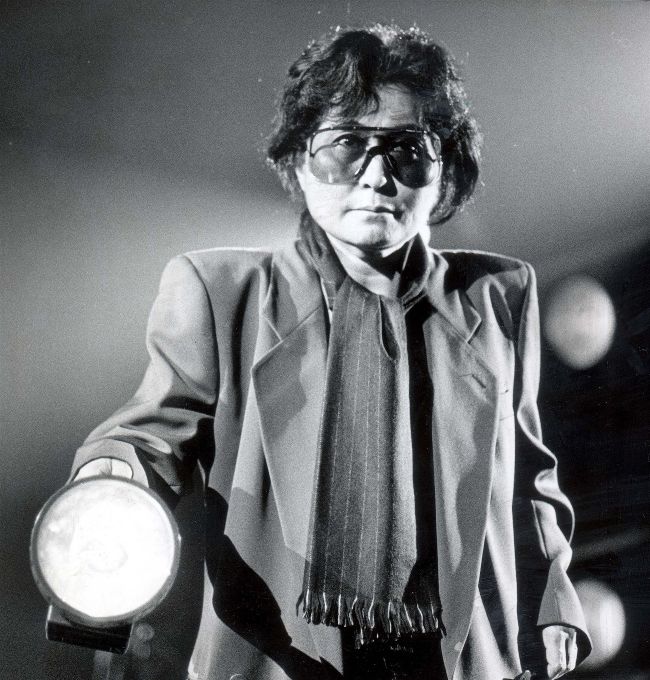
Just say yes: Yoko Ono shows the way to enlightenment.
Clive Limpkin/ANL/Shutterstock
I N2020, THE revered satirist Craig Brown published a Beatles biography, entitled One Two Three Four, that re-presented well-known moments of Fabs social history with fresh, literate panache. For the most part, it was a book that looked beyond cliché in search of enlightenment. Yet in one respect, its treatment of Yoko Ono, it also felt mired in received opinion. Ever since May 1968, when the then 35-year-old Japanese performance artist first appeared in public with her future husband John Lennon, Ono has been written about by (usually white, male) authors with a barely veiled mistrust. The sexism and racism may no longer be as overt as it was in the 1970s when she was referred to as “bitch”, “witch”, “dragon lady” and worse, but it remains, expressed most overtly in the unsubstantiated mainstream fallacy that she was a cultural gold digger instrumental in The Beatles’ split and that recordings she has made between 1968 and the present day are unworthy of critical study. Look up Yoko Ono on YouTube and you will discover videos devoted to her “senseless screaming” long before you find any praising her creativity. A better choice might be to seek out the interview Ono gave to the New York Times in 2016. Discussing her 1964 performance-artwork Cut Piece, in which she instructed audience members to snip off small pieces of her clothing with a pair of scissors, Ono offered up what might be considered a fair assessment of how she has been treated critically down the years: “People decided to take what they wanted to take,” she says, “not what I wanted to give.”
“Yoko Ono is singled out as a music revolutionary, an innovator, a creative genius…”
Therefore, one of the jobs of this How To Buy is to give Ono’s substantial discography the respect it deserves, to analyse exactly what she wanted to give, from the game-changing avant-garde rock LPs she made with half of The Beatles in the early-’70s to her late-’70s conceptual feminist art-pop albums, her early-’80s works of mourning and the ongoing series of post-’90s albums and collaborations she has made with her son, Sean Ono Lennon, and numerous adoring figures from the US indie rock scene.