Enabled
More disabled people are represented in the arts now, finds Tom Shakespeare, but the struggle goes on
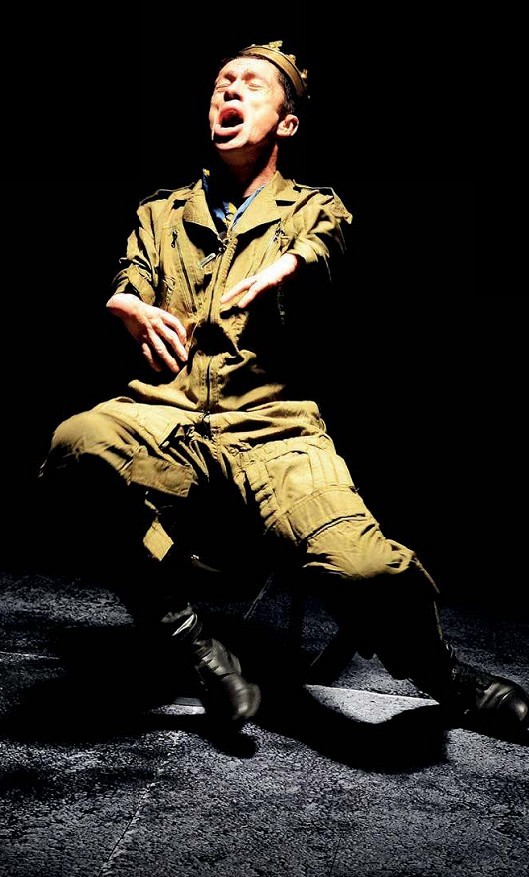
© NOBBY CLARK/ ARENAPAL
My first experience of television was a momentary appearance on the documentary Born to be Small (1973). My father, William Shakespeare, was one of the stars, who all had restricted growth, and the film was made by Lord Snowden—himself a survivor of polio. The aim was to show that people with restricted growth could lead normal lives, and the subjects came out with their dignity intact. Snowden’s Committee on Integration—of which my dad was a member— had been working through the 1970s to attempt top-down change. Within a few years, though, grassroots organisations would assert themselves and split off from the disability establishment that Snowden embodied, a move crystallised in the creation of the British Council of Organisations of Disabled People in 1981.
It’s now easy to look back at any representation of disabled people before the modern disability rights movement as negative. The theme of the new BFI collection Disabled Britain on Film, which is free to access online, is how to learn from the past so as to inform the future. While these films are a gift to cultural historians everywhere, at the same time they undermine any simplistic notion of everything steadily improving. They complicate our understandings of how disabled people have been seen—and how they see themselves.
The disability rights movement was as necessary as it was radical, but that does not mean that everything that came before was tarnished. There are certainly lots of pity narratives in the BFI Collection, and a fair bit of charity. But stories such as that of Joyce Carpenter (1972), at 29 inches the smallest woman in the world, are devoid of condescension, and feature disabled voices. (Although as we listen to her discuss the problems of household chores and going to the post office, banality is always a risk.) In Blind Farmer (1978) we get five minutes in the life of Blake Brown, showing how family dynamics change when a father has visual impairment: his wife built the cattle-shed, the children take it in turns to do the milking, but there is the strong feeling of the family getting on with rural life as usual. It’s all very matter-of-fact.