ASK A PETROLOGIST
Alisha Clark Explains Why Rocks Are the Foundation of our Lives
BY SARA JORDAN-HEINTZ
Getty Images / Chi Hang Leung / EyeEm
Petrologist, Alisha Clark has been fascinated with rocks, their development in the earth and the interplay between them and humankind since she was a child. She’s the assistant professor of geological sciences at the University of Colorado, Boulder and holds a Ph.D. in geology. She says becoming a scientist is the best way she knew to stave off boredom in her professional life, channel her creativity and use problem-solving skills daily.
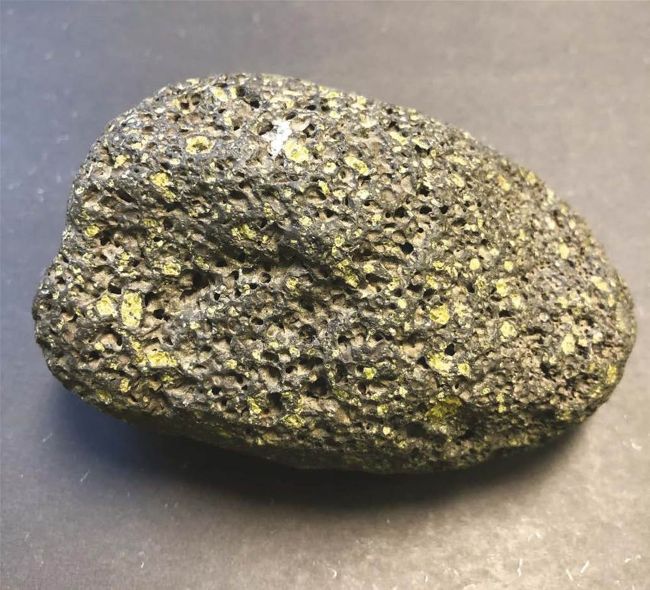
One of Clark’s favorite rocks: this basalt is from Hawaii. It’s very rare to have large green olivine crystals (the gemstone peridot) in a basalt like this one has. Also, the reason it is round is because it has been shaped by the ocean waves.
ROCK & GEM: What exactly is petrology?
How is it different from geology?
ALISHA CLARK: When you tell somebody you’re a petrologist, you get asked a lot of questions about oil (laughs). Petrologists study rocks. Rocks are effectively the main geological record that we have. Petrology has three subdivisions: igneous, metamorphic and sedimentary. I like igneous.
R&G: Why is igneous your area of interest?
AC: The igneous processes are related to those where there is magma around and silicate melts are the main player in the processes for the Earth. I tease some of my colleagues that rocks are just the old fossilized dead parts, but the active, vibrant part is the melt. I think in part that is why I really like igneous processes. It’s trying to understand both how melts work inside the Earth, and then also looking at their signatures either in rocks or through geophysics to see what’s going on where they are and how they function.