Archive
REDISCOVERED
Uncovering the underrated and overlooked
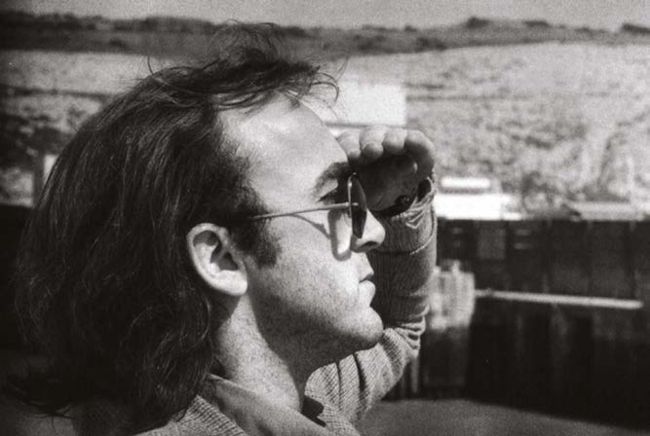
Ollie Halsall: weirdness ahead
OLLIE HALSALL Lovers Leaping
LIKEA KEY
7/10
PATTO And That’s Jazz BEYOND BEFORE
6/10
Lost albums relive the sad story of Patto
ROCK’N’ROLL myth-making takes a rather ghoulish delight in tragic tales of cursed bands. But the story of Patto should melt even the hardest heart.
The voice of Mike Patto saw the soulful singer compared to Steve Marriott. Left-handed lead guitarist Ollie Halsall was a multi-instrumental maestro who also played keyboards and saxophone. Drummer John Halsey was described by one critic as a cross between Jaki Liebezeit and John Bonham, and Clive Griffiths wielded his bass with aplomb.
Born out of Timebox, best remembered for their 1968 hit “Beggin’”, Patto seemed to have everything when they formed in 1970, fusing prog-rock ambition, Bonzos-style wit, and blue-eyed soul vocals into an engaging hybrid. However, their three albums sold so poorly that they found themselves dropped by two different labels. After breaking up in 1973, their fourth album Monkey’s Bum remained unreleased for 22 years, by which time the curse of Patto had delivered further cruel blows.
Mike Patto died of leukaemia in 1979. Halsall, after playing with John Otway, The Rutles and Kevin Ayers, died of a heart attack in 1992. While playing in Joe Brown’s band, Griffiths and Halsey suffered a car accident that robbed the bassist of his memory and left the drummer with injuries that resulted in a permanent limp.
However, the reissue of all four Patto studio albums in 2017 ignited more interest than the band ever managed to muster throughout its lifetime – and on the back of that posthumous acclaim come two more ‘lost’ albums.
And That’s Jazz is a live recording from a north London pub gig in early quality is pretty rotten but the glorious chaos 1973 and featuring material from their then-current album Roll ’Em, Smoke ’Em, Put Another Line Out, plus a 10-minute workout on the sadly prescient “My Days Are Numbered”, intended for their fourth album. The sound of their Groundhogs/King Crimson/Average White Band hybridity is authentic enough.
The belated appearance of what would have been Halsall’s only ever solo set is even more intriguing. Recorded as demos on borrowed equipment in 1979 when he was grieving over the death of Mike Patto and apparently living in poverty with neither electricity nor telephone, he plays piano, synthesiser, guitar, bass, drums and sax and sings on a dozen original songs that only survive because he gave the tape to Otway, in whose band he was playing at the time.
They reveal a melodic pop sensibility that confirms a story Patto’s former drummer Halsey told Uncut in 2017. On the way to gigs, Halsall would sit in the van musing that he could write commercial pop songs all day long – before rejecting the idea in favour of “trying to make everything as weird as possible”.
Extras: 8/10. The Patto album also comes with a DVD of five live 1971 performances.
NIGEL WILLIAMSON
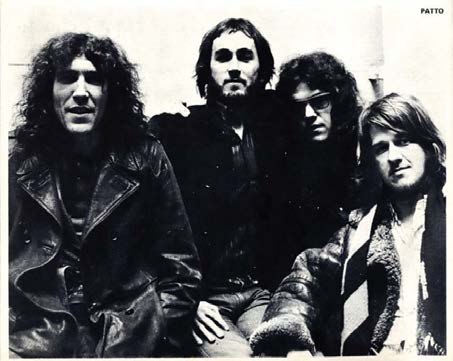
Patto in 1971: (l-r) Mike Patto, Ollie Halsall, Clive Griffiths, John Halsey
STEVE GOODMAN
It Sure Looked Good On Paper: The Steve Goodman Demos OMNIVORE
8/10
Songwriting maestro’s early searches for the meaning of life
The Windy City’s Steve Goodman entered America’s post-apocalypse 1970 with a doozy, “City Of New Orleans”. Arlo Guthrie rendered its dark realism and lyrical visions into a giant hit, and Goodman’s earliest demo of that song opens this set: gorgeous, unfettered riffs, rhythms a little faster than expected. Among these 20 demos – mostly acoustic – Goodman throws fancy production out the window, but his stories pull listeners in, pull questions out, and circle back around. “Hands Of Time” is a fine example, his voice in the light, hopes reaching high, Neil Young in his back mirror. On “Song for David” he finds death on his doorstep at age 20. Never-before-heard cuts – “Jazzman” and “Six-Pack” – are as strong as anything he released at the time. And “Ballad Of Paul Powell” lands straight in the present: “You’ve lied to all the people, Mr Powell”.
Extras: 7/10. Rare photos, liner notes and interviews by Lee Zimmerman, paper scraps from Goodman’s songwriting days.
LUKE
TORN
JONATHAN RICHMAN
Having A Party With Jonathan
Richman (reissue, 1991) CRAFT
7/10
Back for its 30th birthday – on “Bermuda seafoam” vinyl!
Richman was 40 when he made Having A Party With..., but there was no diminishing of the faux adolescence he routinely adopts when addressing affairs of the heart. “When She Kisses Me” is all the better for its innocent protagonist’s simplistic critique (“They don’t last long and they’re not hot/And they’re not the wettest kisses I ever got”), as are the underwhelming moves of self-conscious wallflowers in “They’re Not Tryin’ On The Dance Floor” (“Doin’ no one thing that I could mention/They’re not tryin’ to get your attention”). The sole accompaniment of his acoustic guitar leaves lots of space for Richman’s talents as a storyteller, peppering his songs with warm wit and weird characters, and especially evocative on the spoken-word poem “1963”, in which he hankers for a return to the quieter environs of the small town of his youth, “so I could hear the loud silence”.
Extras: None.
TERRY
STAUNTON
THE MARS VOLTA
Landscape Tantrums: Unfinished Original Recordings Of De-Loused In The Comatorium CLOUDS HILL
7/10
Expansive dig through debut album tapes
Prior to teaming up with producer Rick Rubin for 2003’s De-Loused In The Comatorium, their scintillating, multi-faceted debut, The Mars Volta pressed their initial vision onto a bunch of recordings that were subsequently shelved. Guitarist and musical director Omar Rodríguez-López has finally seen fit to