HOLDING WATER
Rowan Clarke finds out how swim venues have become key to outdoor swimming.
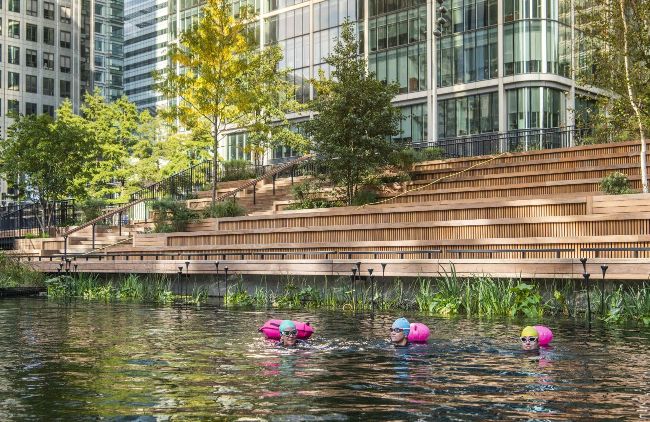
Canary Wharf Group, NOWCA, Love Open Water
The rise of open water swimming venues in England tells a revealing story. It doesn’t just demonstrate how popular outdoor swimming is becoming, it shows a shift in how we swim, and how much demand there is for better access to swimming spots.
But what kind of solution is private venues to the complex issues around access and water quality? We hear you; we should all be able to swim wild and free – it is our strapline, after all. But before you throw this magazine into the sea, hear how open water venues are opening up previously inaccessible swim spots, offering safety, support, community, inclusion and rewilding.
RECLAIMING WATER
Unlike our neighbours in Scotland, England and Wales exemplify the problems that come with privatising land and water. Despite being part of a small island surrounded by beautiful coastline and full of lakes and rivers, we have surprisingly limited access to wild swimming.
The law around public access to inland water is as muddy as its privately-owned river banks, and many swimmers report conflicts with landowners and anglers, accusations of trespassing, threats of fines, fences, barriers, or Public Space Protection Orders (PSPOs) that ban swimming, often classing it as antisocial behaviour.
One solution is creating venues for outdoor swimming. In 1933, the first such club opened at Stowford Manor Farm on the River Frome in Farleigh Hungerford, Wiltshire. Using a small stretch of river bank, this members-only river club is still home to a strong community of river swimmers.