CAMERA CINIC
Master the art of modern photography
This month: Creative lens techniques The lenses you own and how you use them define your photography
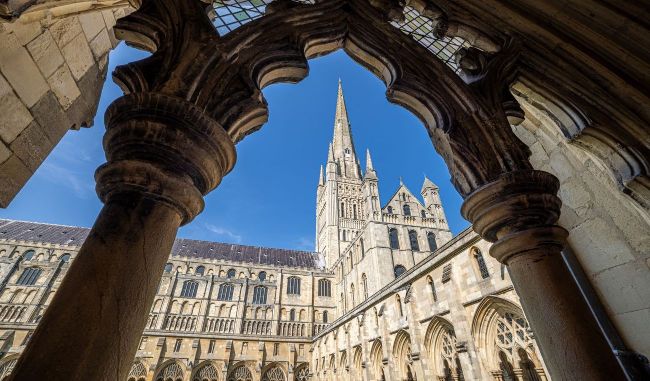
Lenses are your ‘eyes’ so make sure you look after them.
Will Cheung
Will Cheung
An imaging journalist and freelance photographer based in London, Cheung has a wealth of experience over several decades. www.williamcheung.co.uk
You can spend as much as you like on a camera but you won’t get far without a lens or two. In essence, the camera is an expensive, hugely sophisticated box of technological tricks. Of course, features such as resolution, continuous shooting rates and high ISOs have an impact on your photography, but they’re nothing without a lens.
Which lenses you decide to buy is governed by any number of factors. Budget is certainly high up on the list of those factors and almost as important is the camera you own. Manufacturers of interchangeable lens cameras have their own unique lens mount, which means there is usually no cross-brand compatibility. However, there are two open-standard lens mounts. Olympus (now OM System) and Panasonic joined forces for the Micro Four Thirds mount and Leica formed the L-Mount Alliance with Panasonic and Sigma. It means that MFT and L-Mount owners have the flexibility to enjoy different brand lenses, although there may be minor performance limitations.
One benefit of mirrorless bodies is that their thinness allows adapters, which let you mix and match cameras and lenses. It’s not universal, so you need to see what’s available for your camera and lenses. But whatever mount you have, there should be an independent or third-party lens option. Laowa, Sigma and Tamron are among the brands producing lenses for different mounts, often with significant savings.
One mount that is limited is Canon EOS RF, where there are currently no independent autofocus options for full-frame shooting, only manual focus. Hopefully, that will change and there are already third-party AF options for its APS-C format cameras. This month’s Camera Clinic digs deeper into the world of lenses, their creative potential and the key techniques you need to know.
Get the knowledge
Prime or zoom lens? That is the question
Primes are fixed or single-focal-length lenses and while less versatile than zooms, they are often more compact, usually have faster or wider maximum apertures and optical performance is often impressive. Conversely, zooms are bigger, heavier, have slower maximum apertures and can be less optically capable.
But for many photographers, the zoom lens is the better option. Having a range of focal lengths makes framing shots easy, and smaller maximum apertures aren’t an issue with the high ISO performance of digital cameras.
There is a greater sense of involvement when using primes and a more individual look to images shot at wider apertures. However, this is largely a personal matter and there are pros and cons to each type.
Gear to up your game
Accessories to boost your creative repertoire
EXTENSION TUBES
Focus even closer by fitting an extension tube or two. These non-optical devices increase the distance from the back of the lens to the sensor plane to allow closer focusing. Often sold in sets, they can be combined for a more powerful effect. Most have linkages for autoexposure and even autofocus, so they are easy to use. However, with shallow depth of field, focus is critical so placing the camera on a tripod helps.