US
3 MIN READ TIME

WHAT IS ASTIGMATISM?

How a change in the shape of the eye can alter the way people see the world

WHAT IS ASTIGMATISM?

How a change in the shape of the eye can alter the way people see the world

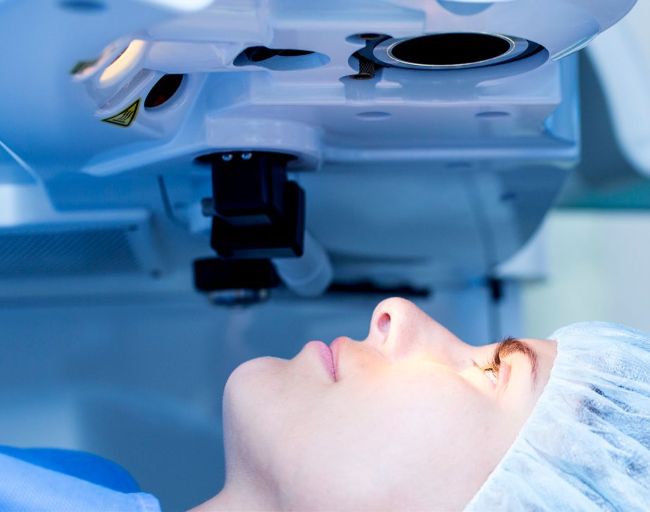
Laser eye surgery is used to permanently correct eye disorders such as astigmatism

Glasses or contact lenses are the most common treatment for astigmatism

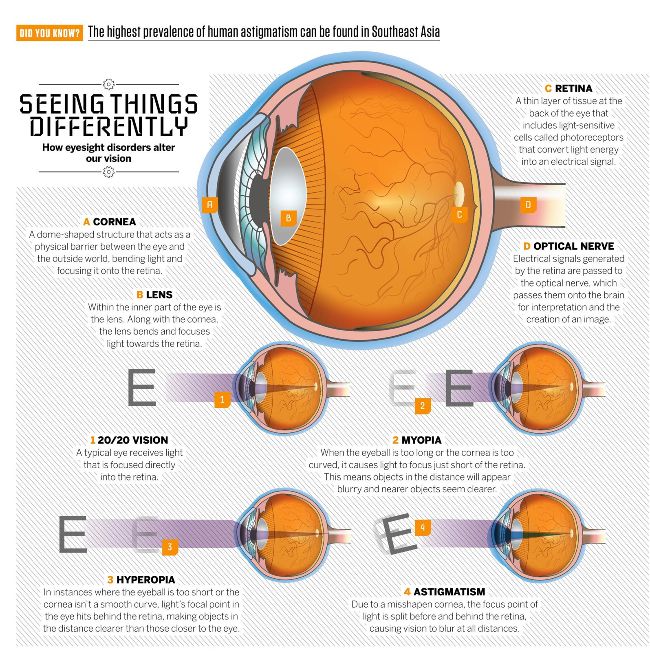
A stigmatism is perhaps one of the most common eye conditions people experience. Around one in three people have been told that they have some sort of astigmatism. The condition comes from an irregularity in the shape of the eye’s cornea. The cornea is normally a circular lens that works like a window, allowing light to pass through other parts of the eye, such as the lens and the retina. Among those with astigmatism, the shape of the cornea is slightly altered and is more oval, similar to the shape of an egg. The egg-like shape can either occur horizontally, when the cornea is wider than tall, or vertically, when it is taller than wide. Any alteration in the shape of the cornea affects the way light is projected into the eye, detected by optical sensory cells and interpreted by the brain. The result of such corneal alteration is blurred vision, headaches and eye strain.

Astigmatism is one of several eyesight disorders, the two most common being myopia (nearsightedness) and hyperopia (farsightedness). Similar to astigmatism, being either near or farsighted is related to the focal point that light reaches inside the eye. For farsighted individuals this point is behind the retina, and for nearsighted people is before. Astigmatism doesn’t have a single focal point, which leaves objects both in the foreground and at a distance blurry.

Did you know?

The cornea is around 560 micrometres thick

There are several causes of astigmatism, including a genetic disposition for the condition, physical trauma or surgery. It can also be made worse by rubbing the eye. Rubbing the eye too much can stretch the cells that make up the cornea, leading to a change in its shape. Treating astigmatism is relatively simple. A good pair of corrective lenses can refocus light that enters the eye and point it in the right direction to offset the shape of the cornea. For more severe cases, laser-assisted in situ keratomileusis (LASIK) surgery uses a high-powered laser to precisely cut and reshape the cornea.
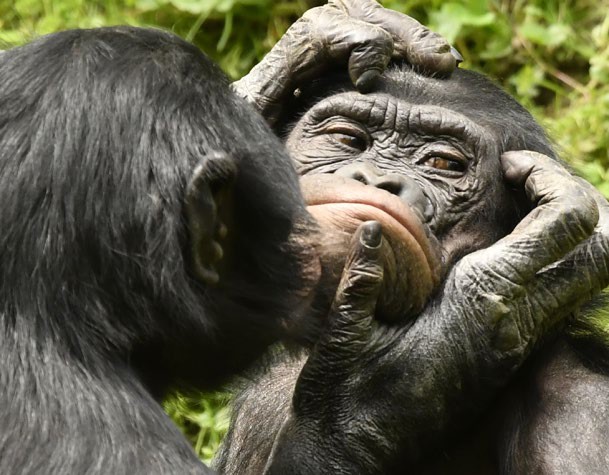
Two bonobos engaging in daily grooming

BONOBO BIFOCALS

As we age, our eyesight naturally deteriorates and corneal astigmatism worsens, typically after the age of 50, and that applies to other primates, too. The eyesight of humankind’s closest relative, the bonobo (Pan paniscus), becomes increasingly farsighted as they age. In 2016, researchers studied bonobos grooming members of their troop. What they discovered is that bonobos under the age of 30 looked into their grooming partners’ fur from around ten centimetres. However, by the age of 45 that eyesight distance had gradually increased to around 40 centimetres, suggesting the older apes were farsighted.
CONE CORNEA
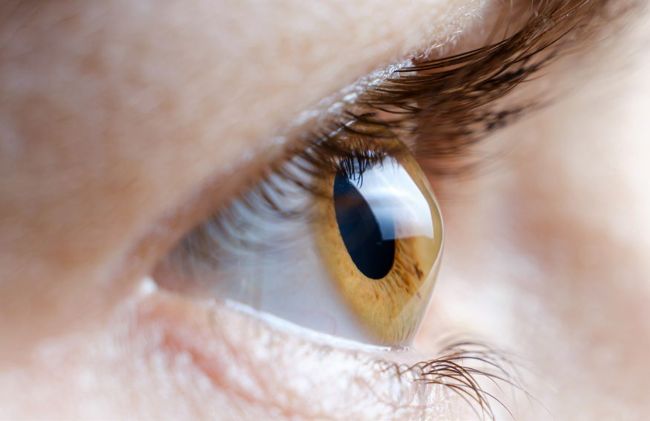
Keratoconus caused the eye’s cornea to bulge into a cone shape
© Getty

Astigmatism is one of the three most common eye disorders. However, when the eye’s cornea becomes too thin and its shape bulges into a cone, the result is a condition called keratoconus. Affecting around one in 2,000 people, keratoconus is a severe disease where the collagen within the cornea decreases. Sufferers of keratoconus experience blurred vision, sensitivity to light and a sudden worsening or clouding of vision. The disease typically starts during puberty and progresses into a person’s mid-30s, but the exact causes of keratoconus remain unclear to scientists. Research has shown that one in ten people with keratoconus share the condition with one of their parents. One of the most effective methods to treat keratoconus is a corneal transplant, whereby a donor cornea is inserted as a replacement.

Unlock this article and much more with
You can enjoy:
Enjoy this edition in full
Instant access to 600+ titles
Thousands of back issues
No contract or commitment
Try for 99c
SUBSCRIBE NOW
30 day trial, then just $9.99 / month. Cancel anytime. New subscribers only.


Learn more
Pocketmags Plus
Pocketmags Plus

This article is from...


View Issues
How It Works
Issue 170
VIEW IN STORE

Other Articles in this Issue


WELCOME
WELCOME
Issue 170 “Fear not, the world’s spiders do
HOW IT WORKS
MEET THIS ISSUE’S EXPERTS
DR ANDREW MAY Andrew has a PhD in
Unusual life forms
A moeba proteus is a single-celled microbe
Lurking on the seafloor
The bobbit worm, Eunice a phroditois,
Stranger things
Though the octopus stinkhorn ( Clathrus archeri )
New view of Jupiter
At the poles of the gas giant, the
REGULARS
The Milky Way is ‘rippling’ like a pond
Artist’s impression of the structure of the spiral
RARE CRYS TAL DISCOVERED ON THE MOON
A new type of crystal, and a potential
$3 million prize won for an AI that predicts every protein’s structure
Ribosomes (light purple) assemble new proteins from building
Huge ancient lava flow seen from space
The Carrizozo Malpaís lava flow in the Chihuahuan
GHOSTLY RINGS OF NEPTUNE SHINE IN NEW WEBB IMAGES
Neptune and its rings glow an eerie white
China approves first inhaled COVID-19 vaccine
An illustration of coronavirus particles C hina has
A SECRET STAR AT THE CENTRE OF THE CAT’S EYE NEBULA
A 3D model of the Cat’s Eye Nebula
A vanished arm of the Nile helped build the pyramids
New findings shed light on the Nile’s water
Tardigrade survival attributed to proteins found in no other animals
Tardigrades can enter cryptobiosis to withstand temperature and
Ancient ‘dragons’ were Earth’s first gliding reptiles
The ancient reptile used its wings to glide
Acid lake atop ‘Mount Doom’ in striking new image from space
The highly acidic hydrothermal lake can be seen
MYSTERIOUS ‘BLUE GOO’ ON THE OCEAN’S BOTTOM STUMPS SCIENTISTS
A close up of one of the mysterious
WISH LIST
The latest tech for WINTER
BRAINDUMP
Amazing answers to your curious questions
THE LIBRARY
The latest book releases for curious minds
MAKE A SPIDER’S WEB
Weave your own web with Styrofoam and nail polish remover
ADVERTISING TRICKS
Dear HIW, How does the technology work to personalise the adverts you see on your phone? Sometimes I speak about something and don’t search for it on my phone, but I still receive adverts for a specific product. Is there a way to stop this?
FAST FACTS
Amazing trivia that will blow your mind
SPECIAL
20 SPIDER MYTHS BUSTED
There are many misconceptions about these eight-legged creepy-crawlies. We sort the facts from the fiction
ENVIRONMENT
HOW BIRDS MAKE NESTS
Explore the amazing beakwork of the world’s feathered architects
HOW DO DOGS SMELL?
See inside the nose of man’s best friend
HISTORY
SECRETS OF THE BOG PEOPLE
Meet the mysterious Iron Age mummies buried in Northwest Europe’s swamps
A PILGRIM’S PICKLING
Miranda Aldhouse-Green, emeritus professor of archaeology at Cardiff University, says that many of the bog people may have been on spiritual journeys before being killed
HOWARD CARTER
100 years ago, this archaeologist shot to worldwide renown when he discovered the tomb of the Egyptian pharaoh Tutankhamun
ANGEL’S GLOW
Why injured Civil War soldiers glowed with a pale-blue light that seemed to heal their wounds
SCIENCE
What are MICROPLA ASTICS?
Take a closer look at these miniscule pollutants and how they affect all life
REMOVING MICROPL ASTICS
These technologies and techniques can help reduce microplastics’ environmental impact
SPACE
BLUE STARS EXPLAINED
Take a look at the hottest stars in the galaxy, which live fast and die young
HOW THEY EVOLVE
The rate at which a star progresses through
TEN BIG TERRESTRIAL TELESCOPES
These giant Earth-based structures serve as our eyes, peering far into space
SOLID ROCKET BOOSTER CHEMISTRY
Much of the power of NASA’s new rocket comes not from its main engines, but its boosters
TECHNOLOGY
STEAM DECK TEARDOWN
This new portable console takes gaming to the next level
HOW NEWBORN INCUBATORS WORK
Found in hospitals around the world, these medical boxes have saved the lives of countless sick and premature babies
TRANSPORT
THE UPS AND DOWNS OF AIR TRAFFIC CONTROL
Air traffic controllers are tasked with keeping pilots, planes and passengers safe in increasingly crowded airways – this is how they do it
A DAY IN THE LIFE OF AN AIR TRAFFIC CONTROL OFFICER
Air traffic control officer Bart Montilla explains how he keeps you safe in the air
Chat
X
Pocketmags Support