MAWIZA
BACK TO THE PRIMITIVE
Why Mawiza are on
a mission to reclaim
their Mapuche
heritage
WORDS: MATT MILLS
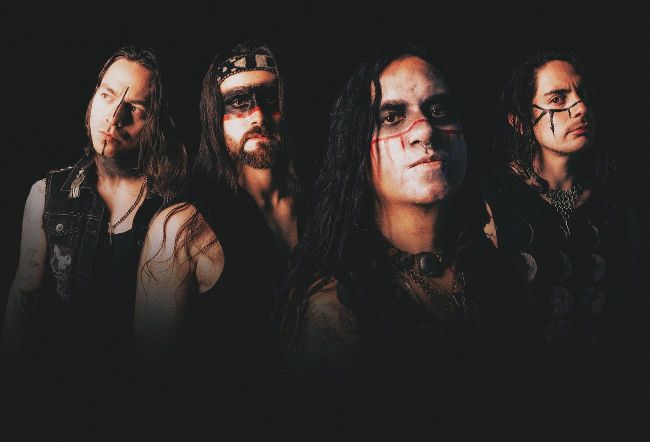
PICTURES: ANDIE BORIE
Four face-painted men stand around a bonfire, one of them banging on a South American tribal drum called a kultrung. No, this isn’t the scene of some ancient ritual – it’s the opening sequence of the music video for Wingkawnoam, a single from up-and-coming Chilean groove metallers Mawiza.
Based in Santiago and representing the Mapuche Nation, this four-piece join the rising tide of Indigenous bands introducing their cultures to metalheads worldwide. As with their peers – including Māori trio Alien Weaponry and Native American black metal project Blackbraid – they use heavy music as a megaphone to scream about their pride in their customs and their hatred of colonialism.
“We are searching for our own identity within our music,” says lead singer Awka Mondaka. “Here in Chile, for the Mapuche Nation, it’s difficult to find your identity, because in the Chilean state it’s like, ‘You are all Chilean. There is no Mapuche, there is no Indigenous, there is no identity – just Chile.’”
The Mapuche people are mainly situated in southern Chile and southwestern Argentina. For 350 years, they fought against Spanish settlers who wanted to force them into slavery and eradicate their culture. But, since Chile declared independence in 1818, their traditions have been eroded by racism and economic pressures. There are approximately 1.8 million Mapuche people in South America, yet only 250,000 speak their native language, Mapudungun.