REAL GONE
Careering
Clash-PiL co-founder and post-punk guitar iconoclast Keith Levene slipped away on November 11.
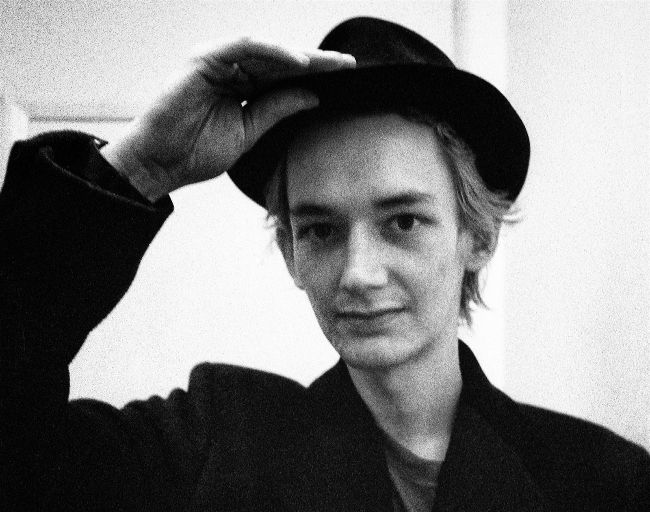
Hats off: Keith Levene – who “forged a genuinely new sound and aesthetic” – in John Lydon’s flat, March 1981.
Tom Sheehan
KEITH LEVENE’S lacerating metal blizzards on the first two PiL albums made him one of the few guitarists of the rock era to forge a genuinely new sound and aesthetic. He was also instrumental in forming two of the great groups of punk and post-punk.
The son of a Muswell Hill tailor, born on July 18, 1957, Levene tasted factory work after leaving school at 15. He also, surreally, roadie’d as drum tech for Alan White and his musical heroes, Yes. Having learned guitar – with remarkable speed, he recalled – Levene formed The Clash with Mick Jones in 1976. He and manager Bernie Rhodes persuaded Joe Strummer to leave the 101’ers and front the group, but after just five gigs the guitarist’s accelerating musical aspirations and The Clash’s politics prompted his departure. He did, however, leave a co-writing credit on What’s My Name on The Clash in 1977.
“Guitar was redundant, I hated it.”
KEITH LEV ENE
Visiting Levene’s Shepherd’s Bush home, this writer met the likeable creative dynamo when he was forming The Flowers Of Romance with squatmates Viv Albertine and Sid Vicious. After the Sex Pistols’ 1978 collapse, he formed Public Image Ltd with John Lydon. Both men were determined to sound wholly unlike their previous outfits. Completed by Jah Wobble on bass and drummer Jim Walker, PiL announced itself with the scathing, Top 10 Public Image single, a Christmas Day show at the Rainbow and debut LP First Issue, which mystified Pistols fans but inspired such post-punk aggressors as Gang Of Four and The Pop Group.
In November 1979, I was summoned to PiL HQ at Lydon’s Chelsea townhouse to hear the just-finished, alchemical Metal Box, withits audacious rewiring of punk attitude into atonal dub and scabrous vocalese. Handling drums and string-synth, Levene described the album as “really just me and John finding out how to use the studio.” Levene, Lydon and Jeannette Lee went on to construct 1981’s guitar-free The Flowers Of Romance from manhandled acoustic instruments, electronic noise and super-treated percussion. “In the early PiL stuff, I felt like I discarded conventional guitar,” said Levene. “Guitar was redundant, I hated it. PiL managed to use it and it came out different. That was good until Metal Box.”
Levene described PiL as “bigger than a band. It’s total.” Yet, after 1983’s Top 10 single This Is Not A Love Song, a fourth album he mixed and delivered while Lydon was filming the movie Order Of Death led to a split. After Lydon rerecorded it with session musicians as 1984’s This Is What You Want… This Is What You Get, the same year Levene released his mixes under the album’s original titleCommercial Zone (later revisited as Commercial Zone 2014). Levene was by now addicted to the heroin that would poleaxe his career; he and Lydon would not collaborate again.
Moving to Los Angeles in 1985, Levene worked with acts including the Red Hot Chili Peppers and Ice-T before releasing 1989’s Violent Opposition, the first album in a sporadic solo canon. He also reunited with Jah Wobble in 2010, wrote several PiL- and Clash-related memoirs, and appeared alongside Wobble, Mark Stewart, Youth and Andrew Weatherall on 2019’s anti-Brexit protest song A Very British Coup. He leaves partner Kate Ransford, and son Kirk from his first marriage to US musician Lori Montana. On hearing of his death, Wobble paid tribute to his “musical brother”.
Kris Needs
THE LEGACY
The Album: Metal Box (Virgin, 1979) The Sound: PiL’s pivotal achievement manifested as three metal-encased 12-inch singles, and marked Levene’s last great guitar excursions. His shattered-nerve jangle rode Wobble’s booming rumble with breath-catching impact on Albatross and Swan Lake; Careering introduced his ominous string synthesizer, given full rein on Radio 4’s astonishing, symphonic solo finale.