Beyoncé
From girl-group to global domination. By Victoria Segal.
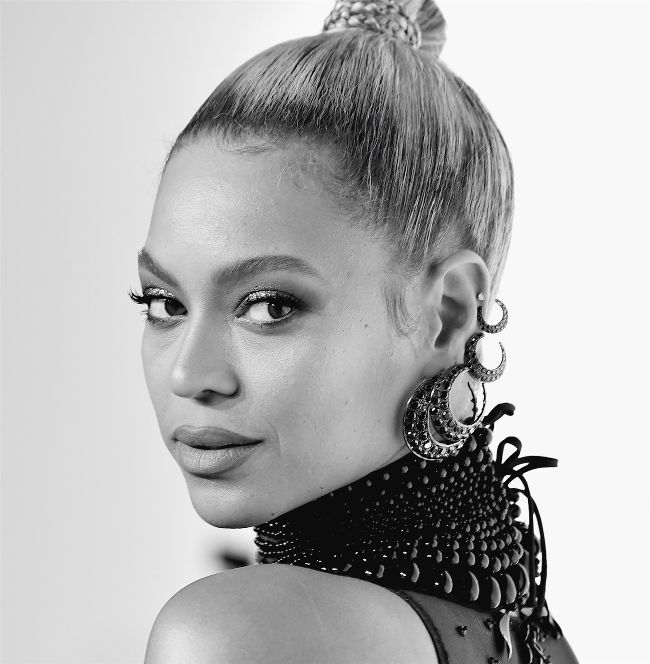
Beyoncé in 2016, shaping her musical world from the material around her.
Getty (2)
THE ARC of a pop career is rarely one of steady growth and healthy development – the fireworks tend to be front-loaded, the sparks slowly falling away over time. Beyoncé Knowles-Carter, however, has been an exception to this dispiriting rule, a global pop star – approximately 200 million record sales behind her – whose vision has evolved with each album, whose cultural impact has intensified with each year. Her last two records, 2016’s Lemonade and this year’s Renais-sance, have dramatically driven her ongoing transforma-tion, opening up her work in new and acutely resonant ways by amplifying black music, history and woman-hood, style and content syncing up to rare effect.
Born in Houston in 1981, Beyoncé started par-ticipating in dancing and singing competitions from the age of seven. “I was often the only black girl, and it was then that I started to realise I had to dance and sing twice as hard,” she said in 2021. “I had to have stage presence, wit, and charm if I wanted to win. I started taking voice lessons from an opera singer at nine. By 10, I had already recorded at least 50 or 60 songs in the recording studio.” She started to sing with girl-group Girl’s Tyme aged eight, failing to win TV talent show Star Search; by 1996, they had mutated into Destiny’s Child under the managerial eye of Beyoncé’s father Mathew Knowles. A trio of Beyoncé, Kelly Rowland and Michelle Williams in their final form, they profoundly influenced the sound of millennial R&B – not least because of Beyoncé’s distinctively staccato vocals.
“Beyoncé has become a pop star not just of the age, but for the ages.”
The girl-group bonds eventually frayed, however, and by 2005, Beyoncé was two albums into her solo career. Her relationship with Jay-Z – they married in 2008 and have three children, 10-year-old Blue Ivy and 5-year-old twins Rumi and Sir – provided her with both a collabo-rative partner (as on 2003’s Crazy In Love) and carefully curated material for her more personal songs.