FILTER ALBUMS
On further reflection
Wirral wanderers set the existential scene on cinematic double bill.
By Victoria Segal.
The Coral
★★★★
Sea Of Mirrors
RUN ON. CD/DL/LP
“ONCE A DRIFTER, always a drifter,” declares guest narrator John Simm on Drifter’s Prayer, a track from Holy Joe’s Coral Island Medicine Show, the companion LP to The Coral’s eleventh album, Sea Of Mirrors. “Those are the rules of the game.” From the moment their self-titled 2002 debut unfurled its sails with buccaneering opener Spanish Main, The Coral made it difficult to pin down what their game was, let alone its rules, jamming the signals that might have fixed their exact coordinates. They launched their voyage from the Wirral seaside town of Hoylake while they were still in their teens but otherwise, these “bedroom heads” (in the words of multiinstrumentalist Nick Power) roved all over the map, their fondness for Love, Can and Captain Beefheart mutating into pirate psychedelic reels, beat group freak-outs and wistful garage pop.
While they are no stranger to the concept album – 2004’s Nightfreak And The Sons Of Becker was Boris Becker-themed psychedelia recorded in career-sabotaging response to the Number 1 success of the previous year’s Magic And Medicine – the band have recently become increasingly fond of carving out strange metaphorical spaces to furnish with their work. With their last album, 2021’s Coral Island, they wrote a collection of songs about a haunted coastal resort, binding them together with narration from Ian ‘The Great Muriarty’ Murray, grandfather of singer James Skelly and his drummer brother Ian. Now, they are following that double album with two records released on the same day – Sea Of Mirrors, and the physicalformats-only country feedback of Holy Joe’s Coral Island Medicine Show, a record again hooked together by Murray’s late-night beatnik radio links.
It’s an oddly inappropriate burst of creative energy, given Sea Of Mirrors is so much about drift, dissipation, the deceptive cracks and crevices between solid reality and incorporeal fantasy. Barnacled shanties give way to more cosmic voyages; Faraway Worlds is less a desperado rampage to the Spanish main, more a harmony-laden trip on David Crosby’s schooner. The slow-moving Dream River, inviting the listener to pick out images and moods like a kind of psychic hook-a-duck, begins with a swell of strings reminiscent of Leslie Bricusse and Anthony Newley’s Pure Imagination: Sea Of Mirrors seeks to be a world of The Coral’s creation, one that might well defy all explanation. If it’s formed around a worryingly played-out concept – the soundtrack for a film that doesn’t exist, in this case a film about an actor on a disintegrating spaghetti western, slowly collapsing along with the sets – there is a depth to these songs that ensures Sea Of Mirrors isn’t just so much postmodern plywood.
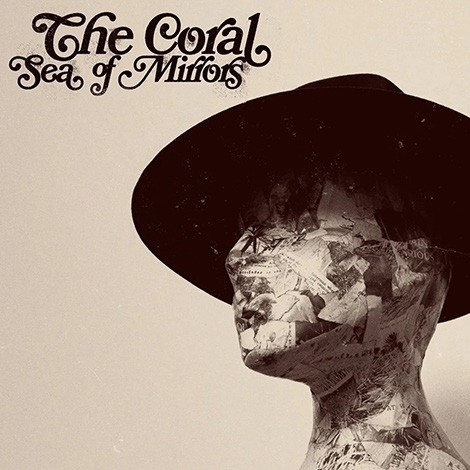
Illustration by Joe Wilson.
“Unsettled tracks about love and loss, physical and mental alienation, disconnection from the world.”
These waters are not entirely uncharted: Coral Island features a vignette called The End Of The Pier, which had Murray pulling back the curtain on the summer-season artifice: “Like all the great mirages, it’s gone before you’ve blinked/The promenade palm trees are plastic, the amusements are a cardboard movie set.” Melancholy, meanwhile, has long been their close companion (even on apparently jaunty hit In The Morning, love is being erased – “She wrote my name on a red telephone box/When I got there she’d already rubbed it off ”). Yet Sea Of Mirrors is beautifully constructed, the band working with The High Llamas/ Stereolab’s Sean O’Hagan again (he also joined them on 2010’s Butterfly House) to ensure a meticulous dovetail-joint finish to the surreal Cowboy In Sweden fantasia – aslight glassy glint to the string arrangements and choral cascades, but nothing cheap, no wobbly trompe l’oeil props.
It begins with The Actor And The Cardboard Cowboy, a misty instrumental that feels like the introduction to an Oliver Postgate children’s show, a portal into these songs, before Cycles Of The Seasons, turn-turn-turns somewhere between Windmills Of Your Mind and the teatime melancholy of The Littlest Hobo theme tune. The cactus-needle guitars and rattlesnake drums of Wild Bird and North Wind are most obviously in wide-brimmed Sergio Leone character; a female figure flits ambiguously through That’s Where She Belongs, The Way You Are (an acid-age And I Love Her) and dreamy instrumental intermission Eleanor.
The acting world isn’t just represented by Simm’s presence on Holy Joe’s Coral Island Medicine Show, either. Cillian Murphy, currently operating in a slightly un-Coral-like universe post-Oppenheimer, delivers the closing Nick Power-written voiceover on Oceans Apart, his character balancing at the eroded edge of reality: “Here I am caught between both the form and the reflection, between fact and fiction/Not knowing what role I’m supposed to be playing.”
“Most of the directors just used the genre,” James Skelly tells MOJO, explaining his interest in spaghetti westerns, “they didn’t really care about westerns – they would use it to make a horror film or a comedy or a political film.” Similarly, the cinematic trappings of Sea Of Mirrors feel like a red herring, a Hitchcockian MacGuffin – the framing stor y of a film-set meltdown an excuse for a collection of unsettled tracks about love and loss, physical and mental alienation, disconnection from the world. Waves turn into desert sand, and vice versa; there is a constant blurred horizon. There’s an occasional vagueness, but more often it translates into unease. The lushly stringed psychodrama of the title track imagines “a reflection of yourself/Reaching out for help”, while a dangerous fog rolls in with the reverb on Oceans Apart as Skelly sings: “Feel myself slipping away/It’s like a stranger took my place.”
For all the drifting, though, it’s rare that The Coral let these songs get away from them. They might have needed the cinematic prompt as a spur, a reminder of earlier unpasteurised idiosyncrasies, but Sea Of Mirrors stands up without the set dressing. It ends with a brief reprise of the opening track, gently lighting the aisles to the exits; you might well find yourself staying put in the dark, ready to let it run back to the start and play out again.
Jalen Ngonda
★★★★
Come Around And Love Me
DAPTONE. CD/DL/LP
Liverpool-based US soul brother impresses with accomplished debut.
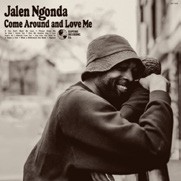
Ngonda’s voice is a thing of wonder; a supple, sublimely soulful bel canto instrument that can rise to a soaring, hairs-on-the-neck-lifting falsetto cry. Though his arresting high tenor tone reverberates with echoes of Marvin Gaye’s liquid gospel and the pleading, forlorn wail of The Delfonics’ William Hart, Ngonda has developed a highly individualistic voice that he frames with evocative retro arrangements. Opening with the urgent title song, characterised by a jazzy What’s Going On vibe and David Van De Pitte-style string arrangement, the Marylandborn singer/songwriter takes the listener on a journey exploring the vicissitudes of love. Highlights include It Takes A Fool, juxtaposing psychedelic fuzz-toned guitar with dreamy, glistening vibraphone, and Lost, a desolate tale of heartbreak saluting producer Thom Bell’s work with The Delfonics. Simultaneously classic and contemporary, Ngonda has crafted an exquisitely soulful debut.
Charles
Waring
Royal Blood
★★★★
Back To The Water Below
WARNER BROS. CD/DL/LP
Brighton’s millennial rock sourpusses untether their inner Smashing Pumpkins.
Royal Blood’s isolation as one of only a very few British rock chart-toppers to emerge in the last 15 years was all too manifest at BBC Radio One’s Big Weekend in May, as frontman Mike Kerr stropped out at the indifferent pop audience that greeted them. Ironically, he and drummer Ben Thatcher have been diversifying of late: after two LPs of piledriving riffage, 2021’s Typhoons was built on synth melodies, thereafter, beefed up. But this fourth album branches out to include considerable light and shade, with the expansive-but-to-the-point feel of Smashing Pumpkins’ Gish, or even Led Zeppelin III. Each side certainly begins heavy (Mountains At Midnight is ‘disco Sabbath’ in excelsis, Triggers even more so), but then Pull Me Through strips out Kerr’s trademark bass distortion for an acoustic, Beta Band vibe, while side two’s There Goes My Cool builds like a Slade ballad through bombastic chord changes to an arms-aloft singalong finale. With top-drawer tunes throughout.
Andrew
Perry
Courtney Barnett
★★★
End Of The Day
MOM + POP. CD/DL/LP
Alt-rock anti-heroine releases 17 instrumentals.
“I turned 30, felt like I stepped over some sort of line, but I’m still lost,” Courtney Barnett says on Anonymous Club, Danny Cohen’s film about her life on tour. Originally conceived as a soundtrack to the movie, Barnett’s fourth solo album is purely instrumental sound-art collage, a way of redirecting the nervous energy that has driven her for so long. Usually a laconic lyricist, she has ditched the wordplay to focus on an interior ambient world created just through her guitar and the Oberheim synth effects of co-collaborator, Warpaint drummer Stella Mozgawa. Slow twanging notes hang in mid-air, looped and echoed in a way that is meditative and beguiling. In places it verges on doodling, as if Barnett is endlessly tuning her guitar, but tracks such as Intro or River sound darkly majestic, like deep, drifting hollowed-out Americana.
Lucy
O’Brien
Kristin Hersh
★★★
Clear Pond Road
FIRE. CD/DL/LP
Throwing Muses mainstay in magic-realist minstrel mode.
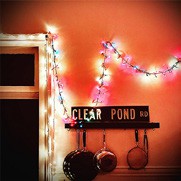
Of all the US alt-ensembles signed by majors around the time of grunge, Boston’s Throwing Muses were perhaps the unhappiest misfits, too defiantly left-leaning for mainstream grooming. Hersh, their sole songwriter after Tanya Donelly left in 1991, initiated her solo offshoot in 1994, which has run parallel to Throwing Muses and more obtuse trio 50 Foot Wave ever since. In places, this twelfth solo LP has a markedly similar feel to her generation’s biggest-selling acoustic record, Nirvana’s MTV Unplugged In New York: on Ms Haha, tough strumming and foreboding cello underpin Hersh’s parched growl about the “crap shack we call home”. Her voice weathered to a softer huskiness, Hersh’s songs these days come across less stridently, with no intensity subtracted. Dandelion weaves arpeggiated alchemy, amid oblique images of “Cupid slinging dandelion hope”, while Palmetto’s medieval plucking resolves to the tingling pay-off, “no winter without spring”. Hard-won optimism, as ever, from this troubled heroine.
Andrew
Perry
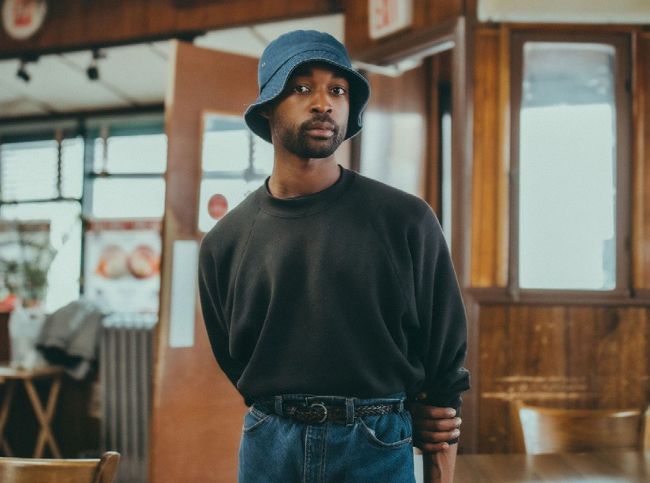
Jalen Ngonda: exquisitely soulful.
Matthew Halsall
★★★★
An Ever Changing View
GONDWANA. CD/DL/LP
Manchester jazz baron resets his lens to landscape.
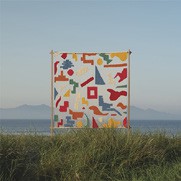
Rosie Cohe
Trumpeter, producer and record label founder, Matthew Halsall has built an industry around himself since dropping his debut LP – an assured collection of Miles-like ruminations – 15 years ago, when British jazz was much deeper underground. Since that time, his one-man label, Gondwana, has grown into an important, international outlet for jazz. His own work, 10 LPs in, is well defined now, along sharp, clean lines. This one expands on the rippling backdrops he used on 2020’s Salute To The Sun: looped percussion – log drums, kalimbas, seed shakers, chimes and bells – laying down a landscape which Halsall can walk through, playing in his clear tone. Water Street and Calder Shapes sparkle like rivers, with Chip Wickham’s lyrical flute and sax, while Alice Roberts’ evocative harp serves to remind you of Halsall’s deep admiration for Alice Coltrane.