MOTOR SPORT TECH
Giving the underdog its day
After years of struggle Williams is again looking a competitive F1 team. Here’s how it turned a pig’s ear of a car into a silk purse
WORDS: MARK HUGHES
WILLIAMS FW43B
To create the wider, flatter sidepods the hot air from the radiators is routed through the centre bodywork, creating a bulkier shape
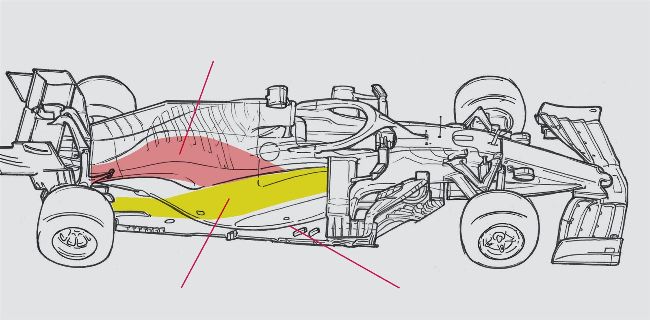
ILLUSTRATION: CRAIG SCARBOROUGH
The tops of the of the sidepods are wider and create more downwash towards the diffuser, producing more downforce from the floor
Williams sidepods are wider at the bottom and merge smoothly into the floor
In Sochi George Russell qualified the Williams FW43B into Q3 for the third time this season. Once there, an inspired early switch to slicks played its part in his sensational third place on the grid. Russell is clearly operating at an extremely high level and the car is in reality still only a marginal Q1/Q2 runner most of the time, but it’s good enough that a just slightly favourable set of circumstances can allow Russell to produce these occasional shock outcomes (see also Silverstone and Spa). Given that the basic architecture of the car is still that of the disastrous 2019 FW42 clearly big advances have been made within that limitation. In ’19 Williams hung off the back of the grid by a significant margin; in 2020 it was able to compete with Haas and Alfa-Romeo. This year it has left Haas well behind and can on occasion mix it with more exalted company.