ALL AMERICAN HERO
While writing his new book on Carroll Shelby, Preston Lerner became entranced by engineer Phil Remington who seemed to embody the best of motor sport. Here, the author recounts a life which is passing into folklore
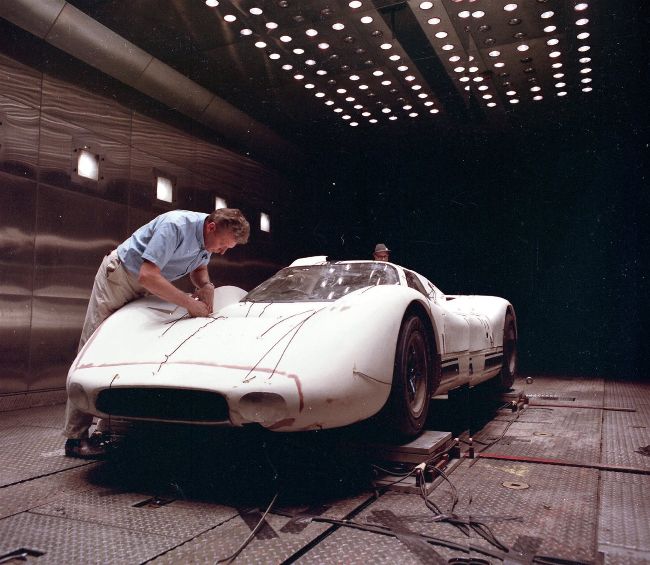
Phil Remington in the Ford wind tunnel testing the bodywork modifications he’d made a few days earlier to the J-Car. When the new bodywork was finalised, the car was renamed the Mark IV and won Sebring and Le Mans in its only two competitive outings
FORD MOTOR COMPANY
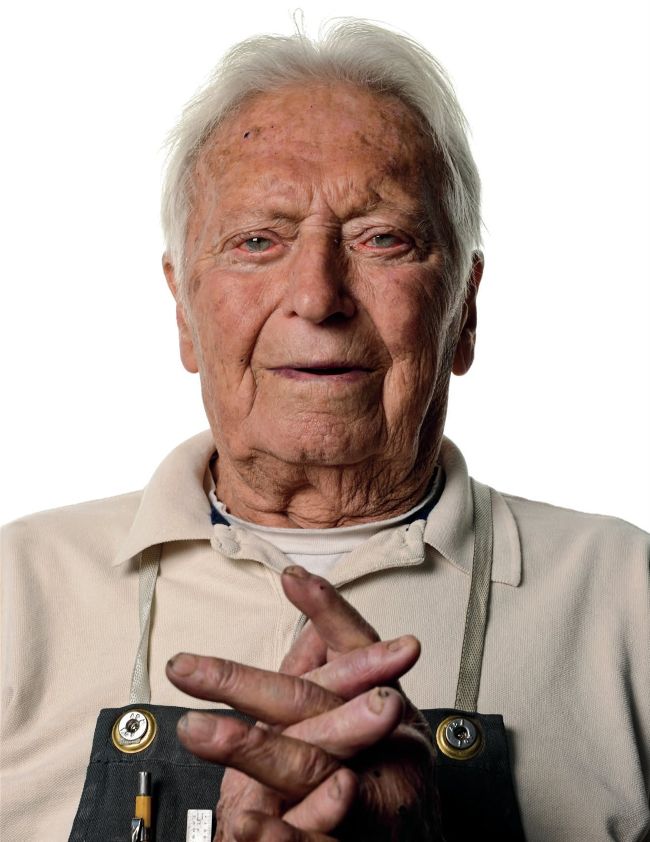
Remington in his nineties.
“He became probably the greatest race car builder in the world”
Phil Remington was the Paul Bunyan – the US superhuman lumberjack folk hero – of American motor sports. During a career that stretched from pre-war hotrods to the carbon-fibre DeltaWing, he generated enough lore to fill several volumes of epic poetry. Did he really bend a 40ft-long piece of tubing by using the roof of his house as a fulcrum? Maybe not. But there are witnesses who saw him straighten a crooked swing arm without ever touching it with his hands by deftly heating it with the oxygenacetylene welding rig he wielded like a magic wand and letting the metal settle into the correct shape. And there are photos of him in the wind tunnel at Ford, where, working purely by intuition, he transformed the unloved Ford J-Car into the unbeatable Mark IV. And then there was the time that everybody in the Shelby American shop stopped to gawk while he power-hammered a roll bar into existence because he was working at such a furious John Henry-esque clip to get the GT40 X-1 in the transporter en route to Sebring, where it would win the 12 Hours a week later.
Fellow All American Racers crewman Mike Lang still laughs as he thinks back to the day that Boy Hayje crashed an AAR Toyota Celica GTU during practice at Mid-Ohio. The instant the car arrived back in the pits, Remington starting cutting away the wreckage. He found that somebody had forgotten to fill the tank for the TIG welder with argon. No problem.
But when Remington dragged out an oldschool acetylene torch, he discovered that there were no welding rods. Without missing a beat, he climbed into the team transporter, collected the wire coat hangers holding the drivers’ suits, knocked the paint off them with a belt sander and used the bare metal to weld up the front end of the car.
It was mid-summer in the American Midwest – brutally hot and obnoxiously humid. “We’re all sweating like there’s no tomorrow, and ‘Rem’ is gas-welding with a crappy old pair of welding goggles that kept slipping down off of his eyes,” Lang says. “Finally, he tossed the things to the side and just squinted as he welded. There were some younger guys there who’d been recruited for the Toyota programme, and they were completely slackjawed. I mean, they could not believe what they were seeing. And, if I recall correctly,” he adds with a chuckle, “we were back at the hotel bar by seven o’clock.”