What lies beneath
The 911 RSR story began in the mid-70s but this is the latest chapter. As Andrew Frankel discovers, the ‘95% new’ RSR-19 has little in common with its ancestors
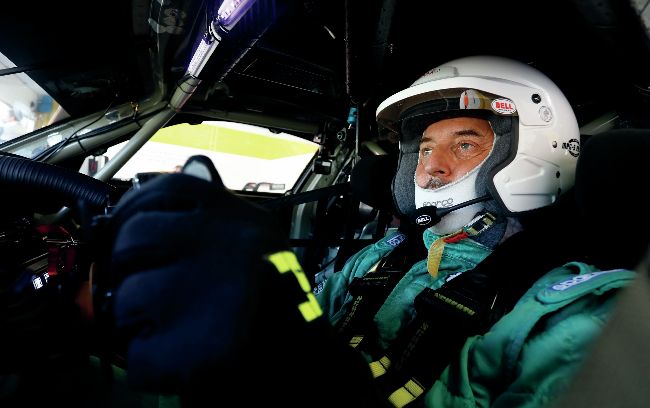
Earplugs, balaclava, helmet and sound-absorbent fabric still can’t fully hide the din of the RSR-19
IF YOU WANT TO KNOW HOW FAR REMOVED from even the raciest street-legal Porsche is this 911 RSR-19 – its current Le Mans and World Endurance Championship contender – you don’t need to drive it, though I have. You don’t even need to pore over its specification, nor crawl all over it, though I did. All you really need to do is ask Porsche’s head of WEC operations Alex Stehlig a simple question.
“If I gave you a new road 911 and asked you to turn it into an RSR...” And that’s as far as you get before Stehlig looks at you as if you’ve parted company with your senses. “You couldn’t,” he says, wide-eyed at the thought.
Try from the other direction. “Okay, could you show me round the car and point out those components that have come from the road car?” Alex pauses, now lost in thought, before he smiles as an answer pops into his head. “Here!” he says pointing to the rear lights.
“So the RSR has the same rear lights as a road 911?”
“The lights? No. Just the plastic covers.”
“Anything else?”
Alex walks to the other end of the car and points at the Porsche sticker that passes for a badge on the bonnet. “That,” he says. “Maybe.”
SO THOUGH IT LOOKS LIKE A PORSCHE 911, IS powered by a flat-six engine and is made by the same people who make the Porsche 911, I’ll leave it to you to decide whether it really is a 911. It doesn’t even possess that other unmistakeable 911 hallmark: a rear-mounted engine. Because the 911 road car uses a version of the platform also employed by the midengined Boxster and Cayman, in 2017 Porsche argued that it should be allowed to turn the engine and gearbox by 180 degrees, creating the first mid-engined 911. Some salivated over the prospect of a mid-engined 911 road car. Three years later, they’re still salivating.