BRACKISH Neovespicula
A STING IN THE NAME
The fish that live in the realm between fresh and seawater rarely get a look in. Chris Sergeant spotlights a brackish species worth setting up for.
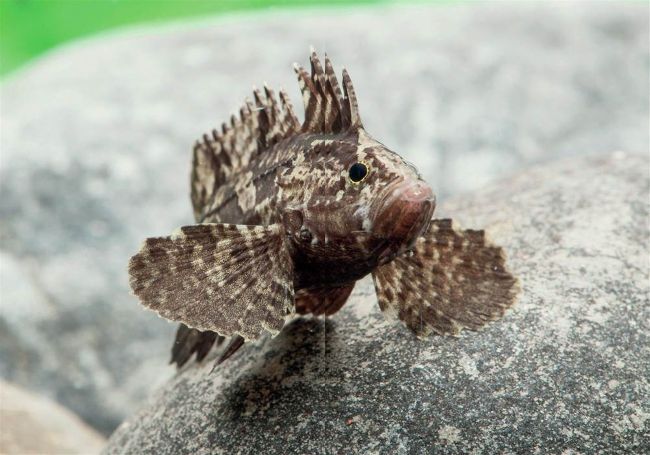
These spines are made for stinging.
ALAMY
CHRIS SERGEANT
Chris works in conservation research and regularly writes for aquarium publications.
WHEN IT comes to their common names, fish can be particularly confusing. Take the Bombay duck Harpadon nehereus, or Montagu’s sea snail, Liparis montagui, prime examples of fish masquerading under the guise of another animal. Meanwhile, working out what creatures like the Sarcastic fringehead, Neoclinus blanchardi, or Monkeyface prickleback,
Cebidichthys violaceus, are based on their name alone is nigh on impossible. Then you have Zebra sharks, Stegostoma fasciatum, which are spotted, whilst Electric eels, Electrophorus sp., are actually species of knifefish. I would continue, but you get the picture.
Most naming confusion causes relatively few issues within the aquarium trade. If there’s any ambiguity, we revert back to the scientific titles. But there’s a small assortment of fish where misleading names can lead to their detriment.
For many aquarists, the thought of a lionfish, toadfish or waspfish will likely conjure up images of fishes dwelling over coral reefs, hunting prey with impunity, or buried under sand, spiky and venomous. But scour the stock tanks at any of the more specialised aquarium stores and you’ll often yourself face-to-face with a ‘freshwater’ alternative.
Admittedly, the Grunting toadfish, Allenbatrachus grunniens, and Three-spined lionfish, Batrachomoeus trispinosus, (confusingly also a species of toadfish) can be rare finds. Probably the most commonplace, at least from my own personal experience, is the Freshwater waspfish, Neovespicula depressifrons.
Salty little wasps
These little fish have a multitude of other colloquial hobby names: Leaf goblinfish, Butterfly goby, Dusky panther goby or the Butterfly grouper to name just a few. Despite the insinuations, they are neither goby nor grouper, but instead hail from the order Scorpaeniformes and the family Tetrarogidae, a group known collectively as the waspfish.