Tortoises in the summer
Allowing your tortoises outdoors over the summer is a good idea, but you need ensure they will be safe. Also, bear in mind that females may nest in garden surroundings, and you may find yourself with an unexpected clutch of eggs, explains David Alderton.
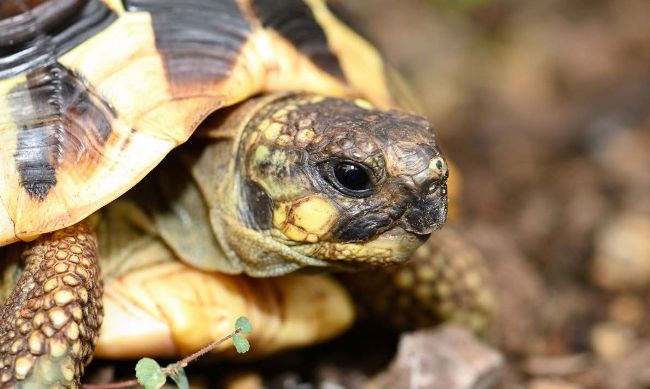
Photo courtesy Jordi Jornet/
www.shutterstock.com

Tortoise may raid garden crops such as strawberries.
Allowing tortoises outside when the weather is sunny will be beneficial to their health. They are able to bask and derive maximum benefit not just from the warmth, but also the UVA and UVB wavelengths of sunlight. This serves to encourage their appetite as well as helping to ensure healthy bone development, and also affords a more natural breeding environment.
But before you allow your tortoises out to roam in the garden, you must ensure that it is safe for them. First and foremost, you need to be certain that there are no areas from which they could escape. Check the fences carefully for any gaps. Bear in mind that tortoises can dig well and are likely to be able to expand a hole under a fence without difficulty, effectively tunneling out of your garden as a result. You will also probably have to restrict the area accessible to a tortoise so that it cannot wander off into a fish pond for example, or head away from the lawn area to munch some precious vegetables or flowers elsewhere.
A courtyard-style garden with a lawn is probably the safest option, but it is important not to put your tortoise in an area where it will be accessible to passers-by, as your pet is then likely to end up being stolen. Free-roaming tortoises - including Horsfield’s (Agrionemys horsfieldii) which do not officially need to be micro-chipped, should still be protected in this way. If your pet does stray from your garden at any stage, it will then be more likely to be reunited with you as a result.
Obviously when you are out in the garden yourself, you can allow your pet to roam freely, although do not become distracted, because tortoises can move surprisingly fast and so may disappear very quickly from view.
Young at greatest risk
The size of your tortoise is also significant, because smaller tortoises are much more likely to disappear out of sight in a garden, or escape further afield. It will often be better to confine your pet therefore, in a suitable pen. This also has the advantage, particularly later in the year, that when the weather turns colder, you can find your tortoise easily to bring it back indoors. Young tortoises, because of their size, are generally more susceptible to becoming chilled.
They are also are potentially vulnerable to various predators. These could include birds such as crows and gulls, as well as foxes, which are common in cities, where they may be active during the day. Other domestic pets and especially dogs can also represent a danger, although a dog will often tend to bark repeatedly at a tortoise rather than trying to pick it up. Cats generally have little interest in these reptiles, however, usually ignoring them.
The great escapers
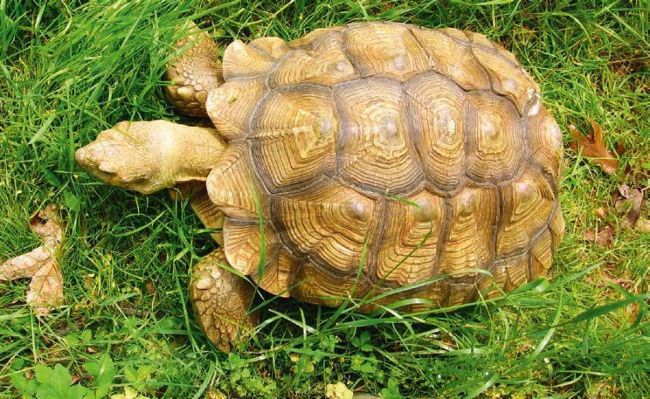
Tropical tortoises such as this sulcata are at risk from becoming chilled outdoors.
Horsfield’s tortoise occurs further north than other species, even being encountered on the Russian steppes where the winters are long and cold. These chelonians are very determined diggers, excavating underground burrows where they may reside for over six months of the year in the wild. In a garden setting, they will instinctively tend to tunnel underground, and this can make them hard to locate, especially in a flower bed.