Breathe In Deep
Never For Ever marked the start of a new creative era for Kate Bush and also made her the first female solo artist to enter the UK album chart at No.1. On the 40th anniversary of her iconic third album, Prog looks at how the visionary vocalist’s career changed… forever.
Army Dreaming: Daryl Easlea
Portrait: Syndication/Mirrorpix/Getty Images
“Change is a very important thing. On any level, I do want to change; not only as a person, but as a musician. I think it’s starting to happen a little, just slightly different.”
Kate Bush, April 1979
Released in September 1980, Never For Ever stands discrete within Kate Bush’s slender, esteemed catalogue. Boasting two of her most loved singles - Babooshka and Army Dreamers - Never For Ever also contained Breathing, Bush’s first real deep dive into unselfconsciously mature material.
“I feel this is perhaps why this one is like starting again. It’s like the first album on a new level. It’s much more under control.”
Kate Bush
Like her public persona at this time, Never For Ever is an album that still has one foot in ‘old showbiz’ (EMI protégé, Multi-Coloured Swap Shop guest, a target for prime-time TV parodies); yet the other displaying her development (working with established artists such as Roy Harper and Peter Gabriel, and the album’s unsettling subject matter). Commercially, her previous long-player, Lionheart, hadn’t been a roaring success, and its singles had not set the charts ablaze. It was time to change course.
Never For Ever was an album of firsts for Kate Bush: her first co-production; her first release after renegotiating her EMI deal; her first time recording at Abbey Road, and her first use of the (then brand new to the country) sampling synthesiser Fairlight CMI, which was so to shape her material for the next decade.
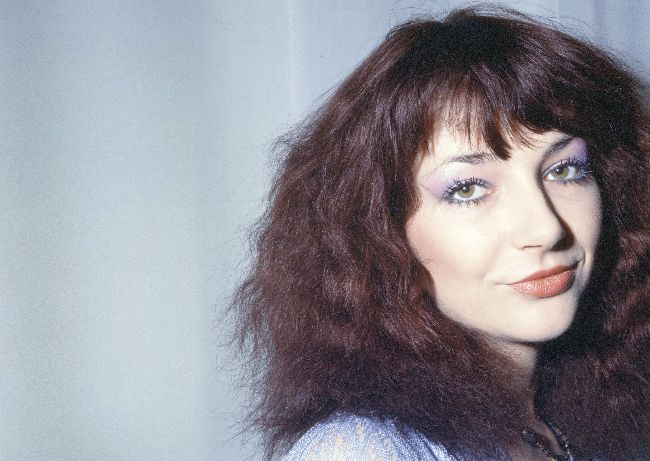
Kate Bush at the British Rock and Pop Awards, February 1980.
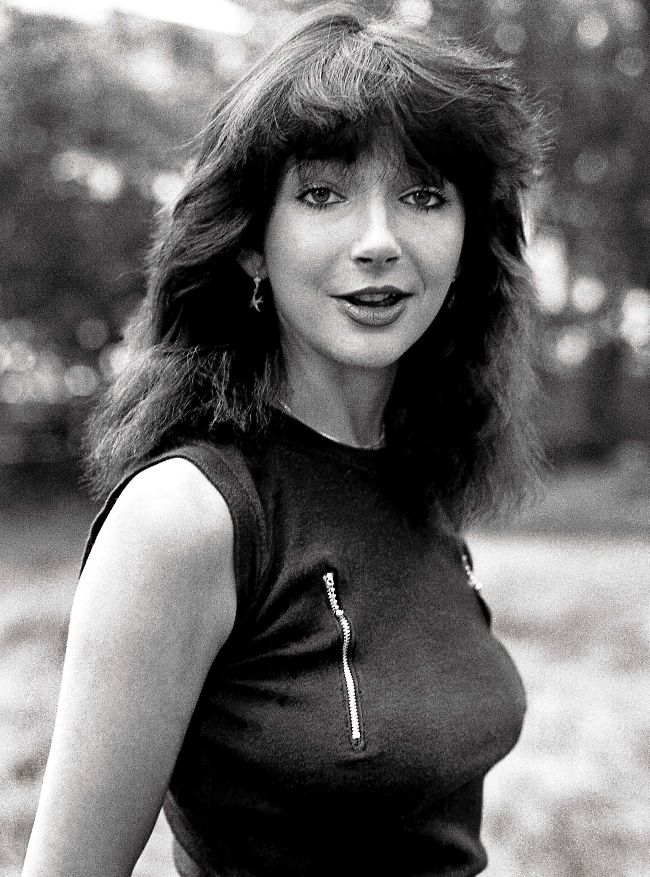
Kate Bush outside the old EMI offices on August 28, 1980, posing for a Record Mirror feature about the album. Pity their review was awful.
ANDY PHILLIPS
Bush’s new-found confidence and step away from the machine (something she was soon to perfect) was to inform Never For Ever - an album influenced by death, technology, relationships and a 21-year-old simply bursting with ideas. “There are 10 tracks, and if there is a main theme, it’s about human communication and its difficulties,” Bush wrote in September 1980, a few months after her 22nd birthday. Although largely stylistically different, Never For Ever fitted into the pattern of the day for art rock experimentation crossing borders and genres. It is blessed with the same spirit as Robert Fripp’s Exposure, David Bowie’s Scary Monsters (And Super Creeps), Fear Of Music by Talking Heads, and Peter Gabriel’s third album. Never For Ever may not be the masterpiece that 1985’s Hounds Of Love is frequently cited as being, but, for many, it remains their favourite Kate Bush album, and one that unquestionably paved the way for future triumphs.
“She always commanded her own respect, on the other hand she would ask you if you wanted a cup of tea and then she would go and make it. So it was impossible not to be warm and enthusiastic around her.”
Richard James Burgess
N
ever For Ever was Kate Bush’s first studio recording after her groundbreaking The Tour Of Life in spring 1979, which had turned the notion of a live concert on its head. Fully choreographed by Anthony Van Laast, the sold-out 28-date tour was a visualisation of her first two albums, The Kick Inside and Lionheart. Much was made of it costing between £200,000 and £250,000 and employing 40 people - it was just at the very cusp of the touring industry being taken seriously. There was a BBC TV Nationwide special on the tour to coincide with the opening night at Liverpool Empire. Reporter Bernard Clark asked Bush, “Do you have a problem now: what next - how are you going to follow the success?” There seemed to be a feeling that, after only a year in the spotlight, Bush had achieved her goals. “You’re now just over 21 and you’ve made it,” Clark probes. “What is there left to do now?” Bush offered her gracious smile and replied: “Everything. I haven’t really begun yet.” How right she was.
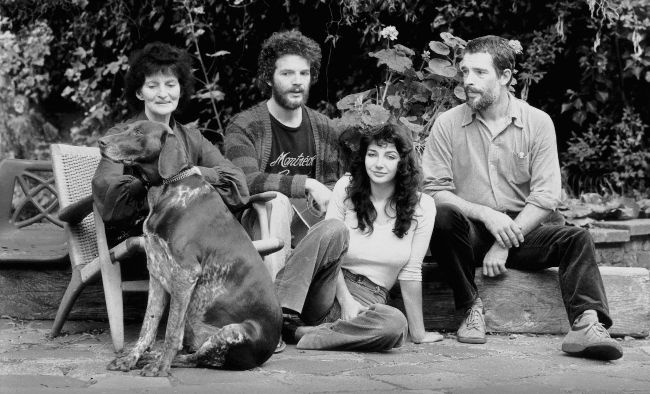
Bush with her mother, Hannah Daly, and her brothers, Paddy and John, at their home in East Wickham, London, on September 26, 1978.
CHRIS MOORHOUSE/EVENING STANDARD/HULTON ARCHIVE/GETTY IMAGES
However, the tour was overshadowed by the tragic, accidental death of Bill Duffield, her 21-year-old lighting director. On April 2, 1979, after a warm-up gig at Poole Arts Centre, Duffield was undertaking the so-called ‘idiot check’ where the final crew member present inspects the entire performance area to make sure nothing has been left behind. He fell 17 feet through an unlit open panel on the stage to a concrete floor below and died a week later in hospital from his injuries. A memorial concert for Duffield was planned at the end of Bush’s tour on May 12 at Hammersmith Odeon. The evening was to be an emotional tour de force, where Bush was joined by two artists who had previously worked closely with Duffield - Peter Gabriel and Steve Harley. They duetted with Bush on Them Heavy People and The Man With The Child In His Eyes. Bush joined Gabriel on his yet-to-be released I Don’t Remember and they all sang The Beatles’ Let It Be to close.
If Duffield had not died, Bush and Gabriel may not have met. They hit it off immediately; Gabriel’s painstakingly free approach to his work was to inform her in a way few artists had ever done. The meeting had a profound effect on her - within months she would be singing on Gabriel’s third album, and through those recording sessions, she first encountered the Fairlight CMI synthesiser.