Eruption! Tarkus In Their Own Words
In an exclusive extract from the official new book, Emerson, Lake & Palmer, the band themselves look back on the making of their second album, Tarkus. We explore the highs and lows of their very first chart-topper, in Keith, Greg and Carl’s own words.
Words: Keith Emerson, Greg Lake, Carl Palmer
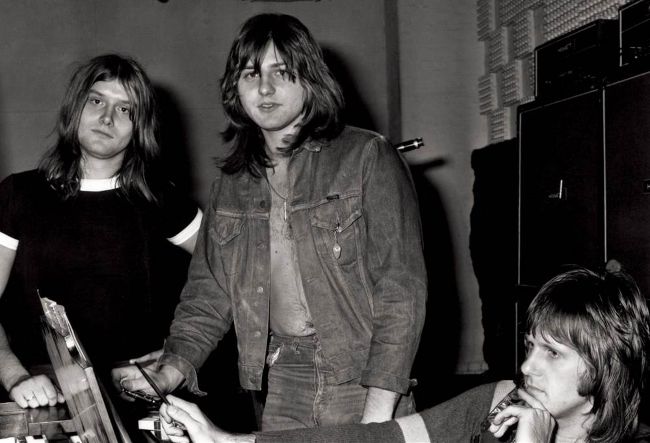
Working together: ELP in the studio, 1971.
Images: Norman Quicke/Express/Getty Images
“Tarkus is
a challenging
piece of music,
but timeless.”
Keith Emerson
ELP’s journey to Tarkus was brief by many bands’ standards, but it was no less dramatic. Its creation was fraught with arguments that very nearly ended the trio’s career, yet it was through dedication and a shared vision that the ambitious work finally reached a rewarding end. Emerson, Lake & Palmer recall the making of an album that transformed them from one-hit wonders to leading lights of the progressive rock world, and set them on the path to super-stardom.
KEITH: At first, Greg was not sure about the beginning of Tarkus. After all, it was weird, and it used a 5/4 time signature. Carl had wanted to record something in 5/4, so I had that in mind when I was developing the piece.
GREG:
Tarkus begins with the success of Lucky Man. No one expected that to become the sort of anthem of ELP. It almost became the identifier of ELP and I think in many ways it jarred Keith, because he had seen ELP as an instrumentally led band. When it came to recording the second album, he was really determined to see that the instrumental side of ELP was firmly established.
CARL:
Tarkus got off to a rocky start, but it came together very quickly. It was ultimately a great experience while we were in the studio. We had such little time to mould the final album before we went in, so it could have been a disaster.
KEITH: Carl and I would often test each other’s sight-reading abilities, writing out complicated rhythms in odd time signatures. One day while we were on our first UK tour, he came into my dressing room and drummed out