STEVE HACKETT
The ex-Genesis guitarist’s first fully-fledged concept album in decades is a dizzying, delirious box of delights.
Words: Mike Barnes Illustration: Pete Fowler
Edited by Dave Everley prog.reviews@futurenet.com
“A re you sitting comfortably?” asks the voice from the BBC Radio programme Listen With Mother from within a sound collage at the beginning of People From The Smoke, the track that opens The Circus And The Nightwhale. It’s more than coincidence that this famous phrase was first uttered in 1950, the year of Steve Hackett’s birth, as the story begins in traumatised post-war London when the national broadcaster was a reassuring presence, and follows the rites of passage of the principal character, Travla –who despite his name, is based on the guitarist.
Hackett’s solo debut, 1975’s The Voyage Of The Acolyte, was a concept album, taking its inspiration from the tarot, but apart from toying with some themes on 1980’s Defector, which he states is not a complete concept album, he hasn’t revisited that format until The Circus And The Nightwhale –a wise move that’s resulted in one of his very best releases. When in Genesis, Hackett contributed to one of progressive rock’s most famous concept albums, The Lamb Lies Down On Broadway. Its protagonist, Rael, was the hapless victim of unfathomable outside forces. But although The Lamb… follows its own strange logic, we always know where Rael is within the narrative. The Circus And The Nightwhale is different in that while it’s inspired by Hackett’s memories, it’s a kaleidoscope of real and imagined elements rather than a linear story. He also wanted to have different musical eras co-existing within the same song, and here Hackett has constructed a world and invites the listener in.
The Circus And The Nightwhale
INSIDEOUTMUSIC
The Circus And The Nightwhale to be musically and emotionally overwhelming and he gives us some of the most flamboyant and dazzling guitar-playing of his career. As a youth, Hackett lived opposite Battersea Power Station, and worked at London’s only permanent funfair, which was situated next to it. This idea of the ‘Fairground dreamland’ leads us into the album’s fast-moving, cinematic moods.
The core musicians are from Hackett’s live band: Craig Blundell on drums, bassist Jonas Reingold, Roger King on keyboards and orchestral arrangements, and Rob Townsend on saxophone. Vocalist Nad Sylvan makes a guest appearance on the ominous, loping Taking You Down, about a child card sharp who Hackett actually knew, but they’re recast here as a demonic character. Townsend unleashes a torrential sax solo, which urges Hackett onto ever more expansive playing.
On People Of The Smoke, Hackett and his co-lyricist and wife, Jo, describe the gritty reality of London and how it was culturally transformed by the energy of 60s youth culture and rock’n’roll. This feeling of emancipation, of not having to bow ‘to your betters’ is reflected in a passage of formal string figures, before Hackett’s lead guitar bursts in at thrilling speed. He wanted Harp-like 12-string guitar and synth bass notes, reminiscent of the Genesis song Entangled from A Trick Of The Tail, feature on Enter The Ring. Hackett sings harmonies with Amanda Lehman, then his brother John leads a jig-like section on flute and the song moves into an orchestral section with echoes of the giddy fairground swirl of The Beatles’ Being For The Benefit Of Mister Kite.
A feeling of panic and being trapped pervades Get Me Out with Travla ‘Stuck to the wall on a spinning wheel’, and Hackett’s guitar is harsh and aggressive. Ghost Moon And Living Love is more lyrical, a rumination on the thrill of new love and its redemptive power, but all is under threat once more on Circo Inferno. Malik Mansurov’s tar introduces the dance, with sax and guitar outbursts, and the band locking into some fast, agitated unison sections.
A number of short instrumentals link the songs and All At Sea is another sound collage with Hackett’s quicksilver guitar navigating its way through the turbulence. The titular Into The Nightwhale, its insistent rhythmic pattern centred on one chord, nods back to A Tower Struck Down on The Voyage Of The Acolyte. It feels like a journey into oblivion. Is Travla, like Rael in Cuckoo Cocoon, going to end up as, ‘Some sort of Jonah shut up inside the whale’? Ultimately, being consumed by the metaphorical cetacean doesn’t do him much harm. The penultimate track, the anthemic Wherever You Are, suggests that he is never out of reach of the song ‘that can travel to the ends of the Earth’, and that warm feeling is reinforced by strings and ecstatic lead guitar.
This is Hackett telling his own story thus far, and it’s a moving conclusion to an allusive rollercoaster of an album –haunting, cryptic, exciting, disorientating. But if it had been more literal it would have lost some of its magic. The Spanish-flavoured acoustic guitar postscript White Dove shrugs off the preceding weight and worry, replacing it with a much longed-for feeling of liberation. It’s a fitting end to Hackett’s finest solo album to date.

BIG BIG TRAIN
The Likes Of Us INSIDEOUTMUSIC
There may be a new face on the footplate, but the route is familiar.
New Big Big Train singer Alberto Bravin was eased into position on last year’s Ingenious Devices, tucked away at the end of the album on a live recording of 2021’s Atlantic Cable. With the other tracks fronted by his predecessor, the late, much-loved David Longdon, this positioning felt like a carefully orchestrated step towards gentle transition and a changing of the guard. But it’s Bravin’s voice that introduces this follow-up, as if to emphasise the
permanence of the shift and the trust the rest of the band have in their new hire.
By and large, that trust is rewarded. Bravin’s voice is pure and pretty and pitched in the same range as Longdon’s, so nothing’s going to terrify the fans, but there are differences. Longdon was a naturally dramatic performer, and this drama was reflected most in his singing’s euphoric highs. In these moments he sounded liberated, transcendent, and Bravin doesn’t. Instead, he sounds as if he’s concentrating, like an actor so committed to precisely annunciating his lines that his performance fails to truly soar. It’s a smooth start, but a cautious one.
The Likes Of Us sounds like an album by a band regrouping and consolidating. On 2021’s Welcome To The Planet, Longdon’s final studio album with the band, there were moments –most notably on the title track, and on Bats In The Belfry –where all musical inhibitions seemed to be thrown to the wind. This album is frequently the opposite, as if Big Big Train are keen to reestablish a firm footing.
But it works. First single Oblivion is a reasonably straightforward rocker, but BBT have always done sharp and snappy alongside the long-form pieces, and the epics are here too. Beneath The Masts (17 minutes, 26 seconds) successfully transitions from gentle, piano-guided introduction to rapturous climax via a series of dizzying instrumental sections, some of them almost violent. The beginning of Last Eleven crashes in like Dance On A Volcano-era Genesis before slowly spiralling skywards, and bassist/founder Greg Spawton continues to conjure up the ghost of Chris Squire with his rumbling Rickenbacker.
There are also moments of genuine loveliness: the forlorn brass on opener Light Left In The Day, before the song goes a bit Market Square Heroes; the close harmonies on the introduction of Miramare; the swooping guitar solos on Love Is The Light, which finishes with a choral section perfectly crafted for mass audience singalongs. It’s an album of genuine warmth and quiet wonder, and if it’s a little safe, well, that’s understandable.
FRASER LEWRY
ABSTRACT CONCRETE
Abstract Concrete THE STATE51 CONSPIRACY
Canterbury-tinged avant-pop masterpiece.
With a pedigree that includes Quiet Sun, Radar Favourites, This Heat and Camberwell Now, as well as a string of impressive solo releases, any project that drummer Charles Hayward engages with is worthy of attention.
Inflected with touches of dub, rock, lounge, quirky alt-pop and more than a few smart prog-friendly moves, this nimble quintet, drawn from the experimental and improv music scenes, present a melodically accessible and powerful six-track set. Deftly moving through warm harmonious breezes and euphoric convergences of gear-shifting rhythms, barbed guitar,
rippling keyboards, violin and vocals, they are also prone to erupt into boneshakingly obsessive bursts of manic repetition.
The septuagenarian Hayward’s drumming has lost none of its urgency. Nor has age quelled his belligerent, contrarian whine of a voice. Whether fuelled by indignation at the hypocrisies in political and public life or rent with emotional fragility, his infectious vitality carries a weighty energy. Though not without humour or whimsical charm, Abstract Concrete is both deadly serious and spiritually uplifting. Music for our times, indeed.
SS
ANYONE
Miracles In The Nothingness TOGETHERMENT
Cali prog maverick keeps expanding.
Californian visionary Riz Story has been operating under the Anyone moniker since the early 90s, initially as part of a trio with Jon Davison (now singer with Yes) and then-future Foo Fighters drummer Taylor Hawkins. Several reinventions later, Story has stretched his band’s formula far beyond the prog-inclined alt-rock that typified their first few releases.
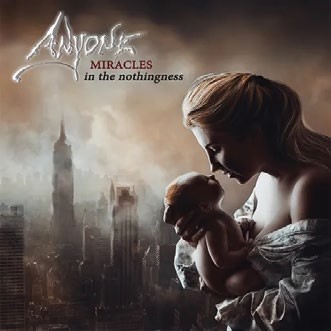
As with 2021’s In Humanity, Miracles In The Nothingness combines virtuoso progressive rock with a syrupy strain of blissed-out psychedelia. Story plays every instrument across its two-hour runtime. Bristling with ambition, it feels
less like an album than an experiential adventure. The intricate, rambling likes of My Name Is Forever are strong melodically, but Story’s production is so full of textural tricks that the tunes seem secondary to the overwhelming trippiness of it all. On the languorous Symptom Of The Miracle, Jon Davison returns to the fold and his sonorous tenor soars across some of Story’s most complex arrangements. It’s a beautiful, barnstorming moment on an album that seeks to redefine modern prog as a prolonged sojourn in a highspec flotation tank on a much more interesting planet than this one.
DL
THE ARISTOCRATS
Duck THE-ARISTOCRATS-BAND.BANDCAMP.COM
Illustrious fusion trio embrace the absurd with thrill-a-minute concept album.
The three musos who make up The Aristocrats have been involved with more albums than most of us have had hot dinners, but they’ve never written anything like Duck before.
A less-than-serious concept album, it centres around a cartoon duck who, chased out of the Antarctic by a malevolent penguin policeman, goes on to explore the world. The Wall this is not.
As with their previous records, each member has written three tracks. The
Aristoclub’s flashing disco grooves sees Guthrie Govan sprinkling spicy guitar between bursts of its infectious motif, while on Sideshow, Bryan Beller’s bright
bass lines intertwine with Govan’s pattering licks. Sgt Rockhopper, named after the avian antagonist, benefits from establishing its hooks before gorging on modulating rhythms and fretboard acrobatics. Drummer Marco Minnemann offers a smooth R&B swing throughout, with the wah-lathered Sittin’ With ADuck On ABay a particular highlight.
For all that, Duck does occasionally suffer from the trio’s virtuosity overshadowing the needs of their songs. As a result, its sillier, free-spirited moments are the ones that leave a lasting impression.
POW
THE BEVIS FROND
Focus On Nature FIRE RECORDS
Almost 40 years in and the creativity still flows like water.
Much like the Shroud of Turin or the Bermuda Triangle, the ongoing cult status of The Bevis Frond – aka founder and sole constant member Nick Saloman – remains a mystery that is unlikely to be solved any time soon.
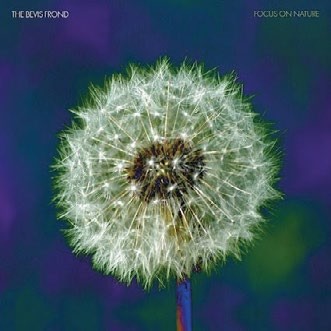
Those who’ve followed this hugely prolific artist will know what to expect. Namely guitar freak-outs (Mr Fred’s Disco), six-string pop (Here For The Other One) and state-of-theworld meditations (Focus On Nature) filtered through a psychedelic prism that’s at once welcoming if slightly disorientating. Indeed, such is the immediacy at play throughout the
19 songs that make up this album, it’s hard to believe that this isn’t a ‘The Very Best Of’ compilation. Conversely, neophytes will be wondering why they’ve been missing out since the band’s mid-80s inception. Saloman’s ability to balance serious concerns with a sense of familiarity is to be commended. Heat takes a microscope to climate change against a backdrop of discordant guitars and sonic sweeps, while the beautiful Maybe We Got It
Wrong shakes a weary head at the here and now. Flab-free and finely balanced, Focus On Natures more than justifies taking up two slabs of vinyl.