THE PROG INTERVIEW
RICHARD SINCLAIR
Every month we get inside the mind of one of the biggest names in music. This issue it’s Richard Sinclair. Born and bred in Canterbury, the bassist, guitarist and vocalist is one of the leading voices of the city’s titular scene, co-founding and playing in some of the burgeoning movement’s core acts, including Caravan, Hatfield And The North and Camel. Never one to stay static musically, he’s since become a sought-after musician for Canterbury-inspired projects and fronted a number of his own. In the mid-00s, he relocated to Italy where he continues to perform and record new material, including his long-awaited new solo album.
Words: Mike Barnes
Born in Canterbury, Kent, into a musical family, Richard Sinclair initially learnt to play ukulele encouraged by his singer father. He was also a choirboy at school, and, aged 16, became a guitarist in The Wilde Flowers with his friends Hugh and Brian Hopper. Although the group never released any music in their
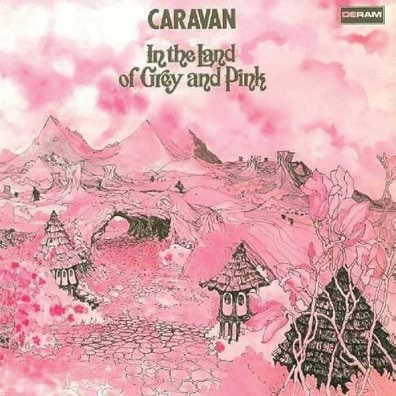
1971’s
In The Land Of Grey And Pink.
lifetime, they became legendary as the progenitors of the so-called Canterbury scene. In 1968 Sinclair was one of the founder members of Caravan, which included his cousin Dave Sinclair on keyboards, and switched to bass guitar and shared vocal duties with guitarist Pye Hastings. The songs on Caravan and If I Could Do It All Over Again, I’d Do It Over You (1970), were all group compositions, but Sinclair’s vocals and songs came to the fore on In The Land Of Grey And Pink (1971).
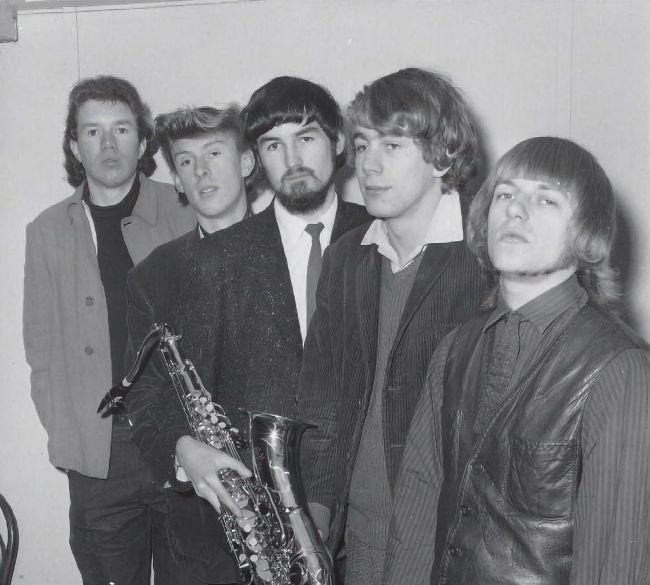
The Wilde Flowers, L-R: Hugh Hopper, Richard Sinclair, Brian Hopper, Kevin Ayers, Robert Wyatt.
COURTESY OF RICHARD SINCLAIR
For 1972’s Waterloo Lily, Steve Miller joined on keyboards and Sinclair went on to form Hatfield And The North with Miller, his guitarist brother Phil Miller (from Matching Mole) and drummer Pip Pyle, fresh from Gong. Steve was replaced by Dave Sinclair and then Dave Stewart from Egg, and in their brief lifespan they established themselves as one of the quintessential Canterbury scene groups, recording Hatfield And The North (1974) and The Rotters’ Club (1975). The group’s musical empathy was extraordinary, with Sinclair’s virtuosic bass playing an integral part. In 1994, Robert Wyatt described Sinclair’s singing with the group to this writer: “What a lovely voice. It’s so true… He always used to sing in tune, which I thought was pretty avant-garde at the time.”
Sinclair split from Hatfield in 1975 and went on to join Camel as bass guitarist and vocalist, recording Rain Dances (1977) and Breathless (1978). Into the 80s and 90s he was involved in numerous collaborations. He fronted his own bands, Caravan Of Dreams and RSVP, and played in the original version of In Cahoots with Phil Miller. He reformed Hatfield And The North in the 1990s and 2000s and was involved in Caravan reunions, recording Back To Front in 1982.